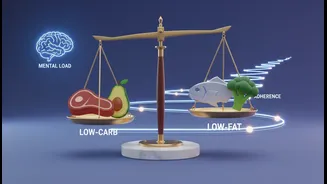









The Problem with All-or-Nothing Diets
Traditional dieting often operates on a rigid, all-or-nothing mindset. Foods are labelled 'good' or 'bad', and a single indulgence can feel like a total failure. This black-and-white thinking is not only stressful but often counterproductive. Decades
of research show that this rigid control is consistently linked with higher body mass index (BMI), more frequent episodes of binge eating, and a greater sense of losing control. It creates a cycle of restriction followed by relapse, often called the 'what the hell' effect, where one small slip-up leads to abandoning all healthy intentions. Studies have shown that while rigid meal plans might offer a straightforward start, they often fail in the long run because they don't teach the skills needed for lasting change.
The Science of a Flexible Approach
Emerging research highlights a more effective alternative focused on flexibility and self-compassion. Studies comparing rigid dieters to flexible ones reveal a telling pattern. While both groups may lose a similar amount of weight initially, the long-term results differ significantly. In one study, participants following a flexible plan, where they learned to track macronutrients and make their own food choices, were more successful at maintaining their results and even gained more lean muscle mass post-diet compared to a group that followed a strict, non-negotiable meal plan. The flexible group didn't regain fat after the diet phase, while the rigid group did. The key takeaway is that learning the skill of making balanced choices is more valuable than simply following a set of prescribed rules.
Embracing Intuitive Eating
One of the most powerful flexible strategies is intuitive eating, a practice that encourages you to listen to your body's internal hunger and fullness cues. It's about moving away from external rules and reconnecting with your own biological signals. This non-diet approach has been associated with a wide range of psychological and physical benefits. Recent research from 2026 published in the Journal of Health Psychology found that intuitive eating was significantly linked to higher self-esteem and lower levels of anxiety, depression, and stress. Other studies have shown it can lead to better diet quality and is associated with a lower BMI. The 10 core principles of intuitive eating include rejecting the diet mentality, honouring your hunger, making peace with all foods, and respecting your body.
Making 'Healthy' Livable
A flexible approach isn't about a lack of discipline; it's about creating a sustainable and enjoyable lifestyle. Instead of forbidding certain foods, it allows for them in moderation, reducing feelings of deprivation. Many people find success with an 80/20 approach, where 80% of their food choices are nutrient-dense and support their health goals, while 20% is reserved for treats and social eating without guilt. This mindset prevents the burnout that often accompanies strict plans. It reframes health as a consistent pattern of choices over time, rather than a perfect but temporary performance. The goal is consistency, not perfection. This allows you to navigate festivals, holidays, and social gatherings without feeling like you've derailed your entire journey.
Beyond the Weighing Scale
A truly healthy approach to weight management also means redefining success. Instead of focusing solely on the number on the scale, a flexible mindset encourages you to notice other positive changes. Are you feeling more energised? Is your mood improving? Are you sleeping better? Are you feeling stronger during physical activity? These non-scale victories are powerful indicators of improved well-being. Health at Every Size (HAES) is a weight-inclusive movement that champions this perspective, promoting balanced eating and joyful movement without the goal of weight loss. Research on these weight-neutral approaches shows they can lead to decreased body dissatisfaction and depression, while increasing sustainable self-care behaviours.