

India’s Ambitious Journey to Venus
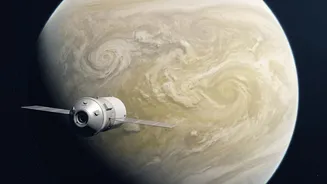
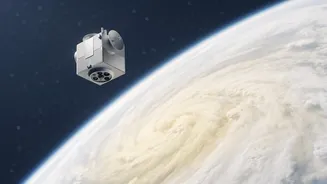
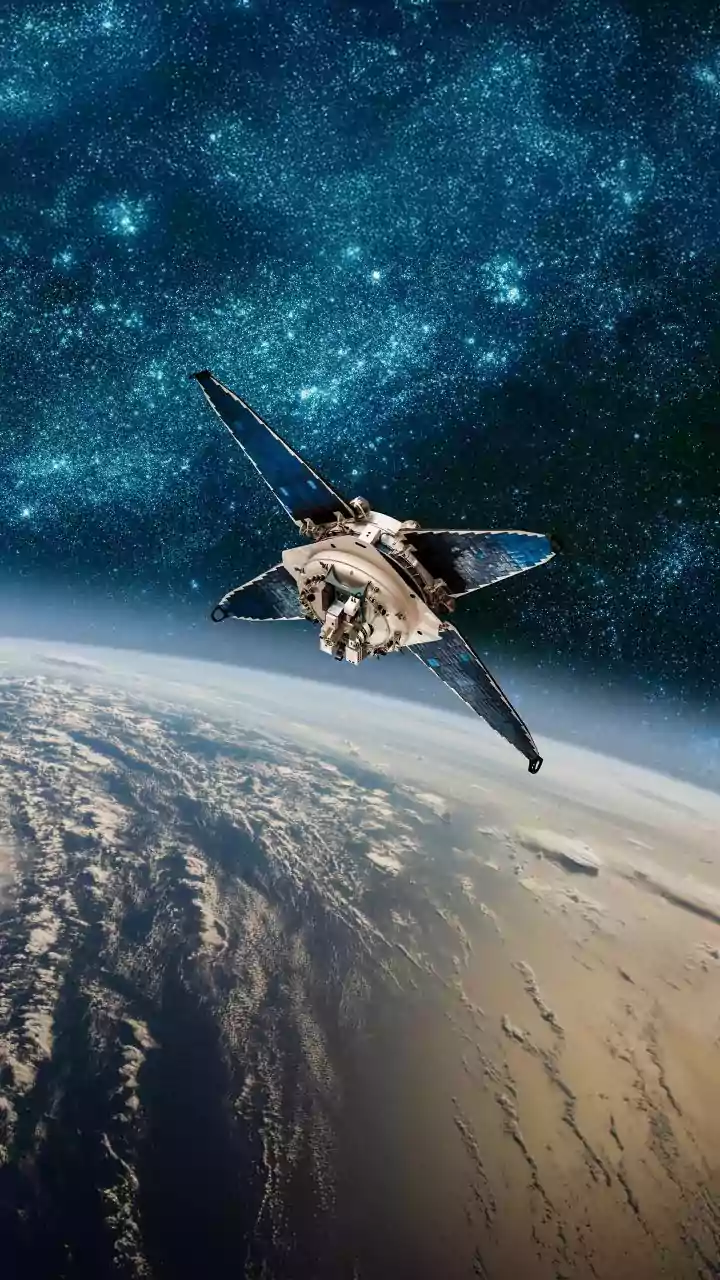
Following the monumental successes of its lunar and Martian missions, the Indian Space Research Organisation (ISRO) is setting its sights on our other planetary neighbour. The Shukrayaan mission, which translates to “Venus Craft,” is India's first dedicated
orbiter to study the second planet from the Sun. With a planned launch in March 2028, this mission places India among a select group of global space agencies turning their attention back to the cloud-shrouded world. Approved with a significant budget, the mission underscores a national commitment to pushing the frontiers of space science. Shukrayaan aims to perform a comprehensive global survey of Venus, from its mysterious surface to the dynamics of its super-rotating atmosphere, seeking answers to why Earth’s so-called twin evolved into such a hostile environment.
A Truly Hellish Environment
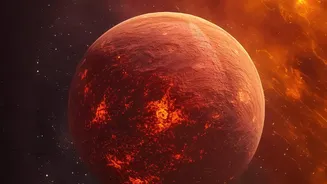
Exploring Venus is one of the greatest technological challenges in the solar system. Its atmosphere is over 90 times denser than Earth's, creating a surface pressure equivalent to being nearly a kilometre underwater. The planet is enveloped in thick, opaque clouds of sulfuric acid that whip around the planet at speeds far exceeding any storm on Earth. Beneath these clouds lies a runaway greenhouse effect in action. The atmosphere, composed of 96.5% carbon dioxide, traps heat so effectively that surface temperatures average a scorching 475°C, hot enough to melt lead. These extreme conditions of heat, pressure, and corrosion have meant that past landers survived for only a couple of hours at most, making an orbiter with powerful remote-sensing capabilities the most viable strategy for long-term study.
Peering Through the Veil
To overcome these challenges, ISRO is equipping the Shukrayaan orbiter with a suite of nearly 20 advanced instruments, some developed indigenously and others in collaboration with international partners. The flagship instrument is a high-resolution Synthetic Aperture Radar (SAR), which is crucial for the mission. Unlike optical cameras, radar can penetrate the thick Venusian clouds to map the surface day or night, in any weather. This will allow scientists to search for active volcanoes and study geological features with greater detail than ever before. For the first time, a ground-penetrating radar will also be used to study the shallow subsurface of Venus, offering a glimpse into its hidden stratigraphy.
Decoding the Atmosphere
A key focus of the mission is to analyze the planet's dense and complex atmosphere. Multiple specialised sensors will work to decipher its chemical makeup and dynamics. The VIRAL (Venus InfraRed Atmospheric gases Linker) instrument, a collaboration with Russia and France, will study the atmospheric composition in detail. Spectrometers will observe the planet in infrared and ultraviolet wavelengths to identify chemical fingerprints of various gases and map their distribution. Scientists are particularly interested in learning more about the runaway greenhouse effect and confirming the presence of certain molecules, like phosphine, which could have tantalizing, though not definitive, implications for biological processes. Other instruments will measure cloud temperatures, detect lightning, and study how the solar wind strips away atmospheric gases, helping to explain how Venus lost any water it might have once possessed.
Why Venus Matters for Earth
Understanding why Venus, a planet so similar to Earth in size and origin, turned into a scorching inferno is not just an academic question. It holds vital clues about planetary evolution and habitability. By studying the extreme greenhouse effect on Venus, scientists hope to gain critical insights into climate change processes and better model Earth's own climate future. The mission represents a significant step for India's space program, demonstrating sophisticated capabilities in deep-space exploration and advanced instrument design. As part of a new wave of global interest in Venus, with missions also planned by NASA and ESA, Shukrayaan will position India as a key contributor to our collective understanding of our place in the cosmos.