


An Unstable Natural Dam
When a massive landslide tears down a mountainside, it can dump millions of tonnes of rock, soil, and trees directly into a river valley, forming what is known as a landslide dam. This happened catastrophically in Nepal's Rasuwa district on August 26,
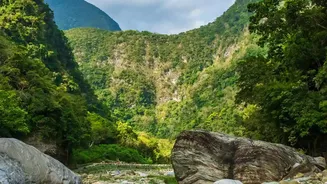
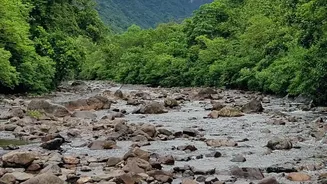
2026, when a glacial collapse is believed to have triggered a flow of debris that blocked the Lhende Khola river. Unlike engineered concrete dams, these natural blockages are unstable mixtures of loose material. Initially, water might seep through the porous debris, but this often doesn't last. Fine sediment carried by the river quickly clogs the gaps, effectively sealing the dam and allowing a lake to form and grow rapidly behind it. The steep, fragile geology of the Himalayas, especially during the monsoon season, makes such events a recurring danger.
The Waiting Game: A Lake's Rapid Rise
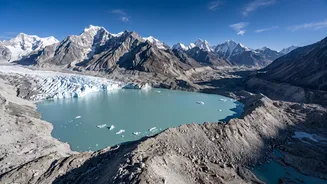
Once a debris dam is sealed, the river's entire flow begins to accumulate. Fed by monsoon rains and glacial melt, the lake behind the blockage can rise at an alarming rate, sometimes by several metres per hour. As the lake deepens and expands, it does two dangerous things. First, it exerts immense pressure on the face of the unstable dam. Second, it submerges the valley upstream, inundating villages and farmland in what is called backwater flooding. Authorities and downstream communities are left in a terrifying waiting game. How stable is the dam? How fast is the water rising? The situation becomes a race against time, as engineers and disaster response teams try to assess the risk, often in remote and inaccessible terrain.
When the Dam Breaks: The Outburst Flood
Landslide dams are notoriously short-lived; studies show that many fail within days or even hours of forming. Failure can happen in two main ways. The most common is overtopping, where the rising lake spills over the top of the dam. The flow of water quickly erodes the loose rock and soil, carving a channel that rapidly widens and deepens until the dam collapses entirely. Alternatively, the immense water pressure can cause the dam to fail from within, leading to a sudden, catastrophic breach. The result in both cases is a Landslide Dam Outburst Flood (LDOF) — a terrifying wall of water, mud, and debris that surges downstream with the force of an inland tsunami. This secondary flood can be far more destructive than the initial landslide itself, as it carries a massive volume of water at incredible speed.
A Himalayan Challenge
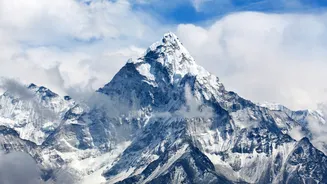
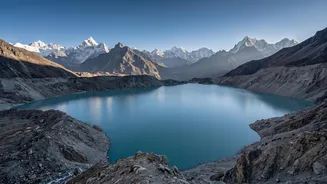
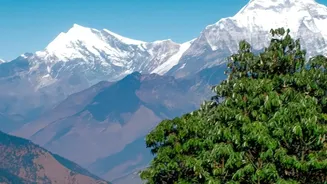
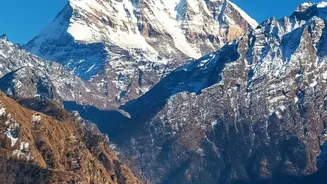
The Himalayan region, often called the “Third Pole,” is uniquely vulnerable to these cascading disasters. Climate change is accelerating the melt of glaciers, creating more glacial lakes and increasing the instability of mountain slopes. This, combined with intense monsoon rainfall and tectonic activity, creates a perfect storm for landslides and subsequent outburst floods. The recent disaster in Nepal that killed over 160 people and left hundreds missing is a tragic example of this deadly combination. The event, which devastated communities along the Bhote Koshi and Trishuli rivers, highlights the immense risk faced by the millions who live downstream of these volatile mountain systems.
Racing the Clock with Monitoring and Mitigation
For communities in the path of a potential LDOF, early warning is critical but incredibly challenging. These events can happen with little to no prior rainfall, defeating many conventional flood alert systems. Following the August 26 disaster, authorities warned of a second-wave risk from another blockage that remained upstream, forcing evacuations and a tense monitoring effort. Mitigating the danger is a monumental task. In some past cases, engineers have attempted controlled breaches of landslide dams using explosives or by manually digging channels to drain the lake slowly and safely. However, accessing these remote, hazardous sites is a major obstacle. The future of protecting these vulnerable areas relies on better satellite monitoring, real-time data sharing between countries, and robust early warning systems designed for the specific, complex hazards of the Himalayas.