







India's space sector is buzzing with ambition, moving from a government-led domain to a vibrant ecosystem of private innovators. A recent overhaul of foreign investment rules could be the rocket fuel needed for the nation's startups to truly take off.
A New Financial Frontier
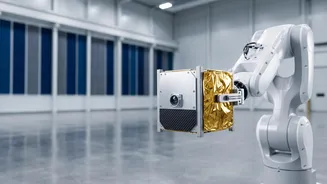
In a landmark move earlier this year, the Indian government significantly liberalised its Foreign Direct Investment (FDI) policy for the space sector, aiming to attract global capital and technology. Previously, foreign investment in satellite establishment and operation was permitted up to 100%, but only through the government approval route—a process often seen as lengthy and cumbersome. The new policy, effective from April 2024, introduces a more nuanced, tiered approach designed to boost private participation and streamline investment. The most significant change allows up to 100% FDI through the 'automatic route' for companies manufacturing space components and subsystems. This means foreign entities can invest without prior government approval, dramatically lowering the barrier to entry for building India's space hardware supply chain.
Fueling the Startup Engine
For India's 400-plus space technology startups, this policy shift is more than just regulatory paperwork; it's a potential lifeline. The primary benefit is access to substantial capital. Space ventures are notoriously capital-intensive, requiring massive upfront investment with long gestation periods before profitability, which has traditionally made it difficult to secure domestic funding. Liberalised FDI opens the door to a global pool of investors willing to make long-term bets on technology. Beyond just money, the policy is expected to facilitate critical technology transfer and foster international partnerships. As foreign companies invest, they bring not only funds but also expertise, advanced technologies, and access to global markets. This allows Indian startups to move up the value chain from being local suppliers to ISRO to becoming integral parts of the global aerospace industry.
Who Stands to Gain?
The tiered structure of the new FDI policy is designed to stimulate growth across the entire space value chain. The 100% automatic route for components will likely benefit a wide range of MSMEs and startups focused on manufacturing everything from satellite buses to ground station equipment. Companies working on satellite manufacturing and operations, a high-growth area that includes Earth observation and communication services, can now attract up to 74% FDI automatically. This could provide a major boost to startups like Pixxel, which is building constellations of hyperspectral imaging satellites. The most sensitive area—the development of launch vehicles and spaceports—now allows for up to 49% FDI via the automatic route, with larger stakes requiring government clearance. This cautious but significant opening gives rocket-builders like Skyroot Aerospace and Agnikul Cosmos a clearer path to securing foreign investment while balancing national security interests.
Navigating the Turbulence Ahead
While the new FDI policy is a monumental step, the journey for India's private space sector is not without its challenges. The industry is still awaiting the finalization of a comprehensive Space Activities Bill, which will provide the overarching legal framework for private operations. Furthermore, there is a growing talent crunch for experienced professionals in highly specialized fields like propulsion engineering, avionics, and satellite systems integration. Although India produces millions of engineering graduates, deep expertise in mission-critical systems remains scarce outside of the government ecosystem. Building the necessary physical infrastructure, from advanced testing facilities to private launch sites, will also require sustained investment and policy support. Overcoming these hurdles will be crucial for translating the potential of FDI into a globally competitive private space industry.