



An Invisible Planetary Shield
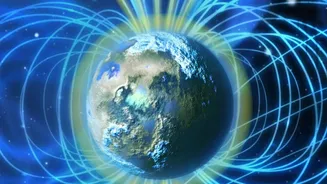
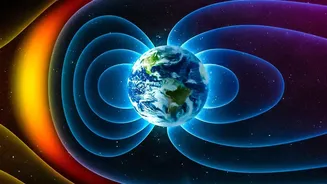
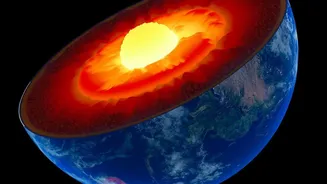
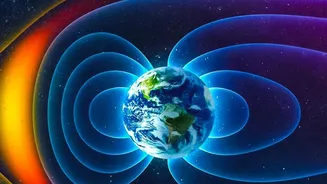
Deep inside our planet, the movement of molten iron in the outer core generates a powerful magnetic field. This field extends tens of thousands of kilometers into space, creating a protective bubble known as the magnetosphere. Think of it as a giant,
invisible shield. It's not something we can see or feel in our daily lives, but without it, Earth would be an unrecognizably barren and hostile world. This magnetic field is not static; it's a dynamic system, constantly interacting with forces from outer space and safeguarding the conditions necessary for life to flourish on the surface.
The Sun's Relentless Assault
Our Sun, while a source of life-giving warmth, also continuously ejects a stream of charged particles called the solar wind. This supersonic stream of plasma travels at speeds of hundreds of kilometers per second and would otherwise strip away the upper layers of our atmosphere. This isn't just a theoretical threat. The process is known as atmospheric stripping, and it’s a key reason why some planets are desolate. The solar wind exerts a constant pressure, and without a strong defense, it can erode a planet’s atmosphere over millions of years, molecule by molecule.
A Tale of Two Planets: Earth vs. Mars
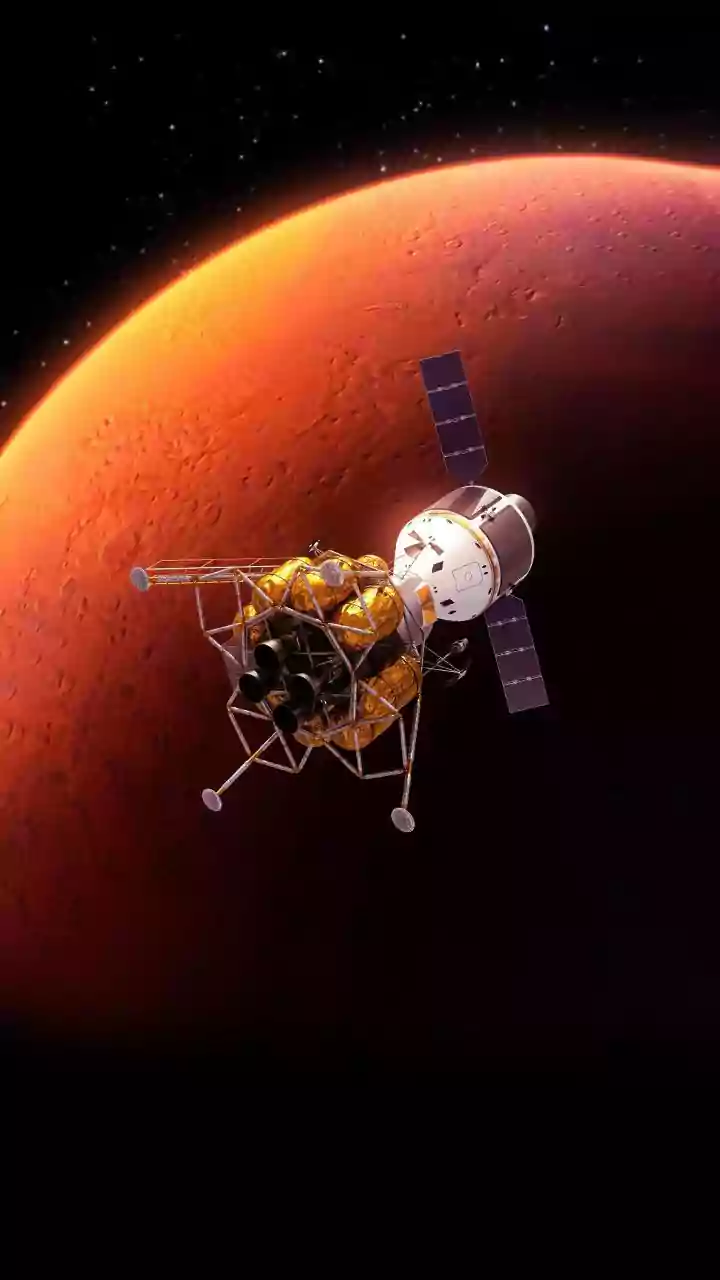
The importance of the geomagnetic field is starkly illustrated by our neighbor, Mars. Evidence strongly suggests that Mars once had a thicker atmosphere, liquid water, and a global magnetic field, much like a young Earth. However, about four billion years ago, Mars's internal dynamo shut down, and its magnetic field vanished. Without this shield, the solar wind relentlessly scoured the Martian atmosphere, stripping it away into space. This transformed Mars from a potentially habitable world into the cold, dry desert we see today. Earth, by retaining its molten, churning core, kept its magnetic shield and, consequently, its atmosphere and oceans.
How Geomagnetic Deflection Works
When the charged particles of the solar wind encounter Earth's magnetic field, they are deflected. The principle at play is the Lorentz force, where a magnetic field exerts force on moving charged particles, altering their trajectory. Most of the solar wind is forced to flow around the magnetosphere, much like water flowing around a boulder in a stream. This prevents the bulk of these high-energy particles from directly impacting our atmosphere. While our shield is robust, it's not perfect. Some particles are funnelled towards the magnetic poles, where they interact with atmospheric gases to create the spectacular auroras—the Northern and Southern Lights.
The Engine in Earth's Core
The incredible engine driving this planetary defense system is called the geodynamo. It is powered by the convection of heat escaping from the Earth's solid inner core to the liquid outer core. This movement of electrically conductive molten iron and nickel creates powerful electric currents, which in turn generate the magnetic field in a self-sustaining loop. As long as Earth's core remains hot and its liquid outer layer continues to churn, this vital protective field will persist, though its strength and pole locations do shift over geological time.