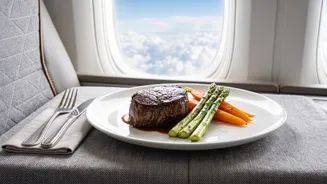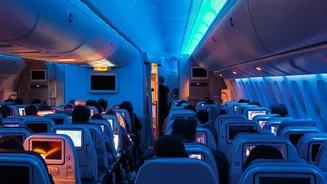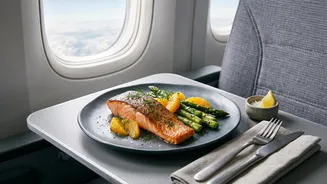






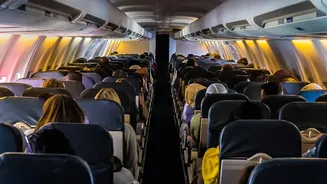
Ever wondered why the meal you were looking forward to tastes so bland at 30,000 feet? It’s not just your imagination, and it’s not always the chef's fault. The answer lies in a fascinating combination of physics, biology, and psychology.
The Double Act: Pressure and Humidity
The primary culprits
behind your diminished sense of taste are the low air pressure and low humidity inside an aircraft cabin. At cruising altitude, the cabin is pressurized to the equivalent of being 6,000 to 8,000 feet up a mountain. This lower pressure, combined with humidity levels that can drop below 12%—drier than many deserts—profoundly affects your senses. The extremely dry air dries out your nasal passages, which is a major problem for flavour perception because what we think of as 'taste' is roughly 80% smell. When your olfactory receptors can't function properly, food automatically tastes blander.
A Muted Palate
The combination of low pressure and dryness directly impacts your taste buds. Research conducted by Germany's Fraunhofer Institute for Lufthansa found that sensitivity to sweet and salty flavours can decrease by as much as 30% in flight. This is why a dish that was perfectly seasoned on the ground can seem underwhelming in the air. It’s similar to how food tastes when you have a bad cold; your senses are simply not operating at full capacity. Interestingly, our ability to perceive sour, bitter, and spicy flavours remains largely unchanged.
The Surprising Role of Engine Noise
It’s not just the air that’s different; it’s the noise. The constant hum of the jet engines, often reaching 85 decibels, plays a sneaky role in altering your meal experience. Studies from Cornell and Oxford Universities have shown that loud background noise can further suppress the perception of sweetness. However, the same noise has an opposite effect on another basic taste: umami. This is the savoury, brothy flavour found in foods like tomatoes, mushrooms, and aged cheese. The loud environment actually seems to enhance our perception of umami. This phenomenon helps explain why so many passengers suddenly crave a tomato juice in the air, a drink they might rarely choose on the ground.
How Airlines Are Fighting Back
Airlines and their catering partners are well aware of these challenges and have become culinary scientists in their own right. They can't change the cabin environment, so they change the food. Chefs intentionally design menus that can withstand the sensory assault of altitude. This often means increasing seasoning levels and using cooking techniques like sous-vide to lock in moisture and flavour. More importantly, they strategically incorporate umami-rich ingredients to give dishes a flavour boost that survives the journey. Think parmesan, soy sauce, mushrooms, and rich tomato-based sauces. Some airlines have even experimented with 'sonic seasoning'—curated music playlists designed to enhance specific tastes during the meal service.