



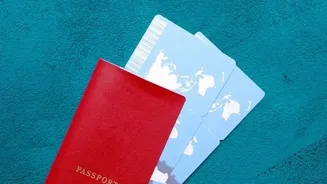

For years, travellers have been conditioned to believe the biggest hurdle to an international trip is the flight price. But a revealing new survey suggests the true obstacle might be the mountain of paperwork waiting for you long before you book.
A Growing Barrier to Travel
The latest
Global Passenger Survey (GPS) from the International Air Transport Association (IATA) has put a number on a long-held traveller frustration. According to the 2026 report, a staggering 43% of passengers have been discouraged from travelling to a destination specifically because of its immigration and visa requirements. This marks a significant jump from 33% in 2025, indicating that as other aspects of travel become more digital and streamlined, cumbersome entry rules are becoming an even greater deterrent. The findings suggest a clear distinction in the minds of travellers between wanting to visit a country and being willing to endure the process required to get there.
What Makes a Visa a 'Hassle'?
The survey dug deeper into what exactly discourages potential tourists. It is not just one thing, but a combination of factors that create the 'hassle'. For the majority of those put off by the process, the sheer complexity was the main reason. Over half (53%) of these travellers pointed to complicated procedures as the primary deterrent. Other significant concerns included the cost of the visa and worries over data privacy, with each being cited by 17% of respondents. This highlights that the burden is both administrative and financial, creating uncertainty and stress that can lead travellers to simply choose another, more welcoming destination.
The Indian Traveller's Reality
These global findings resonate particularly strongly with Indian passport holders, who frequently navigate some of the world's most demanding visa application processes for popular destinations. The IATA survey found that respondents in the Asia-Pacific region were more likely than the global average to be discouraged by immigration rules, with 49% reporting this issue. For many Indians, planning a trip to Europe, the US, or the UK involves extensive paperwork, high fees, and often long waits for appointments and decisions. While easier visa access in some Southeast Asian countries has boosted tourism, the continued interest in destinations like Japan and the United States shows that Indian travellers are willing to go through the process for a desired location, even if it is difficult. However, the IATA data confirms that for a significant portion, the complexity is enough to scrap the trip entirely.
The Economic Cost of Complexity
The impact of these visa hurdles extends far beyond individual travel plans; it has significant economic consequences. When a family decides against a trip to a certain country due to a difficult visa process, that country loses out on tourism revenue spent on hotels, food, attractions, and local shopping. Airlines also feel the effect, as complex entry rules can depress demand for certain routes. IATA itself has a vested interest, as its member airlines lose business when potential passengers stay home. The cost for an airline to wrongly accept a passenger without correct documentation can average $9,000 in fines and removal costs, making the verification of inconsistent visa formats a major operational headache for carriers. This makes a compelling business case for governments to simplify their entry requirements.
A Push for Smarter, Simpler Borders
The solution, according to IATA and many travellers, lies in technology and standardisation. Passengers are overwhelmingly ready for a digital future. The survey found that 60% of travellers prefer to apply for visas online, and 86% are willing to share their immigration information digitally before departure to speed up the process. The industry is pushing for governments to adopt more streamlined systems like eVisas with consistent, verifiable standards that airlines can easily check. The ultimate goal is a system where trusted digital travel credentials and biometrics can create a more seamless and secure journey, reducing the repetitive checks and bureaucratic hurdles that currently deter so many from exploring the world.