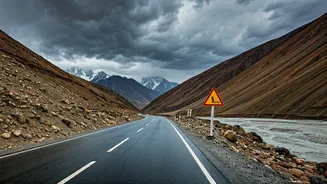









The Allure and the Invisible Threat
There's a reason why a road trip through the Himalayas sits high on every traveller’s bucket list. The hairpin bends snaking through rugged mountains, the vast, barren landscapes of Ladakh or Spiti, and the sense of conquering the mighty passes are experiences
that last a lifetime. But the mountains have their own rules, and weather is the ultimate enforcer. While rain, snow, and landslides are visible threats, high-velocity wind is a silent, invisible force that can be just as deadly. Reports and forecasts often warn of gusts reaching speeds of 60-80 km/h or more, especially on exposed ridges and high-altitude passes. This isn't just a strong breeze; it's a powerful force capable of destabilising vehicles and turning small pebbles into dangerous projectiles.
What's Causing These Fierce Winds?
These extreme wind events are not random. They are often caused by a combination of large-scale weather patterns and local topography. The interaction of the high-altitude jet stream with the Himalayan peaks can create powerful downward gusts. Additionally, Western Disturbances—extra-tropical storms originating in the Mediterranean region—bring sudden changes in weather, including high-speed winds, to Northern India. As these systems move across the mountains, the unique geography of the valleys and passes acts like a funnel, accelerating the wind to dangerous speeds. On iconic routes like the Manali-Leh Highway or the roads around Zoji La Pass, the landscape itself channels the wind, creating localised zones of extreme velocity that can catch even experienced drivers off guard.
The Real Dangers for Travellers
For motorists, especially those on two-wheelers, high-velocity winds pose a significant threat. A sudden, strong gust can easily push a motorcycle or even a lightweight car off its line, a terrifying prospect on roads with sheer drops and no guardrails. The danger is compounded at high altitudes where the air is thinner, affecting vehicle performance and driver concentration. Beyond the direct impact on vehicles, these winds dramatically increase the risk of rockfall. Loose stones and debris, dislodged by the force of the wind, can rain down on the road below. Furthermore, the wind chill factor can be severe. Even on a sunny day, a 60 km/h wind at 14,000 feet can make the effective temperature plummet, increasing the risk of hypothermia if you are stranded or forced to stop for repairs.
An Essential Safety Checklist
The thrill of the Himalayas should not come at the cost of safety. If you are planning to travel on these high-altitude roads, especially when high winds are forecasted, preparation is everything.
1. **Check the Forecast Relentlessly:** Before you start your day, check detailed weather reports from reliable sources like the India Meteorological Department (IMD) and local advisories. Pay close attention to wind speed warnings.
2. **Start Early, Finish Early:** Winds often pick up in the afternoon. By starting your journey at dawn, you can cover significant ground before conditions worsen.
3. **Weight is Your Friend:** If you are driving a car, ensure your luggage is stored low and evenly to improve stability. Bikers should be particularly cautious, as they are most vulnerable. Travelling in a group or convoy offers a safety net.
4. **Know When to Stop:** If you encounter powerful gusts that make it difficult to control your vehicle, find a safe spot to pull over, preferably sheltered from the wind. Do not stop in areas prone to rockfall. Wait for the winds to subside. It's better to arrive late than not at all.
5. **Be Prepared to be Stranded:** Always carry extra food, water, warm clothing, and a first-aid kit. A vehicle breakdown becomes a life-threatening emergency in such conditions.