



A New Chapter in Cosmic Data
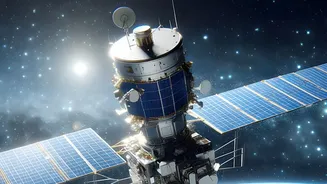
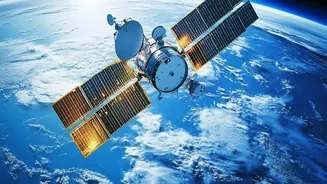
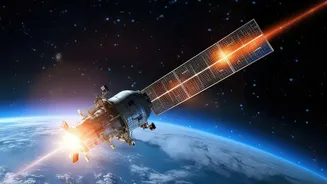
In a historic achievement, NASA's Deep Space Optical Communications (DSOC) experiment successfully transmitted an ultra-high-definition video from nearly 19 million miles away. This technology demonstration, hitching a ride on the Psyche spacecraft, is designed
to transmit data at rates 10 to 100 times greater than the most advanced radio frequency systems currently used by deep space missions. The successful test marks a pivotal moment, proving that laser communications can provide the massive bandwidth needed for the next generation of planetary science and human exploration. The first video was a 15-second clip of a cat named Taters, which was sent at a maximum rate of 267 megabits per second (Mbps)—a speed comparable to terrestrial broadband internet.
From Radio Waves to Light Beams
For as long as humanity has explored space, we have relied on radio waves to send and receive information. While reliable, radio frequency (RF) communication is limited in how much data it can carry, much like an old dial-up internet connection. Sending a single high-resolution image from Mars can take hours. Optical, or laser, communication works differently. It encodes data onto the waves of light itself, specifically in the near-infrared spectrum, which is invisible to the human eye. Because light waves are packed much more tightly than radio waves, they can carry significantly more information. This is the same principle behind fiber-optic cables on Earth, and now NASA has proven it works across the vacuum of deep space, promising to upgrade our cosmic connection to high-speed broadband.
The Challenge of Hitting a Distant Target
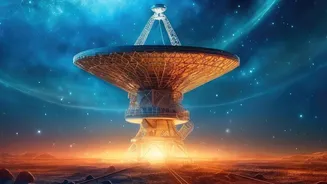
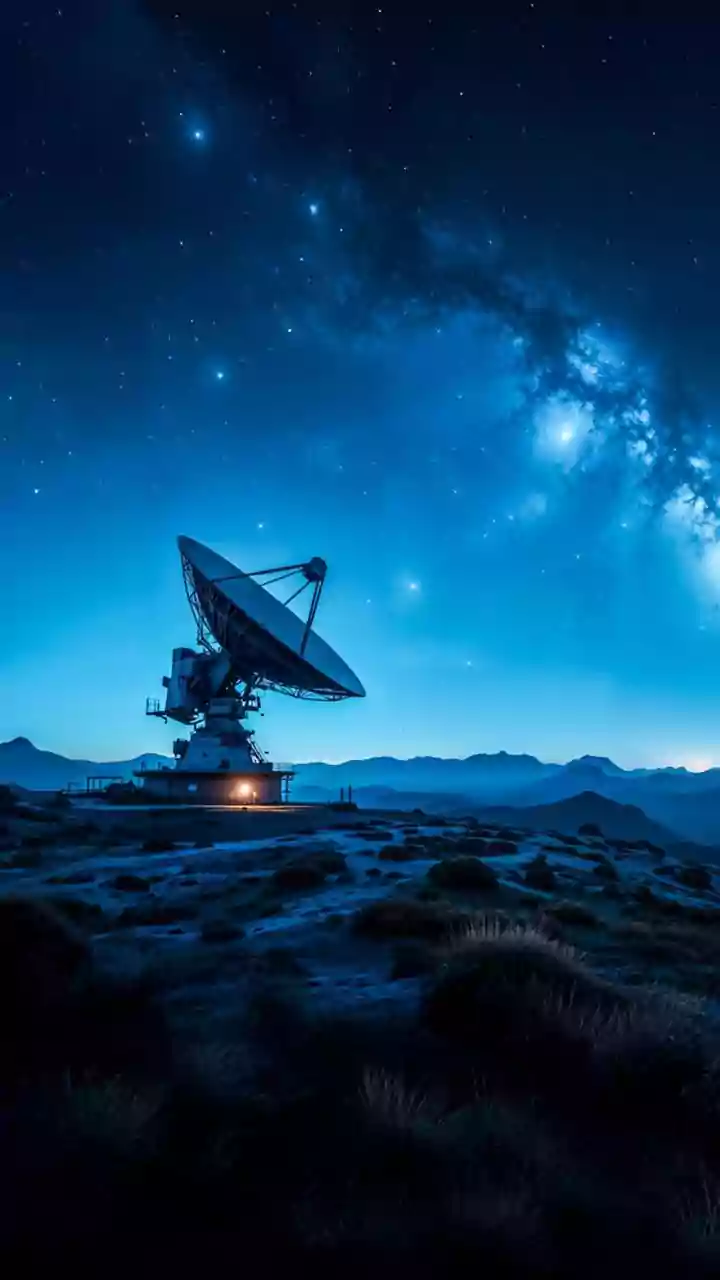
Transmitting a laser beam across millions of miles is an immense technical challenge. The precision required is staggering; one NASA technologist compared it to hitting a moving dime from a mile away. To achieve this, the DSOC system uses a powerful uplink laser from Earth that acts as a beacon, allowing the spacecraft's transceiver to lock on and send its data-encoded laser back with pinpoint accuracy. This return signal is not caught by a simple dish, but by the massive 200-inch Hale Telescope at Caltech's Palomar Observatory in California, which is equipped with highly sensitive detectors capable of counting single photons. Overcoming atmospheric interference on Earth is another hurdle, which is why ground stations are located in high-altitude, clear-weather locations.
An Interplanetary Internet for Mars and Beyond
The success of the DSOC experiment isn't just about faster downloads; it's about fundamentally changing how we explore. This technology paves the way for an 'interplanetary internet' that can support future human missions to Mars. Astronauts could one day stream high-definition video of their work on the Martian surface, receive complex mission-critical data in near real-time, and even hold video calls with Earth. It will also revolutionize robotic science, allowing missions to send back vast quantities of data from more advanced instruments, accelerating discovery. Since the initial video test, the system has proven its capabilities at even greater distances, successfully transmitting engineering data from over 140 million miles away. This demonstrates its potential to support missions throughout the inner solar system.