


The Fragile Shield of Habitability
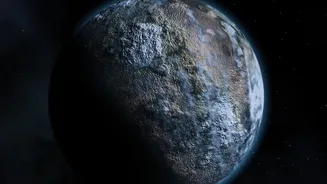
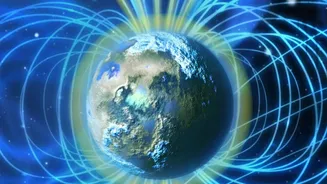
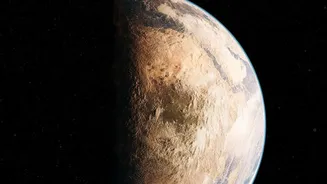
For life as we know it to exist, a planet needs more than just the right temperature; it needs a protective blanket. An atmosphere shields a world from harsh stellar radiation, regulates its climate, and maintains the pressure needed for liquid water
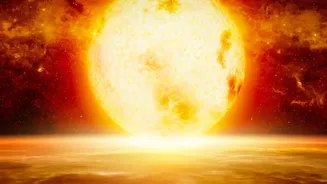
to exist on its surface. Without one, a planet is just a barren rock, exposed to the vacuum of space. The search for extraterrestrial life is, therefore, inextricably linked to the search for planets with stable, life-sustaining atmospheres. However, holding onto this gaseous envelope is a cosmic challenge. Intense radiation and powerful stellar winds from a host star can relentlessly strip a planet's atmosphere away over millions of years, a process known as atmospheric escape. Understanding where and why this happens is critical to narrowing down the search for a true Earth-twin.
Webb’s Unprecedented Gaze
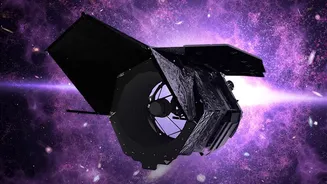
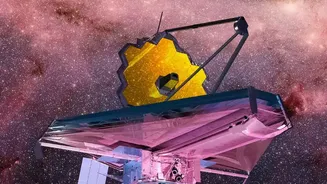
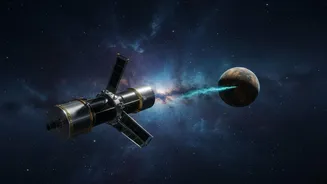
This is where the James Webb Space Telescope (JWST) represents a monumental leap forward. As a successor to Hubble, its powerful infrared instruments allow it to peer into the atmospheres of distant exoplanets with unparalleled clarity. The primary method used is called transit spectroscopy. As an exoplanet passes in front of its star from our point of view, the starlight filters through the planet's atmosphere. Different gas molecules absorb specific wavelengths of light, leaving a unique chemical fingerprint that JWST can read. This allows scientists not only to identify the composition of an atmosphere—detecting water, methane, or carbon dioxide—but also to observe the gas as it is actively escaping the planet's gravitational pull. For the first time, we can watch this dramatic process of atmospheric loss in near real-time.
A Case Study in Atmospheric Erosion
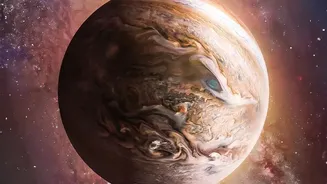
Recent JWST observations of exoplanet WASP-107b, a low-density giant known as a 'super-puff', have provided a stunning example of this phenomenon. The telescope detected a colossal cloud of helium being violently stripped from the planet. This escaping gas forms an enormous tail that stretches for vast distances, so large that it actually precedes the planet in its orbit around its star. By studying the size and shape of this escaping gas, scientists gain crucial insights into how a planet's atmosphere evolves under the intense heat of a nearby star. Similarly, studies of other worlds, like the rocky super-Earth LHS 1140 b, have detected helium leaking away, giving the first hints of an atmosphere on a potentially habitable world. These findings are vital data points in a massive cosmic puzzle.
Redefining the 'Goldilocks Zone'
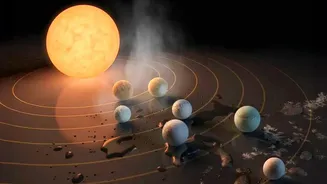
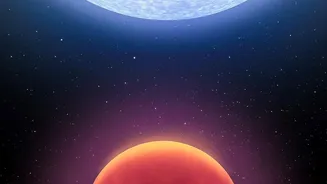
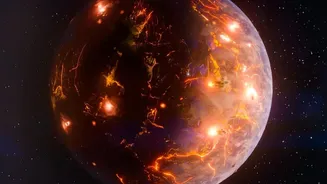
These discoveries are forcing a major rethink of the 'habitable zone'—the orbital band around a star where temperatures could allow for liquid water. It's becoming clear that a planet's distance from its star is only part of the story. The type of star matters immensely. M-dwarf stars, the most common in our galaxy, are known to be particularly active, unleashing powerful stellar winds and radiation that can erode the atmospheres of even well-positioned planets. JWST's observations have shown that many rocky planets orbiting these stars appear to be bare rocks, their atmospheres long gone. The new data suggests habitability isn't just about location; it's about a planet's ability to withstand its star's onslaught and retain its protective atmospheric shield over billions of years. This adds a crucial layer of complexity to the search for life.