
The Tools of the Trade
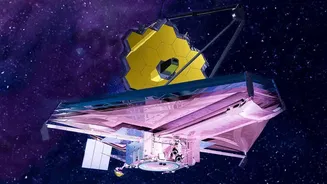
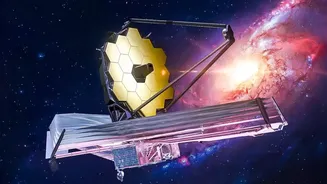
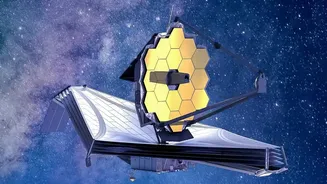
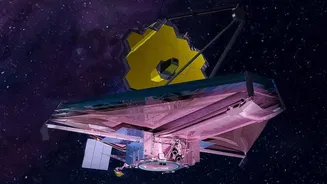
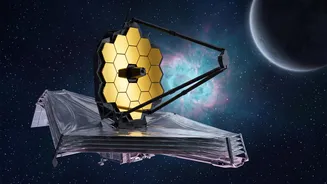
The undisputed star of exoplanet atmospheric detection is NASA's James Webb Space Telescope (JWST). While its predecessor, the Hubble Space Telescope, could identify some atmospheric components, JWST's power and precision have taken this science to a new
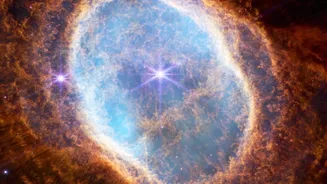
level. It is equipped with highly sensitive infrared instruments, such as the Near-Infrared Imager and Slitless Spectrograph (NIRISS), that are perfectly tuned for this work. These sensors are the billion-dollar eyes that allow scientists to probe worlds that are unimaginably far away. Think of the JWST not just as a telescope, but as a premier data-gathering enterprise, delivering unprecedented insights into the cosmos. Its mission is to capture light that has traveled for millions or even billions of years, providing a return on investment measured in groundbreaking scientific discoveries.
How to Read an Alien Atmosphere
The primary technique used is called transmission spectroscopy. It sounds complex, but the concept is elegantly simple. When an exoplanet passes in front of its host star from our point of view—an event called a 'transit'—a tiny fraction of the starlight filters through the planet's atmosphere. The gases in that atmosphere absorb light at very specific wavelengths. Each chemical, whether it's water vapor, methane, or carbon dioxide, leaves a unique 'fingerprint' or 'signature' in the starlight that reaches the telescope. By analyzing the spectrum of light before and during the transit, scientists can see which wavelengths of light have been absorbed and therefore determine what the planet's atmosphere is made of. It’s like seeing a rainbow with very specific colors missing—those missing pieces tell you what’s in the air over there.
The Signature of Water
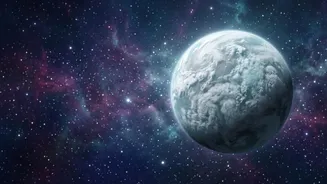
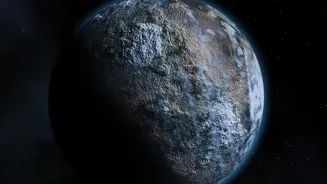
Water (H2O) has a very distinct and recognizable absorption signature that JWST and other telescopes are designed to look for. When starlight passes through an atmosphere containing water vapor, the water molecules absorb some of that light, creating tell-tale dips in the spectrum. The detection of this signature is a landmark moment in studying any exoplanet. For example, JWST captured the clear signature of water in the atmosphere of the hot gas giant WASP-96 b. More recently, it has detected water vapor in the atmospheres of smaller worlds, including the 'steam world' GJ 9827 d and the 'sub-Neptune' TOI-421 b. These discoveries are critical because water is a key ingredient for life as we know it, and finding its gaseous form is a vital first step in assessing a planet's potential habitability.
More Than Just Water
Detecting water vapor is thrilling, but it's just one piece of the puzzle. The real goal is to understand the planet's complete atmospheric chemistry. Scientists also search for other molecules like methane, carbon dioxide, and carbon monoxide. The presence, or absence, of these gases provides a much richer picture of the planet's environment. For instance, on the exoplanet WASP-80 b, JWST detected both methane and water vapor. On K2-18b, a planet in its star's habitable zone, Hubble first detected water vapor, sparking intense follow-up study. However, it's important to temper expectations. The detection of water vapor means gaseous steam, often at incredibly high temperatures, not flowing liquid oceans. The planet GJ 9827d, for instance, has an atmosphere rich in water vapor but is as hot as Venus, making it an inhospitable, steamy world. These findings help scientists build models of how planets form and evolve, bringing us closer to understanding the diversity of worlds in our galaxy.