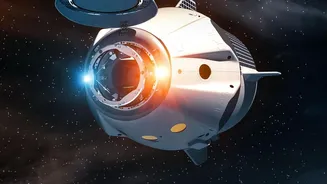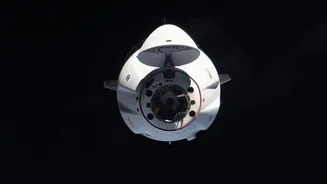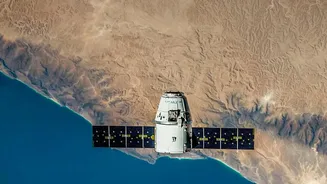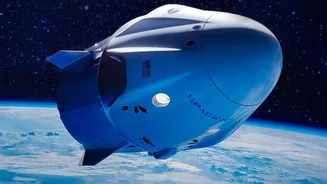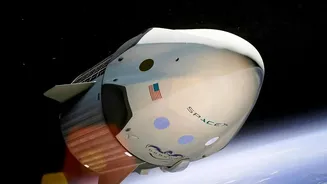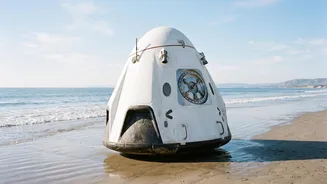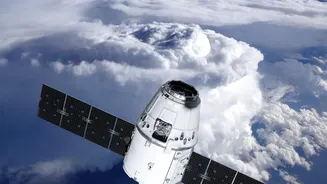



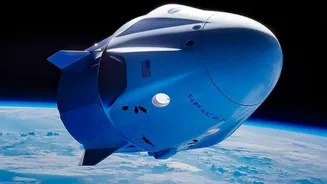
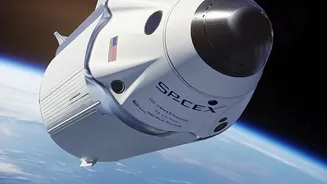

A special delivery from orbit has safely returned to Earth. The SpaceX CRS-35 mission's Dragon capsule splashed down, bringing home not just cargo, but a treasure trove of frozen scientific experiments poised to unlock new discoveries.
A Successful Return From Orbit
SpaceX's 35th Commercial
Resupply Services (CRS-35) mission for NASA concluded successfully with the splashdown of its Dragon cargo capsule in the Pacific Ocean on Saturday, November 21. The uncrewed spacecraft undocked from the International Space Station (ISS) a day prior, on November 20, beginning its 29-hour journey back through Earth's atmosphere. This return is a critical final step for dozens of scientific investigations conducted in the unique microgravity environment of the orbiting laboratory. While delivering supplies to the station is vital, the Dragon's ability to bring research safely back to Earth is what makes it an indispensable tool for science.
The Coolest Cargo in the Solar System
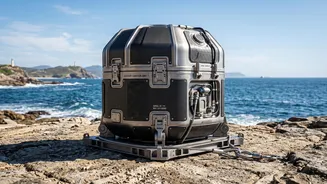
Among the thousands of pounds of returned cargo, the most valuable items are the time-sensitive scientific samples, many of which are kept frozen. These aren't just ordinary lab samples; they are the results of experiments that can only be performed in space. The payload includes 3D-bioprinted blood vessel constructs used to study cardiovascular disease and the aging process. Also on board were frozen tumour organoids—miniature, lab-grown models of human tumours—that were exposed to chemotherapy treatments in space. By studying these in a near-weightless environment, where cellular structures grow differently than on Earth, scientists hope to gain new insights into cancer and develop more effective, personalized treatments.
Why Microgravity Matters
Conducting experiments in microgravity offers a unique perspective that is impossible to replicate on Earth. Gravity influences nearly every physical and biological process, from the way fluids mix to how cells grow. By removing gravity from the equation, researchers can observe the fundamental behaviors of materials and living organisms. For example, protein crystals—essential for designing new drugs—can grow larger and more perfectly in space, revealing their structure in greater detail. Similarly, studying how the human body adapts to weightlessness, such as bone density loss and muscle atrophy, provides invaluable data for understanding conditions like osteoporosis back on Earth.
From Splashdown to Laboratory
The mission doesn't end when the capsule hits the water. A rapid recovery process is crucial. Once the Dragon is secured on a SpaceX recovery vessel, time-sensitive scientific samples are prioritized. The frozen state of many biological samples must be maintained to prevent degradation and preserve the integrity of the data collected in space. This is why the capsule splashes down near the coast, allowing for quick transport of the precious cargo. A helicopter is often used to fly the most critical experiments to land, rushing them to NASA's facilities and the principal investigators across the country who have been eagerly awaiting their return. This quick turnaround ensures the samples are analyzed in as close to their in-orbit state as possible.
The Commercial Artery to Space
The CRS-35 mission highlights the mature partnership between NASA and commercial companies like SpaceX. These commercial resupply services are the logistical backbone of the ISS, providing a steady flow of supplies, hardware, and new experiments to the station. The Dragon is currently the only cargo vehicle capable of returning significant amounts of cargo, making it a two-way highway for science. This model allows NASA to focus on its core exploration and research goals while leveraging the innovation and efficiency of the private sector to handle the vital task of orbital logistics. Each successful mission, from launch to return, reinforces the strength of this commercial space ecosystem and its role in advancing human knowledge.