




The Fiery Gulmohar
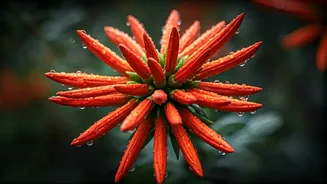
There is perhaps no greater spectacle to announce the arrival of the rains than the Gulmohar (Delonix regia). Also known as the Flame Tree, its branches erupt in a riot of scarlet and orange blossoms, often blanketing the entire canopy. After a long,
scorching summer, the sight of a Gulmohar in full bloom against a grey, cloudy sky is a dramatic and welcome relief. Its fallen petals create a fiery carpet on the roads and footpaths, turning a simple walk into a cinematic experience. This tree isn't just a plant; it's an event, a loud and proud declaration that the season of renewal has begun. Finding a Gulmohar shedding its flowers in the first monsoon shower is a core memory for many across India.
The Golden Shower of Amaltas
While it often begins blooming in the searing heat of late summer, the Amaltas (Cassia fistula) truly comes into its own as the monsoon approaches. Its long, drooping clusters of brilliant yellow flowers earn it the name 'Golden Shower Tree'. The beauty of Amaltas lies in its graceful cascade, like weeping willows made of sunshine. As the first rains wash away the dust, the yellow seems to become even more intense, a vibrant contrast to the deepening green of its leaves. It serves as a beautiful bridge between the harshness of summer and the life-giving relief of the monsoon, its golden chains a promise of the lushness to come.
The Intoxicating Jasmine
If the monsoon had a signature scent, it would undoubtedly be jasmine. Varieties like Mogra, Juhi, and Chameli release their heady fragrance most powerfully in the cool, humid evenings of the rainy season. The tiny white flowers, symbols of purity and love, are a staple in Indian households. Women weave them into their hair, they are offered in temples, and a simple string of Mogra can perfume an entire room. The moisture in the air seems to hold and amplify their scent, making a walk past a jasmine bush an intoxicating experience. It’s a fragrance that’s deeply woven into our culture, evoking feelings of nostalgia, comfort, and quiet joy.
The Humble Hibiscus
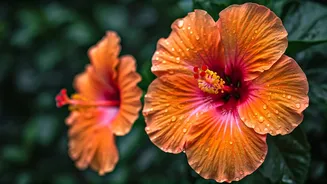
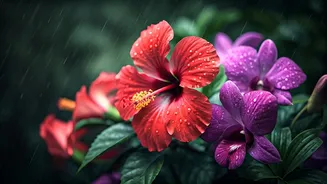
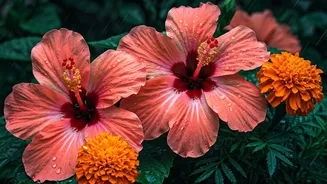
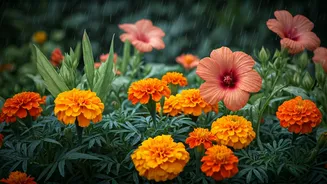
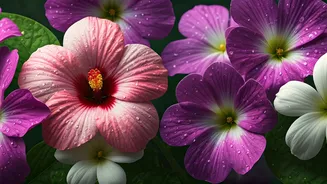
The ever-present Hibiscus (Gudhal) might seem common, but it's the reliable workhorse of the monsoon garden. While it blooms year-round, it puts on a particularly spectacular show during the rainy season. The humidity encourages a flush of large, vibrant flowers in shades of deep red, sunny yellow, bright pink, and pure white. Its simple, open-faced charm is a daily dose of happiness. These flowers are not just ornamental; they are used in prayers, particularly for offerings to Lord Ganesha, and even in traditional hair care concoctions. Its resilience and cheerful colours make it a beloved fixture, a simple pleasure that thrives when the skies open up.
The Delicate Champa
The Plumeria, or Champa, is the flower of serenity. Its waxy, elegant petals and sweet, complex fragrance are often associated with temples and peaceful courtyards. During the monsoon, its perfume seems to hang heavy and travel farther on the moist air. The flowers, typically white with a yellow centre but also found in shades of pink and red, look especially pristine with tiny raindrops clinging to their petals. Unlike the dramatic Gulmohar, the Champa offers a more subtle, contemplative beauty. It’s the scent you catch on a quiet afternoon breeze, a reminder to pause and appreciate the tranquil side of the season.
The Cheerful Balsam
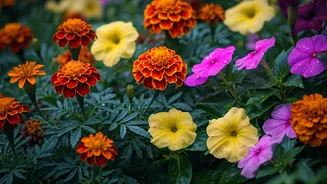
Often found in home gardens and pots, the Balsam (Impatiens balsamina) is a true monsoon specialist. These low-growing annuals spring to life with the rains, producing a profusion of jewel-toned flowers in shades of pink, purple, red, and white. They are sometimes called 'touch-me-nots' because their ripe seed pods burst open when touched, a playful feature that delights children. Against the lush, dark green foliage that defines the monsoon landscape, the bright pops of colour from a bed of Balsam are incredibly cheerful. They represent the small, simple joys of the season, thriving in the wet conditions that might challenge other plants.