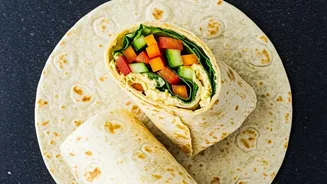







There's little more disappointing than opening your lunchbox to find a sad, soggy wrap. The fillings you so carefully prepared have turned the roti into a mushy mess. But it doesn’t have to be this way. Here’s how to win the war against wrap sogginess.
Create a Moisture Barrier
The single most effective strategy is to create a barrier between your wet ingredients and the roti or tortilla. Spreads like thick hummus, mayonnaise, cream cheese, or even a slice of cheese can act as a seal, preventing moisture from seeping into the bread. Spread a thin, even layer across the entire surface of the wrap before adding any other fillings. Large, dry lettuce or spinach leaves also make an excellent, healthy barrier. Place them down first to shield the roti from wetter items like tomatoes or cucumbers.
Prep Your Fillings Smartly
The journey to a crisp wrap begins long before assembly. First, cool all cooked fillings to room temperature before adding them to the wrap. Hot fillings create steam, which condenses and leads to a soggy mess. For your vegetables, manage their water content. Pat notoriously 'wet' ingredients like sliced tomatoes, cucumbers, and pickles with a paper towel to remove excess moisture before adding them. Better yet, use cherry tomatoes instead of chopped ones to minimize liquid leakage. If your recipe includes roasted vegetables, be mindful not to use too much oil, as that can also contribute to sogginess once cooled.
Master the Art of Layering
The order in which you stack your ingredients is crucial. Once your moisture barrier is in place, follow a simple rule: driest ingredients next, wettest ingredients in the middle. Place items like shredded carrots, cabbage, or firm proteins on top of your leafy green or spread barrier. The most watery components, such as salsa, dressings, or juicy tomatoes, should be nestled in the very centre, cushioned by the drier ingredients on all sides. This strategic layering keeps the moisture contained and far from the bread. For maximum freshness, consider packing very wet components like dressings or chutneys in a separate small container to add just before eating.
Choose and Prepare Your Roti or Wrap
Not all wraps are created equal. Sturdier options like whole wheat, spinach, or other high-fibre tortillas tend to hold up better against moisture than plain flour ones. When using homemade rotis, ensure they are cooked properly and allowed to cool slightly before use. Packing a roti straight from the pan traps steam, which is a primary cause of sogginess. A useful trick is to gently warm the roti or tortilla in a dry skillet for a few seconds on each side before assembling. This makes it more pliable for rolling and can help create a slightly less absorbent surface.
Roll Tightly and Wrap Correctly
A loose roll is an invitation for fillings to shift and moisture to spread. When assembling, place your fillings slightly off-centre, fold in the sides, and then roll from the bottom up as tightly as you can without tearing the bread. For storage, especially if you're making it ahead of time, the wrapping material matters. Avoid plastic wrap, which traps moisture and accelerates sogginess. Instead, use parchment paper or wax paper. These materials allow the wrap to breathe a little while still keeping it securely bundled. For a snug fit, roll the wrap in the paper, fold in the sides, and tuck the ends securely.