





Your Vehicle: The First Line of Defence
Before you even think about hitting the road, a thorough vehicle check is non-negotiable. Your safety hinges on a well-maintained car. Pay special attention to your tyres; they need to have sufficient tread to grip wet roads and prevent hydroplaning.
Ensure your brakes are in top condition, as they are critical for navigating steep descents safely. Equally important are your wipers and lights. Replace worn-out wiper blades that leave streaks, as clear vision is paramount. Check that all your lights—headlights, tail lights, and indicators—are functioning perfectly. A clean windshield, both inside and out, can also significantly reduce glare from oncoming traffic at night.
Mastering the Art of Night Driving in Rain
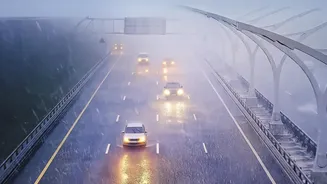
Driving at night significantly reduces visibility, and rain complicates it further. Use your low-beam headlights in heavy rain; high beams can reflect off the downpour and cause glare, blinding both you and oncoming drivers. Reduce your speed considerably. Posted speed limits are for ideal, dry conditions, not for winding, wet ghat roads in the dark. Maintain a much longer following distance from the vehicle ahead, as stopping distances increase dramatically on wet surfaces. One of the most common mistakes is using cruise control on wet roads—avoid it completely. If you start to hydroplane, your car might try to accelerate, making a bad situation worse.
Ghat-Specific Driving Techniques
Ghat roads have their own set of rules. When driving downhill, rely on engine braking by shifting to a lower gear. This helps control your speed without overheating your brakes, which you'll need for sudden stops. Be gentle and smooth with your steering, acceleration, and braking. Sudden, jerky movements can easily lead to a skid on slippery surfaces. When taking sharp, blind corners, which are common in ghats, honk to alert vehicles that might be coming from the other side. Be extra vigilant for potential hazards like fallen rocks, potholes hidden by water, and small streams flowing across the road.
Beware of Monsoon-Specific Hazards
The monsoon brings unique dangers, especially in hilly areas. Landslides are a real risk, so be wary of sections with unstable-looking slopes. It's often safer to stick to main highways and avoid lesser-known shortcuts that mapping apps might suggest, as these can be poorly maintained and more prone to blockages. If you encounter a waterlogged section of road, do not attempt to drive through it unless you are certain it is shallow. It only takes about a foot of rushing water to sweep a car away. Always prioritize safety over speed; if conditions seem too dangerous, it is better to pull over at a safe location and wait for the weather to improve.
The Overnight Challenge: Combating Fatigue
Driving overnight introduces the significant risk of driver fatigue, which can be as dangerous as driving impaired. Ensure you are well-rested before you begin your journey. Plan for regular breaks every couple of hours to stretch, have a coffee, and refresh yourself. Driving at night, especially during hours when you would normally be asleep, significantly increases the risk of an accident. If you feel drowsy, with symptoms like frequent yawning or difficulty keeping your eyes open, pull over immediately in a safe, well-lit area and take a nap. Sharing the driving responsibility with a co-passenger can also make a huge difference.
Pack an Essential Emergency Kit
Being prepared for the unexpected is crucial. Your emergency kit should be tailored for a monsoon trip. Include a powerful, waterproof flashlight with extra batteries (a phone torch isn't enough), a first-aid kit with essential medicines, and a high-visibility jacket. A tyre inflator and a puncture repair kit are invaluable, as is knowing how to use them. Pack non-perishable snacks and plenty of drinking water in case you get stranded. A tow rope, jumper cables, and basic tools like duct tape and zip ties can provide temporary fixes to get you to safety. A power bank for your phone is also a modern necessity to ensure you can call for help.