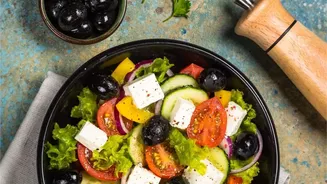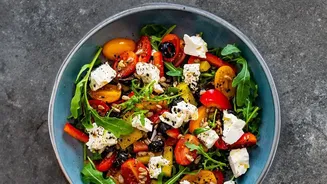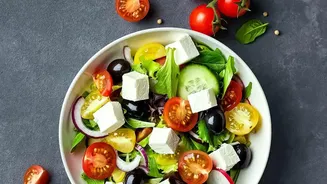




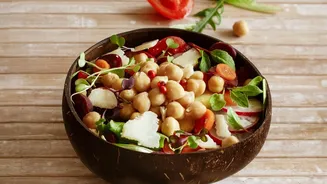

Understanding 'Feta' vs. 'Feta-Style'
Before you even get to the salad, it helps to know what you're buying. True 'Feta' has a Protected Designation of Origin (PDO) status in the European Union. This means that to be called Feta, the cheese must be produced in specific regions of Greece using
at least 70% sheep's milk, with the remainder being goat's milk. This traditional method gives it a distinct, complex, and sometimes earthy flavour. Cheeses labelled 'feta-style' or 'salad cheese' are often made from cow's milk, which results in a milder, creamier, and less tangy product. They are still delicious but offer a different taste experience. Knowing the difference helps you choose the right block for the flavour profile you want.
How to Choose the Best Block
For the best flavour and texture, always opt for feta sold in a block, preferably one that is packed in brine. The pre-crumbled varieties are convenient but tend to be drier and less flavourful. The brine is essential; it's what keeps the cheese moist, seasoned, and fresh. When you have a choice, look at the ingredients. A sheep's milk feta will generally be creamier and more flavourful than one made from cow's milk. Some artisanal or barrel-aged fetas offer an even deeper, more concentrated taste, perfect for when the cheese is the star of the dish.
The Secret to Proper Storage
Once you open your feta, the golden rule is to keep it wet. Never store it dry in plastic wrap, as it will quickly become hard and overly salty. If the cheese came in brine, keep it submerged in that liquid in a sealed container in the coldest part of your fridge. If you bought a block without brine, you can easily make your own by dissolving about one teaspoon of salt in a cup of cold water. Place the leftover feta in an airtight container and pour the homemade brine over it until it's fully covered. Stored this way, it will maintain its creamy texture and balanced flavour for weeks.
Marinate It for an Instant Upgrade
One of the easiest ways to add an extra layer of flavour to your salad is to marinate the feta. Cut a block of feta into cubes and place them in a jar. Add your favourite aromatics—smashed garlic cloves, strips of lemon peel, sprigs of rosemary or thyme, and a pinch of chilli flakes are all excellent choices. Pour good quality extra virgin olive oil over the cheese until it's completely submerged. Let it sit for at least a few hours, or even overnight in the fridge. The cheese will absorb all those beautiful flavours, and you're left with a flavour-infused oil that makes a fantastic base for your salad dressing.
Try Whipping It for a Creamy Base
For a completely different texture, try making whipped feta. It creates a creamy, dreamy base that you can spread on the bottom of a plate before topping with salad ingredients. To make it, simply crumble a block of feta into a food processor with a bit of Greek yogurt, a squeeze of lemon juice, and a drizzle of olive oil. Blend until the mixture is smooth and fluffy, scraping down the sides as needed. Be careful not to over-process, or it can become watery. This creamy spread works beautifully with crisp vegetables like cucumbers, tomatoes, and peppers.
Bake It for a Warm, Gooey Centrepiece
Baking feta transforms its texture from crumbly to wonderfully soft, warm, and gooey. Place a whole block of feta in a small baking dish, drizzle it with olive oil and honey, and sprinkle with herbs like oregano and some chilli flakes. You can surround it with cherry tomatoes, olives, and sliced onions before baking. Bake at around 200°C for 15-20 minutes, or until the cheese is soft and the tomatoes have started to burst. You can then place the entire warm block on top of a bed of greens or serve it alongside your salad with crusty bread for dipping.