



The End of Trial and Error
For decades, shopping for foundation involved swatching stripes on your jawline under harsh store lighting, only to get home and realize the colour is completely wrong. It's a universal frustration. Studies have shown that a significant number of online
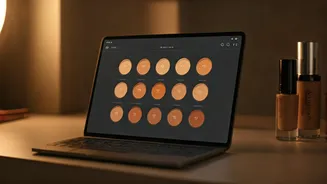
beauty shoppers have abandoned a purchase because they couldn't choose the right shade, and nearly as many have returned a product for the same reason. This uncertainty is what AI-powered tools aim to eliminate. By replacing broad categories like 'fair' or 'medium' with data-driven precision, AI promises a hyper-personalized match that old-school methods can't compete with. The goal is to give you the confidence to buy the right product the first time.
How It Actually Works
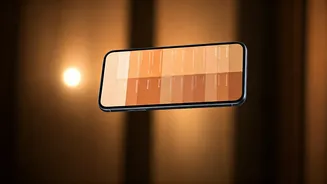
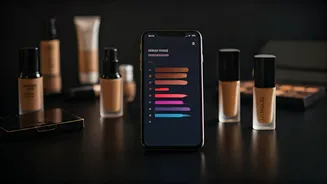
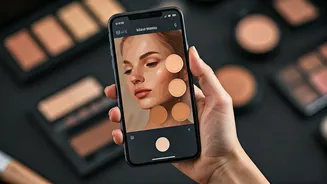
So, how does your phone suddenly know your perfect foundation shade? It’s a mix of sophisticated technologies. Many tools use your smartphone's camera to perform a skin analysis. Using computer vision, an AI algorithm scans your skin to detect not just your overall skin tone but also your subtle undertones—the cool, warm, or neutral hues beneath the surface. It analyzes millions of data points and can even be trained to account for texture and skin concerns like redness. Some platforms combine this with a quiz about your skin type (oily, dry, combination), desired coverage (light, medium, full), and preferred finish (matte, dewy). The system then cross-references this unique profile with a massive database of products to recommend your ideal match.
The AI Beauty Counter
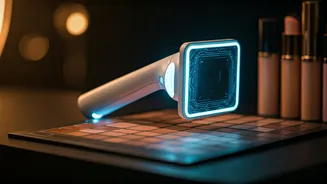
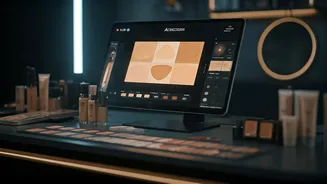
Several major brands and retailers are already pioneering this technology. Sephora’s Color iQ service, which has evolved since its introduction, uses a handheld device in-store to scan your skin and provide a precise shade number. This code can then be used to find matching products across various brands. Online, brands like Il Makiage use a detailed quiz powered by machine learning to pinpoint a match, boasting high accuracy rates. L'Oréal has developed its 'Beauty Genius', an AI assistant that provides personalized diagnostics for skin tone and recommends products from its extensive catalogue, even allowing for virtual try-ons using augmented reality. These tools are not just for shade matching; they can suggest entire palettes, including concealers and powders that harmonize with your complexion.
Beyond the Perfect Shade
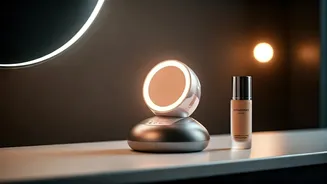
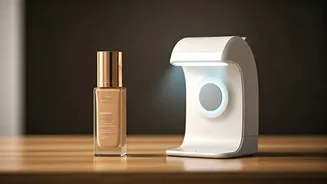
The personalization AI offers goes far deeper than just colour. The next wave of beauty tech is about bespoke formulas. L'Oréal's Perso, for example, is a device that creates custom skincare and, in the future, foundation formulas on the spot. It analyzes your skin in real-time, considers environmental factors like humidity and UV index from your location, and accounts for your personal concerns like fine lines or pore size. It then dispenses a single, perfectly blended dose of product tailored to your exact needs for that specific day. This level of customization moves the industry from mass production to creating products for an audience of one, turning your bathroom counter into a personal beauty lab.
Is It a Flawless System?
While impressive, AI foundation matching isn't foolproof. The biggest challenge for at-home tools is lighting. A selfie taken in a dimly lit room versus one in natural daylight can yield very different results, affecting the accuracy of the shade recommendation. To get the best results, always use natural daylight and ensure your face is clean and makeup-free. There are also ongoing conversations around algorithmic bias to ensure these tools are inclusive and perform accurately across the full spectrum of diverse skin tones. While the technology is powerful, some experts believe the most accurate results come from systems that combine AI's precision with the trained eye of a human makeup artist, blending the best of both worlds.