





Big Ideas on a Tiny Scale
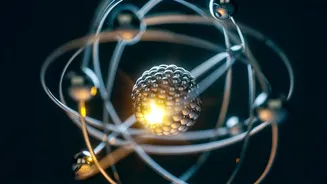
First, what exactly is nanotechnology? Imagine engineering materials at the atomic and molecular level, working with particles that are up to 100,000 times smaller than the width of a human hair. At this minuscule scale, materials like carbon, gold, and silicon
take on unique and powerful properties. They can become stronger, more conductive, or better at catalysing reactions. The Bengaluru India Nano conference, held from August 3-5, brings together scientists, industry leaders, and policymakers to discuss how to harness these unique properties for real-world applications. One of the most urgent and promising of these applications is in the energy sector.
Solving India's Energy Equation
India's appetite for energy is growing rapidly, projected to increase faster than any other major economy over the next few decades. Meeting this demand while also committing to a sustainable future is a monumental challenge. The government has pushed for renewable energy integration and greater efficiency, but current technologies have limitations. This is where the discussions at Bengaluru India Nano 2026 become so critical. Nanotechnology offers a pathway to enhance energy efficiency, improve renewable energy generation, and develop better storage solutions, impacting every part of the energy value chain.
Supercharging Solar Power
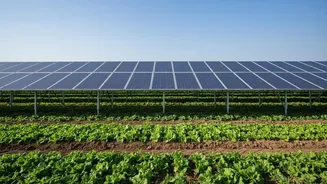
Solar energy is a cornerstone of India's renewable strategy, but conventional silicon solar panels have efficiency limits. Nanotechnology promises a significant leap forward. At the conference, a key focus is on materials like quantum dots—tiny semiconductor particles that can absorb a much wider spectrum of sunlight than traditional cells. This could dramatically increase the energy conversion efficiency of solar panels. Another innovation involves using nanomaterials to create coatings that allow panels to clean themselves, or nanowires that improve charge transport, reducing the amount of energy lost as heat. These advancements could make solar power cheaper and more effective, even on cloudy days.
The Next Generation of Batteries
A renewable energy system is only as good as its ability to store power for when the sun isn't shining or the wind isn't blowing. Energy storage is another area where nanotechnology is proving to be a game-changer. By engineering battery components at the nanoscale, researchers can drastically increase their energy density, allowing them to store more power in a smaller space. Materials like graphene and carbon nanotubes are being used to create electrodes that are more stable and can charge much faster. This has enormous implications for everything from grid-scale storage to making electric vehicles more practical and affordable for the Indian market.
From the Lab to the Grid
The theme of this year's summit, "Nanotech's Next Frontier: AI & Beyond – Conceive, Converge, Commercialize," underscores a critical point: these ideas must move out of the laboratory and into the market. Bengaluru, as India's premier tech hub, is the ideal platform for this convergence of science, industry, and policy. The event features sessions focused on scaling up production, creating investment strategies, and navigating regulatory frameworks. For nanotechnology to truly transform India's energy landscape, collaboration between academic institutions like IISc Bangalore, government bodies that run the National Nano Mission, and private industry is essential to overcome challenges like high production costs and scalability.