

Squats and lunges are staples in nearly every fitness plan, but are you getting the most out of them? Building stronger thighs isn't just about movement, but about intention. Let's break down how to perfect these powerhouse exercises.
The Foundation of Lower-Body Strength
When it comes to
building stronger thighs, few exercises offer the fundamental power of squats and lunges. These movements are considered foundational because they require no equipment and target the largest muscle groups in your body. Squats are a bilateral exercise, meaning they work both legs at the same time, making them ideal for building overall strength and muscle mass in the quads, hamstrings, and glutes. Lunges, on the other hand, are a unilateral exercise, working one leg at a time. This challenges your balance and stability, engaging smaller stabilising muscles and helping to correct strength imbalances between your left and right side. Together, they form a comprehensive plan for leg development.
Decoding the Squat
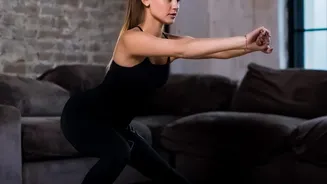
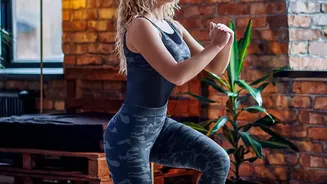
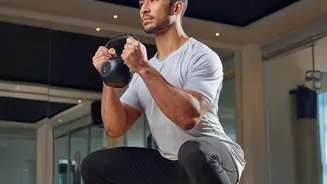
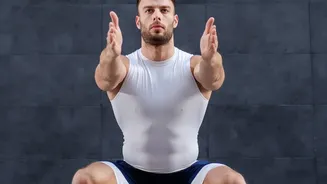
A proper bodyweight squat is the bedrock of leg training. To perform one correctly, stand with your feet about shoulder-width apart, with your toes pointing slightly outward. Begin the movement by pushing your hips back as if you're about to sit in a chair, then bend your knees. Keep your chest lifted and your back straight. Lower yourself until your thighs are at least parallel to the floor, or as low as you comfortably can without your heels lifting off the ground or your back rounding. Then, drive through your heels to return to the standing position. Common mistakes include letting your knees cave inward, lifting your heels, or starting the movement by bending your knees instead of your hips.
Mastering the Lunge
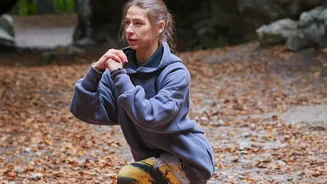
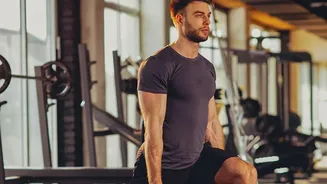
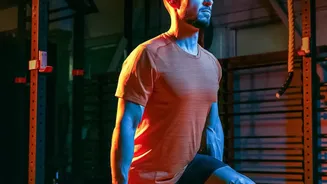
Lunges introduce an element of coordination and balance that builds functional strength. To do a forward lunge, stand with your feet hip-width apart. Step one foot forward and lower your hips until both knees are bent at approximately a 90-degree angle. Your front knee should be directly above your ankle, and your back knee should hover just above the ground without touching it. It's crucial to avoid a 'tightrope' stance where your feet are in a direct line; instead, imagine your feet are on separate train tracks to maintain a stable base. Common errors include stepping too far forward, which puts stress on the back knee, or letting the front knee travel past the toes. Push off the front foot to return to the start.
From Movement to 'Practice'
The key to transforming these exercises from simple movements into a strength-building 'practice' lies in the principle of progressive overload. This means continually challenging your muscles so they are forced to adapt and grow stronger. With bodyweight training, you don't add weight plates; instead, you increase the difficulty in other ways. You can add more repetitions or sets, slow down the movement to increase time under tension, or introduce pauses at the most challenging part of the exercise, like holding the bottom of a squat. Another method is to progress to more difficult variations, such as jump squats or single-leg squats, once you have mastered the basic form. This focus on quality and progression is what builds true, lasting strength.