





1. Seated Cat-Cow
This classic yoga pose is adapted for your chair to gently increase spinal flexibility. Sit on the edge of your seat with your feet flat on the floor and hands on your knees. As you inhale, arch your back, lift your chest, and look forward (Cow). As you exhale,
round your spine, tuck your chin to your chest, and pull your belly button inward (Cat). Focus on initiating the movement from your pelvis and let the rest of your spine follow. Repeat this fluid motion for 8-10 cycles, linking your breath to the movement.
2. Shoulder Blade Squeezes
This simple move activates the weakened muscles between your shoulder blades, which are often overstretched from slouching. Sit tall with your feet flat on the floor and your arms at your sides, elbows bent at 90 degrees. Without shrugging your shoulders up, gently squeeze your shoulder blades together and down, as if you're trying to hold a pencil between them. Hold the squeeze for 5 seconds, then release. Aim to complete 10-15 repetitions to help reset your posture.
3. Seated Spinal Rotation
Sitting still for hours can make your mid-back (thoracic spine) incredibly stiff. This rotation helps to gently mobilize it. Sit upright in your chair and cross your arms over your chest. Keeping your hips still, slowly twist your upper body to the right as far as feels comfortable. Hold for a few seconds, breathing steadily, then return to the center and rotate to the left. Perform 5-10 rotations to each side, focusing on a controlled, gentle twist through your mid-back.
4. Upper Trapezius Stretch
The trapezius muscle runs from your neck down to your mid-back and is a common site of tension from desk work. To stretch it, sit tall and gently tilt your right ear toward your right shoulder. You can increase the stretch by placing your right hand on the left side of your head and applying very gentle pressure. To deepen it further, sit on your left hand to anchor the shoulder down. Hold for 20-30 seconds, then slowly release and repeat on the other side.
5. Chin Tucks
This exercise directly counteracts 'forward head posture,' which strains the muscles in your neck and upper back. Sit or stand tall, looking straight ahead. Gently draw your chin straight back, creating a 'double chin' without tilting your head up or down. You should feel a gentle stretch at the base of your skull and an activation of the muscles in the front of your neck. Hold for 3-5 seconds and release. Repeat 10 times to help realign your head over your shoulders.
6. Chest Opener (Behind-Back Clasp)
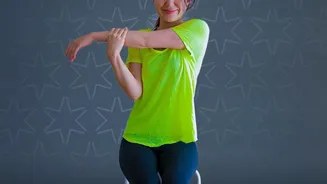
Constant rounding forward tightens the chest muscles. Opening them up provides relief to the opposing muscles in your upper back. While sitting or standing, clasp your hands behind your lower back. Straighten your arms and gently lift your hands away from your body, squeezing your shoulder blades together. You should feel a broad stretch across your chest and the front of your shoulders. Hold for 20-30 seconds while breathing deeply. This is an excellent counter-movement to a slouched posture.
7. Overhead Reach
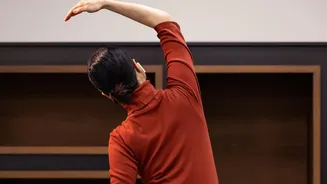
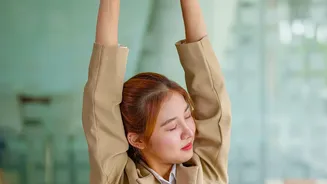
A full-body reach helps decompress the spine and stretch the sides of your body. Sit tall in your chair with your feet planted firmly. Interlace your fingers and raise your arms straight above your head, palms facing the ceiling. Push your arms up and slightly back to feel a stretch through your arms, shoulders, and upper back. To add a side stretch, lean gently to the right, hold for a breath, then lean to the left. Hold the main upward stretch for 15-20 seconds.