






What is the Invitation?
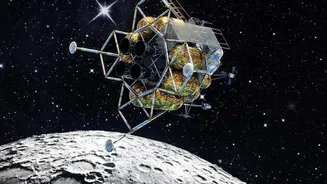
During the ninth U.S.-India Civil Space Joint Working Group meeting in Bengaluru, NASA extended a formal invitation for ISRO to participate in its plan to build a permanent human outpost on the Moon. This isn't just a friendly gesture; it's a strategic
move to deepen the partnership established when India signed the Artemis Accords in 2023. The Accords are a U.S.-led set of principles for cooperation in the civil exploration and use of outer space. While specifics are still being discussed, the invitation opens the door for India to play a direct role in establishing humanity's first long-term residence on another celestial body.
The Artemis Moon Base Explained
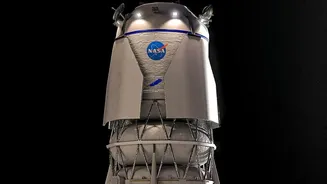
NASA’s plan, part of the broader Artemis program, is about more than just planting flags. The goal is to create a sustainable, long-term presence on the lunar surface, specifically near the Moon's south pole. This region is strategically vital because its permanently shadowed craters are believed to hold vast quantities of water ice. This ice can be mined for drinking water, breathable air, and, crucially, can be processed into rocket propellant. The proposed "Artemis Base Camp" would serve as a home for astronauts, a hub for scientific research, and a proving ground for technologies needed for future missions to Mars. Instead of a go-it-alone approach, NASA’s strategy relies on a coalition of international partners contributing to this massive undertaking.
Why India? Why Now?
India's stock in the space community has never been higher. ISRO has earned a global reputation for cost-effective engineering and executing complex missions, exemplified by its historic Chandrayaan-3 landing near the lunar south pole in 2023—a feat no other nation had accomplished. This success demonstrated a mastery of precision landing and robotic operations in the very region NASA is targeting for its base. For NASA, partnering with ISRO means gaining a capable ally with proven lunar expertise. The invitation builds on existing collaborations, like the joint NASA-ISRO Synthetic Aperture Radar (NISAR) satellite, and solidifies a key alliance at a time when a new era of space competition is taking shape.
A Partnership of Complementary Strengths
This collaboration is a classic case of complementary capabilities. NASA brings its heavy-lift rockets, the Orion crew capsule, and the overall architectural vision for the Artemis program. ISRO, meanwhile, could contribute in numerous ways. Potential contributions range from developing robotic rovers and scientific instruments to designing components for habitats and communication systems. For India, participation is a golden opportunity to accelerate its own ambitious space goals, which include launching a crewed mission (Gaganyaan), building its own space station by 2035, and landing an Indian astronaut on the Moon by 2040. Working on the Moon Base would provide invaluable experience and allow India to leapfrog in developing critical technologies for long-duration spaceflight.
The Geopolitics of a Lunar Alliance
This partnership isn't happening in a vacuum. It represents a significant geopolitical alignment. By building a broad coalition of nations under the Artemis Accords, the United States is creating a collaborative framework for lunar exploration that stands in contrast to the parallel efforts by China and Russia. Deepening space ties with India, the world's largest democracy and a rising technological power, reinforces a shared vision for the peaceful and transparent use of space. The collaboration is a key component of the U.S.-India initiative on Critical and Emerging Technology (iCET), aimed at strengthening strategic ties across multiple high-tech sectors. This move transforms the relationship from a simple partnership to a deep-seated alliance shaping the future of off-world exploration.