





The Rise of the Acidic Palate
For years, the dominant flavour profiles in mainstream food trends have revolved around umami, sweetness, and spice. But a quiet revolution has been bubbling away, and it’s decidedly sour. Chefs, home cooks, and food brands are embracing acidity with
newfound enthusiasm, and vinegar is their primary tool. This isn’t just about adding a simple sour note; it’s about using acid to create balance, complexity, and brightness in dishes. A splash of vinegar can cut through richness, lift dull flavours, and make every other ingredient in a dish sing a little louder. It’s the culinary equivalent of turning up the lights in a dim room—suddenly, you can see everything more clearly. This shift signifies a maturing palate, one that seeks more than just immediate gratification from sugar or salt, craving instead a more layered and memorable tasting experience.
A Global Influence on the Plate
Much of this trend is fuelled by our ever-expanding global palate. As Indian diners become more adventurous, they are embracing cuisines where vinegar is not just an accessory but a cornerstone. Think of Filipino adobo, where chicken or pork is braised in a potent mixture of soy sauce and vinegar, creating a dish that is deeply savoury and addictively tangy. Consider the sharp, refreshing acidity in a Peruvian ceviche, where fish is 'cooked' in citrus juice, or the complex, fermented tang of Korean kimchi that brightens up any meal. The rise of pan-Asian and global tapas-style restaurants across India has introduced these flavour profiles to a wider audience. People are tasting how essential acid is in these cuisines and are beginning to understand its power to transform a meal from good to unforgettable. It’s no longer a foreign concept but an exciting new dimension of flavour to explore.
Not Just for Salads Anymore
The most exciting part of this trend is seeing vinegar break free from its traditional roles. Mixologists are crafting sophisticated cocktails using 'shrubs'—syrups made from fruit, sugar, and vinegar—that offer a tart complexity beer and wine can’t match. Pastry chefs are experimenting with balsamic vinegar glazes on strawberries or even a dash of apple cider vinegar in caramel sauce to balance the intense sweetness. In savoury cooking, its applications are endless. A finishing vinegar, drizzled over a finished dish just before serving, can add a final, vibrant spark. It's used in marinades to tenderise meat, deglazing pans to create flavourful sauces, and even splashed into soups and stews to add a hidden layer of depth. The market is also responding, with artisanal vinegars—from fruity raspberry to smoky malt and delicate rice wine—becoming more readily available in supermarkets.
India’s Own Sour Legacy
While the global trend is new, a love for sourness is deeply embedded in Indian culinary DNA. For centuries, we have used a vast array of souring agents to balance our dishes. From the fruity tang of tamarind (*imli*) in sambar, the subtle sourness of dried mango powder (*amchur*) in North Indian curries, to the unique punch of *kokum* in coastal cuisine and the ever-present use of yogurt and lime. And let’s not forget the incredible diversity of our pickles (*achaar*), which are a masterclass in using vinegar and acid to preserve and flavour. The current trend can be seen as a modern extension of this tradition. Indian chefs are now re-examining local vinegars like Coorg’s smoky *kachampuli* or the sweet-sour Goan coconut vinegar, using them in innovative ways that both honour tradition and push culinary boundaries.
Bringing the Zing Home
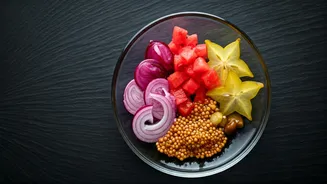
You don't need to be a professional chef to harness the power of vinegar. Start simple. A splash of apple cider vinegar can brighten up a simple dal or a vegetable stir-fry. Try making a quick pickle of sliced onions with a bit of red wine vinegar, sugar, and salt to serve alongside rich curries or grilled meats. When a soup or stew tastes flat, before reaching for more salt, try adding a teaspoon of vinegar—you’ll be amazed at the difference it makes. Don’t be afraid to experiment with different types. A good quality balsamic is perfect for drizzling on roasted vegetables, while a mild rice vinegar works wonders in an Asian-style dressing. The key is to think of vinegar not as a primary flavour, but as a supporting actor that makes the entire cast shine.