




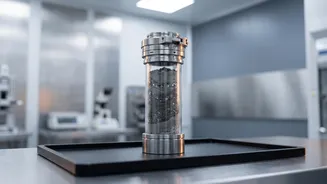

More Than a Pressurised Can
The first image of a space habitat might be a simple, pressurised metal cylinder. While containing a breathable atmosphere is the primary job, modern orbital architecture is a deeply complex discipline. It must protect against a host of threats, both
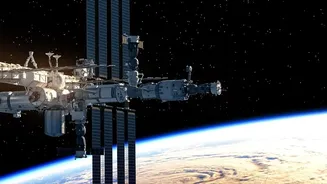
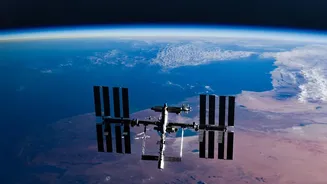
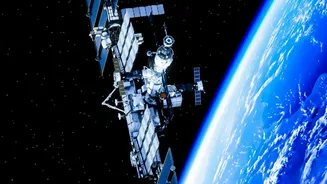
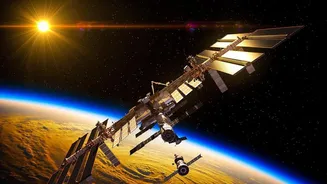
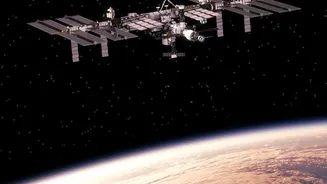
seen and unseen, while also serving as a functional laboratory, workshop, and home. The International Space Station (ISS), a marvel of engineering that has been continuously inhabited for over two decades, is a testament to this complexity. Every component, from its modular design to its life support systems, is engineered with redundancy and crew safety as the paramount concerns. The design philosophy has shifted from mere survival to creating a sustainable environment where crew members can live and work productively over long durations.
Shielding Against Invisible Dangers
Two of the most significant invisible threats in space are radiation and micrometeoroids. Earth's magnetic field and atmosphere protect us from the constant stream of galactic cosmic rays and energetic particles from the sun. Outside this bubble, astronauts are exposed to radiation levels that can increase their lifetime risk of cancer and other health issues. Habitat architects use a combination of passive shielding strategies. This involves carefully selecting materials for the habitat's hull. Interestingly, materials rich in hydrogen, like water or polyethylene, are very effective at blocking this radiation. Some designs even incorporate water storage walls that serve a dual purpose of shielding and life support. While concepts for active magnetic or electric force fields are being explored for future missions, passive shielding remains the primary line of defense today.
A Defence Against Cosmic Bullets
Orbit is not empty; it's filled with micrometeoroids and orbital debris (MMOD) travelling at hypersonic speeds. Even a particle the size of a paint fleck can cause catastrophic damage. To counter this, habitats like the ISS use a multi-layered defence system known as a Whipple shield. Invented by astronomer Fred Whipple, the shield consists of a thin outer bumper placed some distance from the main pressure wall. When a particle strikes the bumper, it shatters into a cloud of smaller, less dangerous fragments that spread their energy over a wider area of the inner wall, preventing a breach. Many modules on the ISS use enhanced versions of this shield, sometimes stuffing the gap with high-strength fabrics like Kevlar and Nextel to further dissipate impact energy.
Creating an Artificial Earth
A habitat's Environmental Control and Life Support System (ECLSS) is the mechanical heart that keeps the crew alive. This complex network of machinery manages atmospheric pressure, controls temperature and humidity, and, most critically, revitalises the air. It scrubs the carbon dioxide exhaled by the crew and removes other trace contaminants. Perhaps most impressively, modern systems are moving towards a closed-loop model. The ECLSS on the ISS, for instance, can recover and recycle about 98% of the water from sources like crew members' breath, sweat, and even urine, purifying it to be perfectly drinkable. This capability is crucial for long-duration missions, as it dramatically reduces the enormous cost and logistical challenge of resupplying water from Earth.
Architecture for the Mind
Protecting the body is only half the battle; long-term isolation and confinement take a significant psychological toll. Modern space architecture increasingly incorporates principles of environmental psychology to support crew well-being. This includes providing private crew quarters for personal time, designing communal areas that foster teamwork, and installing high-quality lighting systems that can mimic natural day-night cycles to regulate sleep. One of the most beloved features of the ISS is the Cupola, a seven-windowed dome that offers breathtaking views of Earth. This connection to home is considered mission-critical for mental health. Researchers at MIT have even developed tools to map how design choices, like layout and reconfigurable spaces, directly impact crew stress, homesickness, and social cohesion.
The Future is Inflatable
Looking ahead, the next generation of orbital habitats may look very different. Companies like the former Bigelow Aerospace and now Sierra Space and Lockheed Martin have developed inflatable or expandable modules. These habitats launch in a compressed form and are then inflated in orbit, providing a much larger internal volume for a fraction of the launch mass and cost. The Bigelow Expandable Activity Module (BEAM) has been attached to the ISS since 2016, demonstrating the viability of the technology. The multi-layered fabric walls, made of materials like Vectran, are incredibly strong and offer excellent protection against radiation and micrometeoroids. Companies like Axiom Space plan to use this technology for their commercial space stations, promising more spacious and comfortable orbital homes.