


A Sweet Find Near the Galaxy's Heart
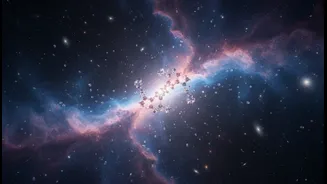
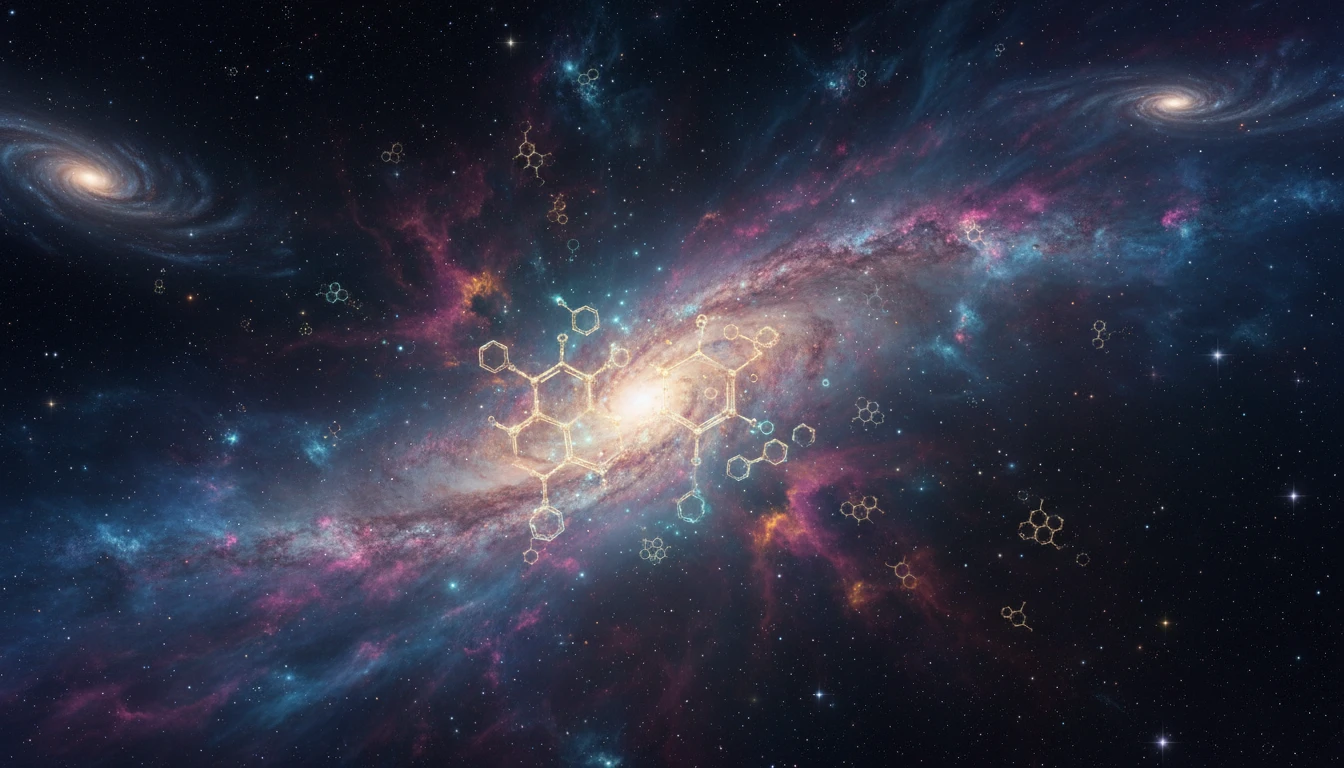
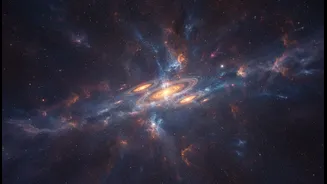
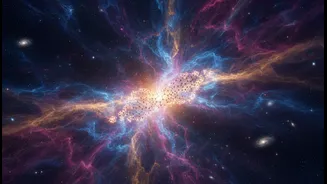
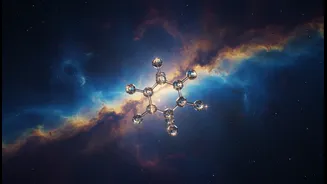
Using powerful radio telescopes, an international team of researchers detected a molecule called erythrulose in a vast cloud of gas and dust near the center of our Milky Way galaxy. This isn't just any molecule; it's a four-carbon sugar, similar to sugars
found in fruits like raspberries here on Earth. While simpler organic molecules have been spotted in space before, this is the first time a 'true sugar' has been definitively identified in the interstellar medium—the raw material from which stars and planets are made. This cloud, known as G+0.693−0.027, is a known stellar nursery, a place where new worlds are born. Finding such a complex, life-relevant molecule here suggests that the chemical ingredients for life are present long before planets even begin to form.
The Standard Recipe for Planets
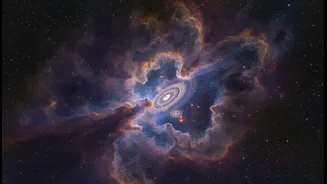
For decades, the leading theory of planet formation, known as core accretion, has painted a fairly straightforward picture. It begins with a young star surrounded by a spinning disk of gas and dust, called a protoplanetary disk. Over millions of years, tiny dust grains, many coated in ice, begin to stick together. This process continues, with small clumps growing into larger ones, eventually forming asteroid-sized 'planetesimals'. These planetesimals then collide and merge, their gravity growing until they sweep up the remaining gas and dust to become full-fledged planets. In this model, the more complex organic molecules thought to be necessary for life were believed to form later, either on the surfaces of these young planets or delivered by comets and asteroids after the initial formation chaos had subsided.
Challenging the Chemical Timeline
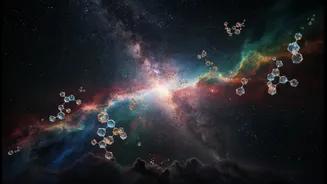
The discovery of erythrulose throws a fascinating wrench into this timeline. The key issue is not just that a sugar was found, but how it likely formed. The long-held belief in astrochemistry was that complex molecules build up slowly, one carbon atom at a time. However, scientists now believe erythrulose formed when two smaller, two-carbon molecules—glycolaldehyde and ethylene glycol—combined on the surface of icy dust grains. This suggests a more efficient, alternative pathway for creating complex organic compounds can occur in the extreme cold of deep space, at temperatures around -250°C. If the essential building blocks for life, like sugars that form the backbone of RNA, are already present in the initial cloud of gas and dust, it means planets might be 'seeded' with these ingredients from the very beginning. They don’t have to wait for chance deliveries by comets millions of years later.
From Cosmic Cloud to Habitable Worlds
This finding fundamentally reframes our understanding of a planet's potential for life. Instead of a world forming as a sterile rock that later acquires the ingredients for biology, it may inherit a rich chemical inventory directly from its parent cloud. This increases the odds that the basic conditions that led to life on Earth could be more common throughout the galaxy. The discovery suggests that protoplanetary disks are teeming with organic molecules, with some studies finding abundances 10 to 100 times higher than previously predicted. These molecules, including precursors for amino acids and the components of RNA, are the raw ingredients for life as we know it. By finding them so early in the process, it implies that the journey from a simple gas cloud to a potentially habitable planet might be more direct than we ever imagined.
The Search for Our Origins
Ultimately, every discovery like this is another clue in the grand mystery of our own origins. Tracing the chemical path from simple elements to complex biology helps us understand not only how life may have started on Earth, but also how likely it is to exist elsewhere. The detection of erythrulose in interstellar space is a powerful confirmation that the universe is a vast chemical factory, capable of producing surprisingly complex molecules even before stars and planets are born. As powerful instruments like the James Webb Space Telescope continue to probe these stellar nurseries, scientists will be looking for more of these prebiotic molecules to see just how widespread they are. Each new molecule found adds another page to the story of how the cosmos might be hardwired to create life.