

More Than Just Dust
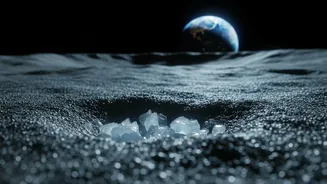
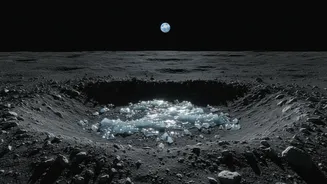
For decades, scientists believed the Moon was almost completely dry. However, missions over the last two decades, including India's own Chandrayaan-1, confirmed the presence of water, especially in the form of ice hidden in permanently shadowed craters
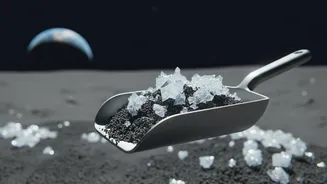
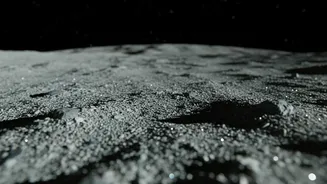
at the poles. The latest research dives deeper, moving beyond just confirming its existence to understanding how it stays there. The focus has shifted to the lunar soil, or regolith. Unlike Earth's soil, which is shaped by wind and water, lunar regolith is a collection of sharp, fine dust and rock fragments created by billions of years of meteorite impacts. Scientists are discovering that this unique material plays a crucial role in trapping and preserving water molecules.
A New Way to Find Hidden Ice
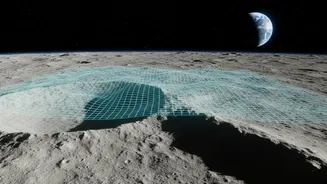
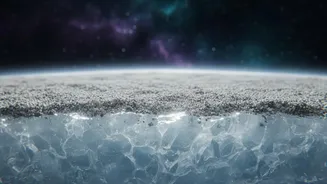
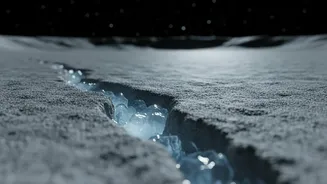
One of the most significant recent developments isn't about the soil itself, but a new method to detect what's in it. A study published in early August 2026 proposes using seismic waves—vibrations from 'moonquakes'—to map buried ice deposits. Researchers found that these vibrations travel two to three times faster through frozen, ice-rich regolith compared to dry soil. This is a game-changer because current orbital instruments can only detect ice very close to the surface. Seismic data would allow scientists to 'see' much deeper, potentially revealing vast reservoirs of ice that have been hidden from view. These new techniques are expected to be tested by upcoming missions, including China's Chang'e-7 in late 2026 and NASA's future Artemis astronaut deployments.
The Science of a Cosmic Sponge
Other recent studies have focused on the physical properties of the regolith. Research has shown that the pore characteristics and heat-adsorption capabilities of the soil can significantly slow the escape of water molecules. This means that water ice isn't just limited to the absolute coldest, darkest parts of polar craters. The soil itself acts like a protective blanket, potentially expanding the areas where water can be found. It’s not about puddles of water, but individual molecules chemically bonded to minerals or trapped between grains of soil. Understanding this mechanism is vital, as it suggests that the distribution of lunar water could be more widespread than previously thought, making it a more accessible resource for future explorers.
Why This Matters for Future Missions
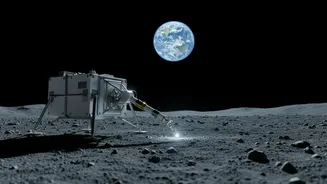
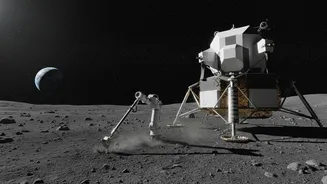
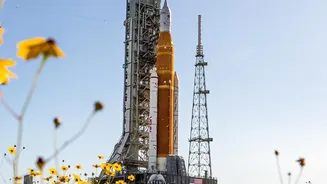
The implications of this research are enormous. The ability to find and extract water on the Moon is a critical step for establishing a long-term human presence, like the one planned under NASA's Artemis program. Instead of transporting massive and costly shipments of water from Earth, astronauts could potentially source it locally. This lunar water could be purified for drinking, split into oxygen for breathing, and combined to create hydrogen and oxygen for rocket fuel. It essentially turns the Moon from a barren outpost into a self-sustaining launchpad for deeper space exploration. This also directly impacts India's ambitious space goals, providing crucial data that will inform future Chandrayaan missions and potential human exploration efforts.
Unlocking the Solar System's History
Beyond its practical use, lunar ice is a scientific treasure trove. The permanently shadowed craters at the poles are some of the most pristine environments in the solar system, acting as time capsules. The ice trapped within the regolith could be billions of years old, preserving a chemical record of the early solar system. By studying this ancient ice, scientists hope to answer fundamental questions about how water was delivered to the inner planets, including how Earth's oceans first formed. The soil doesn't just hold water; it holds the history of water in our cosmic neighbourhood, waiting to be read.