





A Laboratory in the Sky
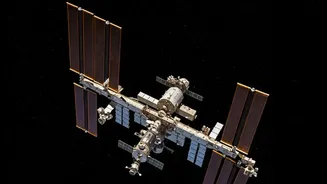
The single biggest gain will be a dedicated, world-class laboratory in microgravity. The near-zero gravity environment of space is impossible to replicate on Earth for long periods. This allows for groundbreaking research in fields like medicine, material
science, and biotechnology. For example, scientists can study how diseases progress, how crystals for new drugs form without gravity's interference, or create next-generation metal alloys that are stronger and lighter. This research can lead to new medical treatments, advanced materials for industries back home, and a deeper understanding of human biology, which is crucial for future deep-space missions.
Boosting the Economy and High-Tech Jobs
Building a space station is a monumental engineering task that will ripple through the Indian economy. This project, known as the Bharatiya Antariksha Station (BAS), will drive demand for high-tech manufacturing, advanced electronics, and sophisticated software systems, creating a surge in skilled jobs. The Indian government envisions the space economy growing significantly, with projections suggesting it could reach $44 billion by 2033. Furthermore, the station will become an anchor for a growing commercial space ecosystem. Private companies will have opportunities to build components, manage logistics, and even conduct their own research on the station, fostering innovation and attracting investment. ISRO may also generate revenue by leasing experiment space or offering training to astronauts from other nations.
Strengthening Strategic Autonomy
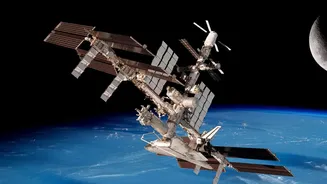
Having an independent space station is a powerful statement of strategic autonomy. Currently, access to long-duration microgravity research is largely controlled by the nations participating in the International Space Station (ISS) or China's Tiangong station. Operating its own station means India will no longer depend on other countries for conducting sensitive research or testing strategic technologies in orbit. It solidifies India's position as a major global space power and a leader among the nations of the Global South, potentially offering a platform for collaboration on its own terms. This move is seen as a critical step in ensuring India's self-reliance in space exploration and utilisation.
A Stepping Stone to the Moon and Beyond
The Bharatiya Antariksha Station isn't just an end goal; it's a crucial training ground. It will function as a testbed for the technologies India needs for more ambitious missions, such as sending an Indian astronaut to the Moon by 2040. Operating the station will allow ISRO to master critical skills like in-orbit docking, long-duration life support systems, and managing astronaut health over extended periods. The experience gained from building and running a habitat in Low Earth Orbit will be invaluable for designing future lunar bases and preparing for even more complex interplanetary journeys.
Inspiring a New Generation
Beyond the technical and economic benefits, the inspirational value of a national space station is immense. Following the successes of missions like Chandrayaan-3, the space station represents a new, ambitious frontier that can capture the imagination of millions of young Indians. This high-profile national project is expected to encourage students to pursue careers in science, technology, engineering, and mathematics (STEM). The 'Gaganyatris' who will live and work aboard the station will become national heroes, inspiring a generation to dream big and contribute to India's technological future.