

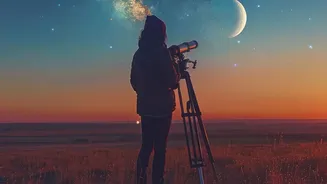
The Main Event: Perseid Meteor Shower
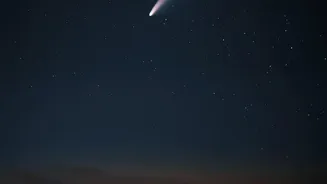
The absolute must-see event this month is the Perseid meteor shower, one of the best and brightest of the year. This annual spectacle peaks on the night of August 12 and into the early morning of August 13. The Perseids are famous for their fireballs—extra-bright
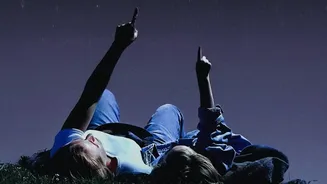
meteors that leave long, glowing streaks across the sky. This year, the timing is perfect. The shower's peak coincides with a New Moon, which means the sky will be perfectly dark, making even faint meteors visible. In a clear, dark location away from city lights, you could see between 40 and 75 shooting stars per hour. The meteors will appear to radiate from the constellation Perseus in the northeast but can be seen streaking across any part of the sky. Just find a comfortable spot, lie back, and give your eyes about 20-30 minutes to adjust to the darkness.
A Parade Of Planets Before Dawn
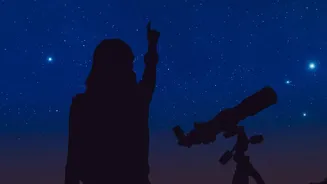
Prepare for an early start around mid-month for a rare celestial gathering. From about August 12 to August 18, a 'planet parade' will stretch across the pre-dawn sky, featuring a lineup of six planets: Mercury, Jupiter, Mars, Saturn, Uranus, and Neptune. For observers in India, Mars and Saturn will be the easiest to spot with the naked eye. Look for Mars's distinct reddish glow high in the eastern sky, while Saturn will shine with a steady, yellowish light further south. Mercury and Jupiter will be a tougher challenge, sitting very low on the eastern horizon in the growing twilight just before sunrise. To spot the distant ice giants, Uranus and Neptune, you will need a pair of binoculars or a small telescope.
Evening And Morning planetary standouts
While most of the planetary action is before dawn, the sky has a brilliant treat for evening observers. Venus will blaze in the western sky shortly after sunset, shining brighter than any star. It's impossible to miss. On the other end of the night, Saturn will be a fantastic target in the early morning hours. While its 'opposition'—its closest and brightest point for the year—isn't until October, it will be large and luminous throughout August, rising late in the evening and visible for the rest of the night. Even a modest telescope will offer a glimpse of its magnificent rings, which are once again tilting back towards us after appearing nearly edge-on in 2025.
Mapping The Milky Way's Heart
August is a prime month for viewing the glorious core of our own galaxy, the Milky Way. On a clear, moonless night far from city pollution, you can see it as a hazy, glowing band of light stretching across the sky. To find its brightest section, look towards the southern horizon for the constellations Scorpius and Sagittarius. Sagittarius is often identified by an asterism of stars that forms the shape of a teapot. The 'spout' of this teapot points directly at the galaxy's dense and brilliant centre. While you're looking up, also try to spot the Summer Triangle, a large, prominent pattern formed by three of the brightest stars in the sky: Vega, Deneb, and Altair, which will be almost directly overhead.
Dealing With The Monsoon Challenge
Let's be realistic: the biggest obstacle to stargazing in India during August is the monsoon. Heavy cloud cover can frustrate even the most patient skywatcher. The key is to be flexible and opportunistic. Keep a close eye on weather apps and satellite imagery for any potential breaks in the clouds. Be ready to head out at short notice if a clear window appears. If you are serious about catching the Perseids, your best bet is to travel to a region that sits in a rain shadow. High-altitude deserts like Ladakh—home to the Hanle Dark Sky Reserve—and Spiti Valley offer the country's clearest skies during this period.
Your Stargazing Starter Kit
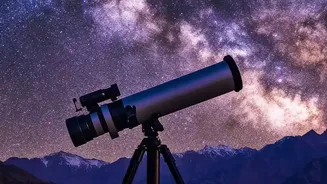
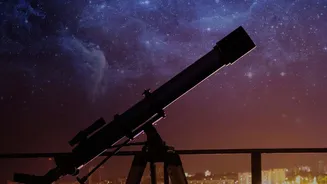
The best news for beginners is that you don't need any expensive equipment to enjoy August's celestial shows. The Perseids and the main planets are all visible with the naked eye. The most important tool is a dark sky, so try to get as far from city lights as you can. Allow your eyes at least 20 minutes to fully adapt to the dark; avoid looking at your bright phone screen. If you need a light, use a torch with a red filter, as red light is less disruptive to your night vision. Finally, consider downloading a stargazing app like Stellarium or SkyView. By simply pointing your phone at the sky, these apps can help you identify constellations, planets, and stars in real-time.