






The Invisible Supermarket Next Door
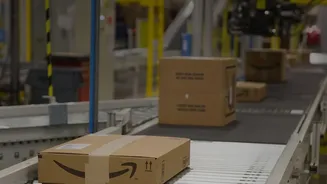
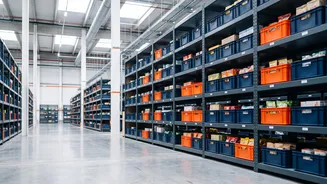
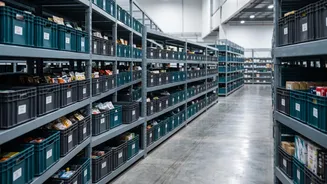
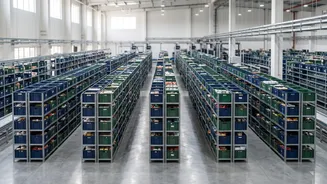
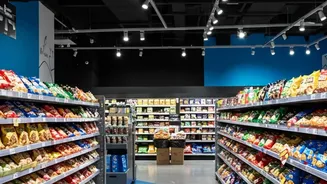
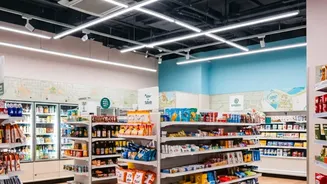
First, what exactly is a 'dark store'? Unlike a traditional supermarket, these locations are closed to the public. They are essentially small, hyperlocal warehouses optimised for one thing: getting online orders picked, packed, and out the door in minutes.
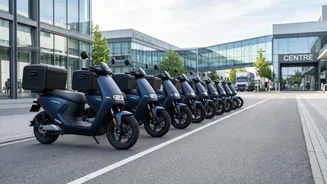
Staff known as 'pickers' navigate aisles designed for maximum efficiency, grabbing items for delivery riders who are constantly cycling in and out. These stores are the backbone of the 10-minute delivery promise made by platforms like Blinkit, Zepto, Swiggy Instamart, and others. Their location is everything; they must be close enough to customers to meet the ultra-fast delivery window, often serving a radius of just a few kilometres.
A Numbers Game in the Garden City
Bengaluru is the most competitive quick-commerce market in India, with more dark stores than any other city. But pinning down the exact number is tricky. For example, a July 2026 survey from QuickCommerceMap identified 629 dark stores in the city, with Blinkit narrowly leading Zepto (165 to 159). However, a CLSA report from August 2026 counted a higher total of 735 stores, with slightly different numbers for each platform: Blinkit at 180 and Zepto at 177. Meanwhile, other trackers might focus on 'serviceable zones' instead of physical stores, arriving at yet another figure, such as the 631 zones reported in a Q3 2026 analysis. This variation isn't necessarily an error; it’s a symptom of a chaotic and rapidly evolving market.
Why the Counts Don't Match
There are several reasons for these discrepancies. The first is methodology. Some firms, like QuickCommerceMap, use publicly available serviceability data from apps to infer store locations, which they acknowledge is a lower-bound estimate. Others, like CLSA, may have access to more proprietary data or use different mapping techniques. Secondly, the definition of a 'dark store' can vary. Is a tiny, 1,200-square-foot micro-hub counted the same as a larger fulfilment centre? Different analysts might draw the line in different places. Finally, the sheer speed of the market is a major factor. Stores are opening and, in some cases, closing so quickly that any report is merely a snapshot in time. A count from July can be outdated by August, as platforms constantly adjust their footprint based on demand and profitability. For instance, the third quarter of 2026 was noted as the first period with a significant number of zone closures nationally, often in areas where multiple platforms were competing fiercely.
What the Discrepancy Reveals
The fluctuating numbers tell a story of a market defined by aggressive expansion and intense competition. Bengaluru is a battlefield where all five major platforms—Blinkit, Zepto, Swiggy Instamart, Flipkart Minutes, and BigBasket—are heavily invested. In this environment, store count is a key metric for investors and a proxy for market share. Blinkit may lead nationally, but in Bengaluru, its lead over Zepto is razor-thin, with both platforms running neck-and-neck. This intense rivalry fuels a constant land grab for prime real estate, leading to a high concentration of stores in dense, affluent neighbourhoods like HSR Layout and Bellandur. The focus for these companies is shifting from just adding stores to improving the productivity and order density of existing ones to achieve profitability.