






A Galaxy of Opportunity
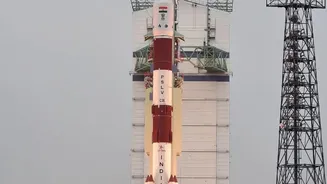
For decades, India's journey to the stars was piloted almost exclusively by the Indian Space Research Organisation (ISRO). But a monumental shift is underway. Following major policy reforms starting around 2020, the government unlocked the space sector
for private enterprise, sparking a 'Big Bang' of entrepreneurial activity. Today, the Indian space landscape is bustling with over 450 startups, a staggering increase from single digits just a few years ago. This new policy framework, spearheaded by the creation of the Indian National Space Promotion and Authorisation Centre (IN-SPACe), has been a game-changer. IN-SPACe acts as a single-window agency, helping private players get authorizations, access ISRO's world-class facilities, and commercialize new technologies, effectively rolling out the red carpet for innovation.
The New Constellation of Innovators
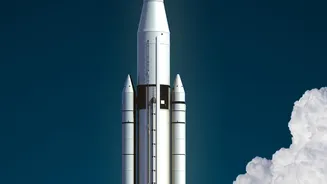
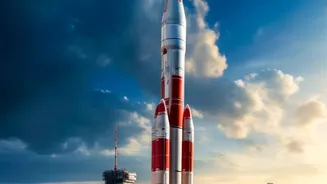
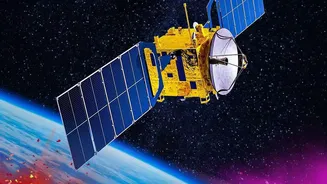
These new space-tech ventures are not just ancillary players; they are building core capabilities across the entire value chain. The ecosystem is broadly divided into upstream and downstream companies. Upstream startups focus on the hardware of space: building rockets and satellites. Hyderabad-based Skyroot Aerospace and Chennai's Agnikul Cosmos are leading the charge in developing India's first privately-built launch vehicles. Skyroot recently made history with the successful orbital launch of its Vikram-1 rocket, while Agnikul is renowned for its cutting-edge, single-piece 3D-printed rocket engines. In the satellite domain, companies like Dhruva Space are creating satellite platforms, while Pixxel is deploying a constellation of the world's most advanced hyperspectral imaging satellites. Downstream, companies like SatSure are leveraging this data from orbit, using AI to provide invaluable insights for industries like agriculture, finance, and infrastructure.
Fueling the Final Frontier
This cosmic boom is being fueled by a surge in investment. Venture capitalists, both domestic and international, have taken note of the sector's immense potential. In recent years, Indian space startups have attracted hundreds of millions of dollars in funding. The government has also stepped in to provide financial thrust, announcing initiatives like a dedicated Venture Capital fund to support early-stage space-tech companies. This influx of capital is crucial, enabling startups to move from the drawing board to the launchpad. The economic projections are, frankly, astronomical. India's space economy, valued at around $8.4 billion in 2022, is projected to grow fivefold to nearly $44 billion by 2033.
ISRO's New Role and the Road Ahead
The rise of the private sector doesn't mean ISRO is taking a backseat. Instead, its role is evolving. Freed from routine manufacturing and operational tasks, the organization can now focus its immense talent and resources on what it does best: pioneering research and development, deep-space exploration missions, and national security projects. ISRO is actively mentoring the new ecosystem, transferring technology and providing critical support. However, the journey ahead is not without challenges. The industry still needs to navigate a complex regulatory landscape, ensure sustainable funding, and prove its commercial viability on a global scale. But the momentum is undeniable. This public-private synergy is creating a powerful gravitational force, pulling in talent, capital, and global attention.