





The Social Hub: Lower Berth (LB)
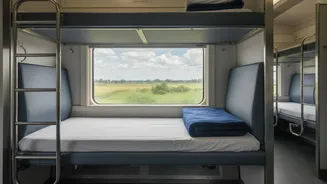
The most sought-after berth is often the Lower Berth, and for good reason. It offers the easiest access, making it ideal for senior citizens, families with children, or anyone who doesn't fancy climbing. You get a prime window seat for daytime viewing
and easy access to your luggage stored underneath. However, this convenience comes with a trade-off: privacy. During the day, the Lower Berth serves as the default seating area for passengers in the corresponding Middle and Upper berths, making it a social, but often crowded, space. Uninterrupted daytime rest is unlikely, and you’ll be in the middle of all the coach's activity, from vendors to fellow passengers.
The Private Perch: Upper Berth (UB)
For travellers who prioritize privacy and uninterrupted sleep, the Upper Berth is a sanctuary. Once you've climbed up, that space is yours for the entire journey, free from the daytime seating arrangements and general foot traffic of the coach below. It’s a great option if you want to sleep early or rest during the day. However, it requires a bit of agility to get up and down, which can be inconvenient for frequent trips to the washroom. Some also find the headroom a bit restrictive, and it can feel warmer than the lower parts of the coach. Luggage storage is also less direct, though many feel it's a secure spot.
The Awkward Middle: Middle Berth (MB)
The Middle Berth is perhaps the most compromised of the options. It only exists as a bed during the official sleeping hours, typically between 10 pm and 6 am. During the day, it is folded away to allow passengers to sit on the Lower Berth. This makes it unsuitable for anyone wanting to rest outside these hours. The headroom is also significantly limited, often leaving just enough space to lie down. While it’s better than no berth at all, most seasoned travellers avoid the Middle Berth for long journeys unless travelling in a group where coordination is easier.
The Window Gazer's Pick: Side Lower (SL)
Positioned along the aisle, the Side Lower Berth converts into two seats during the day, offering one of the best window-viewing experiences on the train. Because you only share the daytime seating with one other person (from the Side Upper), it often feels more personal than the main bay. However, its position by the aisle means more potential disturbance from passing passengers. Taller travellers should also note that side berths can sometimes be slightly shorter than the main berths.
The Solo Traveller's Nest: Side Upper (SU)
Combining the benefits of an upper berth with a bit more autonomy, the Side Upper is a favourite among solo travellers. Like the main Upper Berth, it offers privacy and a space that is yours alone throughout the journey, allowing you to sleep whenever you wish. You also have access to the Side Lower seats during the day. Some find it offers slightly more headroom than the main Upper Berth. The main downside is its proximity to the aisle, which means more exposure to noise and movement compared to the main bay. Still, for many, it represents the best balance of privacy and comfort.
Making the Right Choice
When booking your ticket, you can set a berth preference, though the final allocation depends on availability. Indian Railways has a quota of lower berths for senior citizens and female passengers over 45, which are allocated automatically if available. For others, booking as far in advance as possible increases your chances of getting your preferred spot. Also, consider the train's coach type; newer LHB coaches found on most premium and express trains are more likely to have working charging points near all berth types, while older ICF coaches may not.