




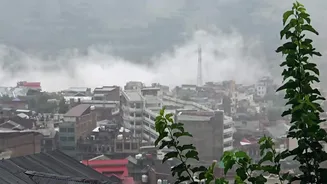
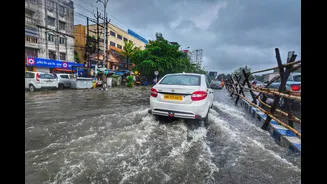
The Big Picture: A Mixed Monsoon
The India Meteorological Department (IMD) has released its outlook for the second half of the monsoon. The latest forecast for August 2026 suggests a complex and varied picture across the country. Overall, rainfall for the month is predicted to be 'below-normal',
which is less than 94% of the long-period average. This comes after a month of July that saw rainfall recover from an earlier deficit. However, this national average hides significant regional differences. While many parts of the country may see reduced rainfall, some areas in peninsular, central, eastern, and northeastern India could still experience normal to above-normal rain. This variability is a classic feature of the Indian monsoon, but it makes planning based on a single, nationwide number extremely difficult for individuals.
The Forecast Disconnect
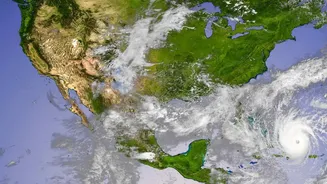
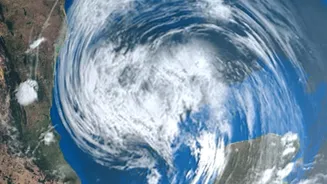
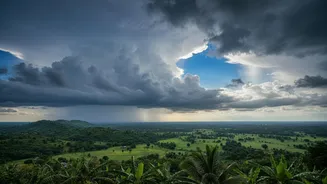
Why do large-scale forecasts from the IMD sometimes feel disconnected from the weather outside your window? The answer lies in scale. National and regional forecasts operate at a synoptic scale, covering vast areas. They are excellent for predicting the movement of large weather systems like monsoon depressions. However, much of the monsoon's rainfall is convective, meaning it occurs in intense, localised bursts that are much harder to predict over a large area. Think of it like a map of India: the national forecast shows you the entire country, but you need a city-level map to navigate your neighbourhood. Forecasting models create a grid over the country, and the resolution of that grid determines the level of detail. A forecast for 'Northwest India' is useful for broad planning, but less so for deciding if you need an umbrella for your evening commute in a specific district.
The Last-Mile Challenge
Delivering accurate, hyper-local forecasts down to the district and block level is one of the biggest challenges in meteorology. India's diverse geography, from the Himalayas to the long coastlines and dense urban centres, creates countless microclimates where weather can change rapidly over short distances. An urban area, for instance, can be several degrees warmer than the surrounding countryside, affecting rainfall patterns. The IMD has been working to improve this by increasing the density of weather stations and developing more sophisticated models, even aiming for block-level forecasting. In May 2026, the IMD even launched an AI-enabled system to provide hyper-local predictions, starting with a pilot in Uttar Pradesh. These efforts acknowledge the critical need for information that is relevant not just to a state, but to a specific community.
Finding Your Local Forecast
While the system is improving, you don't have to rely on broad regional updates. The IMD itself provides a wealth of localised information. Its official website has dedicated sections for district-level and even tourism forecasts. More accessible are its mobile applications. The 'Mausam' app provides current conditions, hourly updates, and warnings for your specific location. For farmers, the 'Meghdoot' app offers crop-specific advisories based on weather forecasts. For lightning, which is a major hazard during the monsoon, the 'Damini' app provides real-time alerts. The IMD also issues 'Nowcasts,' which are short-range warnings for intense weather events with a lead time of about three hours, providing critical, actionable information when you need it most.
How to Plan Your Monsoon Days
For households, getting into the habit of checking a hyper-local forecast in the morning can make a huge difference in planning daily activities. For travellers, the stakes are even higher, especially in a season that sees increasing tourist footfall despite the rain. The unpredictability of the monsoon can lead to transportation delays, landslides in hilly regions, and flooded roads. Before travelling, especially to destinations like Himachal Pradesh, Uttarakhand, or the Western Ghats, check district-level warnings on the 'Mausam' app. Follow local advisories and be prepared for plans to change. Having flexible travel arrangements and building buffer days into your itinerary can turn a potentially stressful situation into a manageable one, allowing you to enjoy the unique beauty of India during the monsoon.