







What is AI Lesson Planning?
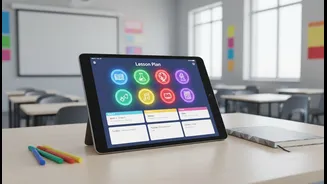
At its core, AI-powered lesson planning involves using specialised software to streamline the creation of educational content. Teachers input key parameters—such as the subject, grade level, specific topic, and learning objectives—and the AI generates
a structured draft. This can include everything from a basic lesson outline and activity ideas to assessment questions and resource suggestions like videos or articles. These tools are not just generic chatbots; many are designed specifically for education, capable of aligning content with curriculum standards and suggesting differentiated tasks for students with varying learning needs.
Giving Teachers Their Time Back
The most immediate and celebrated benefit of these AI tools is time-saving. Teachers often spend hours outside of school on preparation, a significant contributor to burnout. AI automates some of the most repetitive parts of this process, such as finding standards-aligned resources, formatting worksheets, or creating different versions of an assignment for diverse learners. By handling this administrative heavy lifting, AI frees up educators to focus on what they do best: engaging directly with students, offering personalized support, and fostering a positive classroom environment. The goal isn't just to save time, but to reinvest that time into more meaningful teaching activities.
From Personalization to Creativity
Beyond just saving time, AI is enabling a more sophisticated approach to teaching. One of the biggest challenges in a diverse classroom is differentiation—tailoring instruction to meet each student's unique level and pace. AI tools can generate reading materials at various complexity levels from a single text or suggest activities for students who need extra support or an additional challenge. This helps create a more inclusive learning environment where no student is left behind. Furthermore, these tools can act as a brainstorming partner for teachers, suggesting creative project ideas, engaging discussion prompts, or real-world applications for academic concepts. This can help move lessons away from rote memorization and toward fostering higher-order skills like critical thinking and problem-solving.
A Companion, Not a Replacement
A common fear surrounding AI in education is that it will replace human teachers. However, experts and educators largely agree that this is a misconception. AI lacks the empathy, intuition, and emotional intelligence that are fundamental to great teaching. An algorithm cannot replicate the encouragement of a mentor or the human connection that builds a student's confidence. The most effective use of AI is as a companion or an assistant. The AI can generate a draft, but it is the teacher's professional judgement and deep understanding of their students that allows them to refine, adapt, and ultimately deliver the lesson in a meaningful way. The consensus is clear: AI will not replace teachers, but teachers who use AI effectively may replace those who do not.
Navigating the Challenges Ahead
The adoption of AI in Indian classrooms is not without its hurdles. The digital divide remains a significant issue, as unequal access to devices and reliable internet can widen existing inequalities between students in urban and rural areas. There are also valid concerns about the quality and potential bias of AI-generated content, as well as the critical need to protect student data privacy. For these tools to be truly effective, teachers require proper training and professional development to integrate them thoughtfully into their practice. A rush to adopt technology without addressing these foundational issues could undermine its potential benefits and create new problems for schools, teachers, and students.