



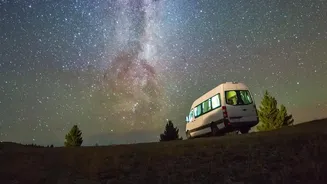
An Ideal Month for Sky-Watching
October is often considered one of the best months for stargazing in India. The post-monsoon season means the atmosphere has been washed clean of dust and haze, resulting in exceptional transparency. The air is clear and the humidity is lower, providing
crisp, stable skies perfect for observing celestial wonders. This clarity is a boon for beginners, as many objects will appear sharper and brighter than at other times of the year. Whether you are in the mountains or the desert, October provides a prime window for your first cosmic adventure.
What to Look for in October 2026
The October sky is bustling with activity. Two meteor showers are active this month: the Draconids and the Orionids. The Draconid meteor shower peaks on the night of October 8-9. A major advantage for 2026 is that the peak occurs near the new moon, promising dark, moonless skies for optimal viewing. Later in the month, the Orionids, which are bits of debris from Halley's Comet, peak around October 21-22. While a bright moon will be present in the evening, it sets after midnight, leaving the pre-dawn hours dark for a potentially great show. Beyond meteors, you can also spot the planet Saturn, which is at opposition early in the month, making it visible all night long. In early October, you can still catch the bright star clouds of the Milky Way in the southwest just after sunset.
Finding the Perfect Dark Sky Location
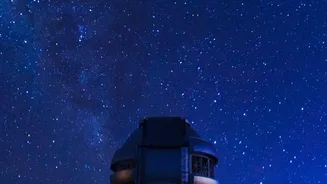
The single most important rule of stargazing is to get away from city lights. Light pollution from urban areas washes out all but the brightest stars. For a truly immersive experience, you need to find a 'dark sky' location. High-altitude regions are exceptional, which is why Hanle in Ladakh is home to India's first designated Dark Sky Reserve and is considered one of the best astronomical sites on Earth. Other Himalayan destinations like Spiti Valley and parts of Uttarakhand also offer pristine skies. If a Himalayan trip isn't feasible, the vast, unobstructed horizons of the Rann of Kutch in Gujarat and the Thar Desert near Jaisalmer, Rajasthan, are excellent choices, especially from October onwards. For those in South India, the coffee plantations of Coorg, Karnataka, provide dark pockets away from city glow.
Essential Gear (and What You Don't Need)
You don't need an expensive telescope to begin your stargazing journey. In fact, your most important tool is patience. It takes about 20-30 minutes for your eyes to fully adapt to the darkness, a process called dark adaptation. Avoid looking at your bright phone screen during this time. A pair of basic 10x50 binoculars is a fantastic and affordable investment for a beginner, revealing craters on the moon, the moons of Jupiter, and the faint glow of distant nebulae. A red-light torch is crucial, as red light doesn't spoil your night vision the way white light does. Finally, install a good stargazing app on your phone. Apps like Stellarium, SkyView, or Star Walk can help you identify constellations, planets, and satellites in real-time simply by pointing your phone at the sky.
Comfort Is Key for a Long Night
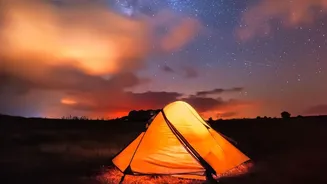
Stargazing involves a lot of looking up and waiting, so comfort is essential. October nights can get surprisingly chilly, especially in desert or high-altitude locations. Dress in warm layers, even if the day was hot. Bring a comfortable chair, a blanket, or a mat to lie on so you can look straight up without straining your neck. Packing warm beverages like tea or coffee in a flask, along with some snacks, can make the experience much more enjoyable. The more comfortable you are, the longer you'll be willing to stay out and the more you're likely to see.