







The War on Misleading Words
In recent weeks, the Food Safety and Standards Authority of India (FSSAI) has intensified its scrutiny of what companies print on their packages. Notices have been issued to several well-known food businesses for a variety of alleged labelling violations.
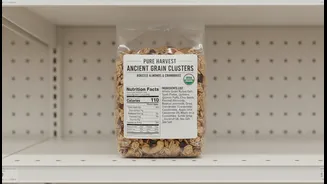
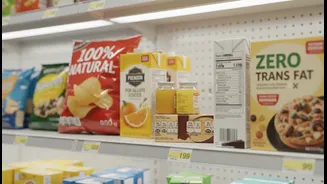
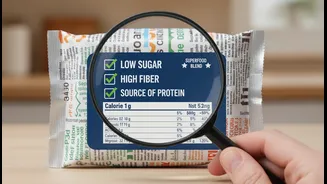
These actions target the gap between catchy marketing slogans and the actual contents of the product. For instance, a cream bun marketed as "100% Natural" was questioned for containing preservatives listed in its own ingredient panel. Similarly, products with names that suggest fruit content but contain none have also come under the scanner. This crackdown is part of a sustained effort by the regulator to enforce transparency and ensure that claims like “healthy,” “natural,” or “high protein” are scientifically backed and not just designed to mislead shoppers.
Beyond the Fine Print: The Labelling Revolution
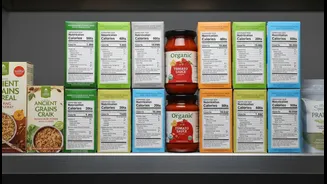
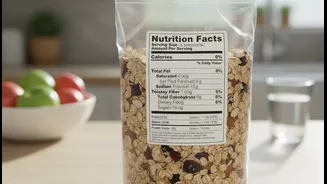
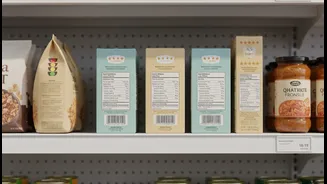
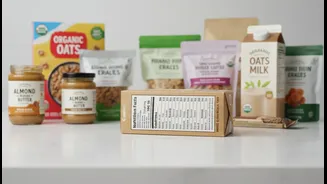
While these enforcement actions grab headlines, they are part of a much larger, more fundamental shift in India's food policy: the move towards mandatory Front-of-Pack Labelling (FoPL). For years, critical nutritional information has been relegated to the back of the package, often in small, hard-to-read tables. FoPL aims to change this by placing simple, interpretive information right on the front, where consumers can see it at a glance. The push for this change is driven by a pressing public health concern: the rapid rise of non-communicable diseases (NCDs) such as diabetes, obesity, and hypertension in India, which are strongly linked to diets high in fat, sugar, and salt. Global evidence shows that clear front-of-pack labels can effectively nudge consumers toward healthier choices in the few seconds they spend deciding on a product.
Stars or Warnings? The Great Label Debate
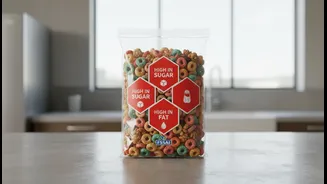
A major point of contention is what these new labels should look like. FSSAI has previously proposed an Indian Nutritional Rating (INR) system, also known as a Health Star Rating (HSR). This model would rate products on a scale from half a star to five stars, with more stars indicating a healthier product. The rating considers both negative nutrients like sugar and salt, and positive ones like fibre and protein. However, public health experts and consumer groups have raised concerns, arguing that a star system could be misleading. A product high in sugar, for example, might still receive a relatively good star rating if it's fortified with protein, masking its unhealthy aspects. As an alternative, they advocate for simple warning labels—like a black octagon—that explicitly state if a product is "High in Sugar," "High in Salt," or "High in Fat." In early 2026, the Supreme Court weighed in, directing FSSAI to seriously consider such warning labels to protect the public's right to health.
How This Changes Your Grocery Run
This impending change is set to transform the "planning conversation" for every household. Instead of needing to be a nutritional expert deciphering complex tables on the back of a pack, you will have a simple visual cue on the front. This empowers consumers to make quicker, more informed decisions. Imagine being able to compare two brands of biscuits instantly and seeing that one has a clear warning for high sugar content while the other doesn't. This shifts the power dynamic, moving the conversation from confusing calorie-counting to a more intuitive understanding of food quality. The goal is to make healthy choices the easy choices, helping families manage dietary needs and improve their overall health without needing a magnifying glass and a calculator in the supermarket aisle.
The Road Ahead for Consumers and Companies
The food industry has acknowledged the need for clearer labels but has also pointed to the significant operational costs involved in changing packaging across thousands of products. For some smaller businesses, these changes can be a substantial financial burden. Regardless of the final format—be it stars or warnings—the transition to mandatory FoPL will likely be phased in, giving companies time to adapt. FSSAI has indicated a multi-year transition period for past labelling rule changes. This will likely push many brands to not just change their labels, but to reformulate their products to avoid negative ratings or warnings, which could ultimately lead to healthier products on the shelves for everyone. While the debate over the best format continues, the direction is clear: an era of greater transparency in the food aisle is coming.