



The Sun's Violent Outbursts
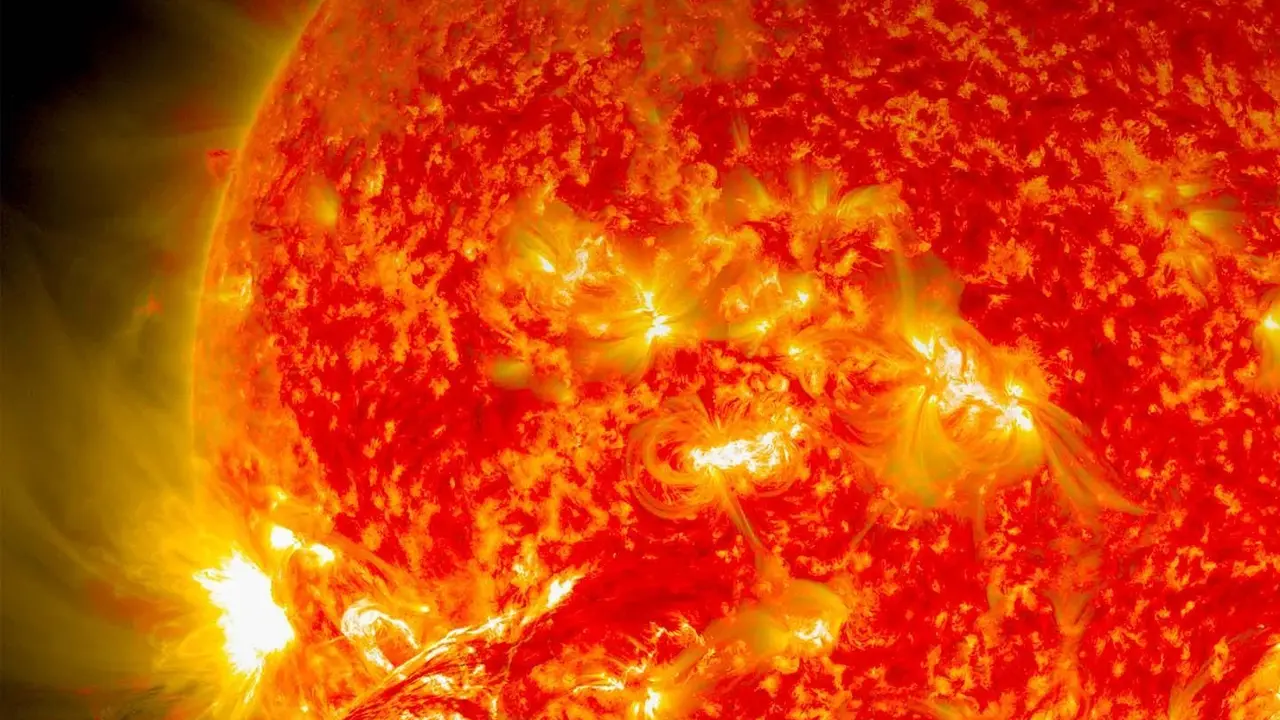
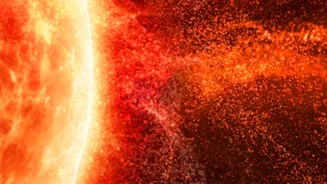
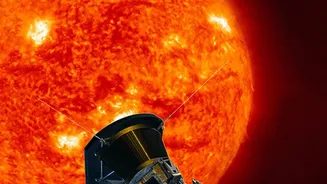
Our Sun, the life-giving star at the centre of our solar system, is not always benign. It periodically releases massive bursts of energy and matter in events known as solar flares and coronal mass ejections (CMEs). A solar flare is an intense flash of radiation,
while a CME is a giant cloud of magnetised plasma hurdling through space at immense speeds. When Earth is in the path of a CME, the charged particles can wreak havoc on technology. These particles can damage satellite electronics, degrade solar panels, and even cause atmospheric drag that pulls satellites out of orbit. In a world completely reliant on satellites for GPS, communication, and financial transactions, such a storm could be catastrophic.
Our Planetary Defense System
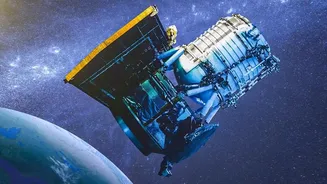
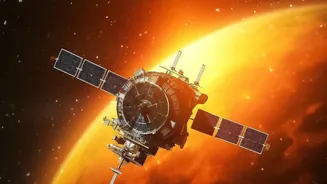
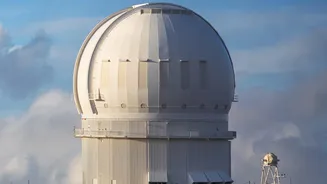
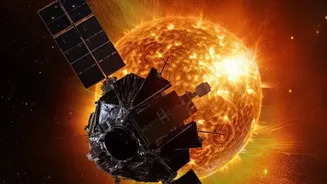
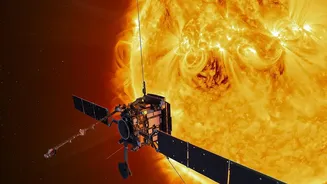
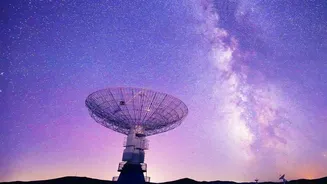
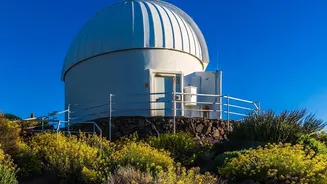
To guard against this threat, a network of space weather monitoring stations acts as our planet's early warning system. This includes both ground-based telescopes and, crucially, space-based observatories. Spacecraft like the Deep Space Climate Observatory (DSCOVR) and the Solar and Heliospheric Observatory (SOHO) are positioned at a special point in space called Lagrange Point 1 (L1), about 1.5 million kilometres from Earth in the direction of the Sun. This vantage point gives them an uninterrupted view of the Sun, allowing them to spot a CME as it erupts. India's own Aditya-L1 mission, also positioned at L1, is a key player in this global effort, designed to study CMEs and enhance our space weather forecasting capabilities.
From Observation to Alert
When an observatory like DSCOVR or Aditya-L1 detects a CME heading towards Earth, its data is beamed back to prediction centres on the ground. In the United States, the primary civilian hub is the National Oceanic and Atmospheric Administration’s Space Weather Prediction Center (SWPC). Analysts at SWPC model the CME's speed and trajectory to predict its arrival time and potential severity. They then issue a series of bulletins: a 'Watch' when a storm is possible, a 'Warning' when it is imminent, and an 'Alert' once the storm's effects have reached key thresholds. These alerts, graded on a scale, are disseminated to satellite operators, aviation authorities, and power grid managers around the world.
Battening Down the Hatches in Orbit
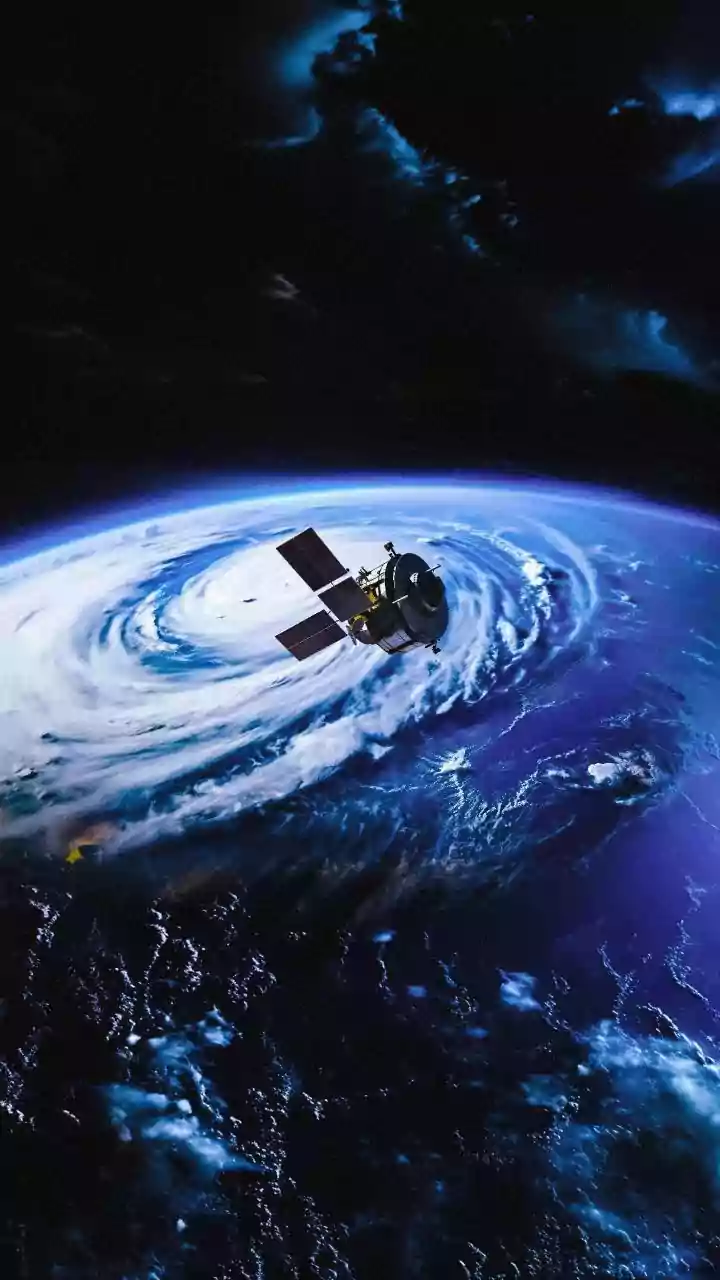
Once an alert is issued, satellite operators have a limited window—from hours to as little as 15-60 minutes—to protect their multi-million dollar assets. The term 'rotate' in the headline is a simplified way of describing a series of defensive manoeuvres. The primary goal is to place the spacecraft into a protective 'safe mode'. This involves shutting down all non-essential and sensitive electronic systems to prevent them from being fried by charged particles. Operators might also reorient the satellite to point its most robust shielding towards the incoming storm, much like turning your back to a strong wind. For satellites in low-Earth orbit, operators may even burn fuel to temporarily raise their altitude to counteract the increased atmospheric drag caused by the storm.
Why This Unseen Shield Matters
The entire process—from a solar eruption to a satellite entering safe mode—is a remarkable feat of science and coordination. It’s an invisible shield that protects the technology we often take for granted. Without these monitoring stations and the swift actions of operators, a severe solar storm could cripple our navigation systems, disrupt global communications, and bring financial markets to a halt. It highlights our deep dependence on space infrastructure and the brilliant, proactive measures required to safeguard it from the cosmos itself. The constant watchfulness of these space weather guardians ensures our digital world keeps spinning, even when the Sun throws its worst our way.