






A Celestial Show Begins
This August, the planet Saturn is becoming an increasingly prominent and beautiful object in our night sky. For sky-gazers across India, the ringed planet can be seen rising in the east during the evening, travelling across the sky, and remaining visible
for most of the night. It appears as a bright, yellowish point of light that, unlike stars, shines with a steady, unflickering glow. While Saturn is always a marvel, its current brightness is the prelude to an even bigger celestial event later in the year. Think of August as the opening act for Saturn’s best performance of 2026, offering a perfect opportunity to get acquainted with this distant world.
The Science of Opposition
The reason for Saturn's enhanced brilliance is a phenomenon called 'opposition'. A planet is in opposition when Earth passes directly between it and the Sun. Imagine the three bodies in a straight line: Sun, Earth, Saturn. This alignment means two things for us viewers. First, Saturn is at or near its closest point to Earth for the year, making it appear larger and more detailed through a telescope. Second, the face of Saturn we see is fully illuminated by the Sun, much like a full moon. This combination of proximity and full illumination makes the planet shine at its brightest in our sky. While Saturn's official opposition date for 2026 is October 4, the planet is already well on its way, becoming brighter and more visible throughout August and September, making this an extended season for observation.
How to Spot Saturn from India
Finding Saturn is surprisingly easy, even for beginner stargazers. As evening twilight deepens, look towards the eastern horizon. The planet will rise and begin its slow ascent across the night. It will be at its highest point in the sky around midnight local time, making it an ideal target for late-night viewing. For those in urban areas with light pollution, the good news is that Saturn is bright enough to cut through the haze, appearing as one of the most prominent objects in its patch of sky. For an even better view, find a location away from city lights, let your eyes adjust to the darkness for about 20 minutes, and enjoy the cosmic display. Throughout August, Saturn will be visible in the pre-dawn hours as well, high in the southern part of the sky before the sun rises.
What You Can See
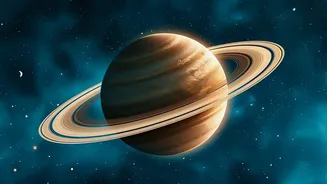
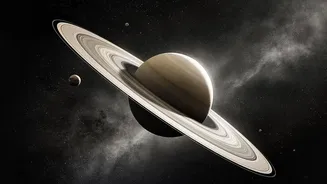
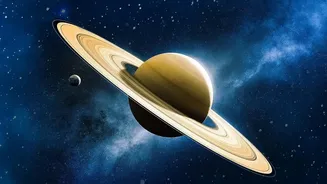
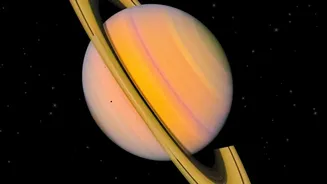
Your viewing experience of Saturn will depend on your equipment. To the naked eye, it’s a brilliant, star-like object. With a simple pair of binoculars, you might notice that the planet is not perfectly round—you may even glimpse its famous rings as tiny 'ears' on either side of the planetary disk. However, the real magic happens with a telescope. Even a modest amateur telescope can reveal Saturn's iconic rings, separating them from the globe of the planet. Last year, in 2025, the rings were seen edge-on from Earth, making them nearly invisible. In 2026, they have tilted back into view, offering a stunning sight. With a larger telescope and steady viewing conditions, you might even be able to spot the Cassini Division—a dark gap in the rings—or Saturn's largest moon, Titan, which appears as a small, star-like companion to the planet.