





Your First Step: Read the Label
Before a single drop of water touches your woollen garment, the most critical step is to consult its care label. This small tag is the manufacturer's direct advice, based on the specific type of wool and material blend. It's a universal language of symbols
designed to prevent costly mistakes. The five main symbols cover washing (a washtub), drying (a square), ironing (an iron), bleaching (a triangle), and professional care (a circle). An 'X' through any symbol means 'do not do this'. Understanding these is the foundation of proper wool care.
Decoding Washing Instructions
The washtub symbol dictates how to wash your garment. A tub with a hand in it means 'hand wash only'. For this, use lukewarm water (around 30°C) and a mild, wool-specific detergent. Swish the garment gently, let it soak for about 10 minutes, and then rinse thoroughly without aggressive rubbing or wringing. If the label shows a washtub symbol, it may be machine washable. Lines underneath indicate the cycle's intensity: one line means a gentle synthetic cycle, while two lines signify an even milder wool or delicates cycle. Always use cold water or the temperature specified, turn garments inside out, and wash with a small load to reduce friction.
The Art of Drying Without Shrinking
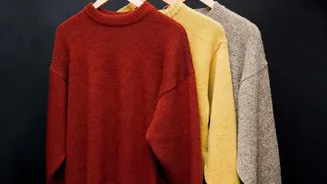
Heat and agitation are wool's worst enemies, which is why the 'Do Not Tumble Dry' symbol (a square with a crossed-out circle) is common. The intense heat of a dryer can cause irreversible shrinkage and felting. Instead, the best method is to dry wool flat. After washing, gently squeeze out excess water—never wring it. Lay the garment on a clean, dry towel, roll it up to absorb more moisture, and then unroll it. Finally, lay the sweater flat on a drying rack or another dry towel, away from direct sunlight or heat, and gently reshape it. Hanging a wet woollen item can cause it to stretch and lose its shape due to the weight of the water.
Ironing and Professional Care
Most wool garments are naturally crease-resistant and may not need ironing. If they do, check the iron symbol. The dots inside indicate the maximum heat setting: one dot is for low heat (around 110°C), while two dots signify medium heat (150°C), which is typical for wool. Always use the steam setting or press the garment under a damp cloth to avoid scorching the fibres. For some garments, the label will show a circle, which is the symbol for professional dry cleaning. If the circle has an 'X' through it, it should not be dry-cleaned. A letter inside the circle tells the cleaner which chemical solvent is safe to use. When the label says 'Dry Clean Only', it's best to trust the professionals.
Maintenance for a Long Life
Proper care extends beyond washing. Wool is naturally antibacterial and doesn't need to be washed after every wear; often, simply airing it out is enough to refresh it. When it comes to pilling—those annoying little fuzz balls—use a fabric shaver or a sweater comb with a light touch. Never pull pills off by hand, as this can damage the fibres. For long-term storage, always clean your woollens first, as moths are attracted to dirt and body oils. Fold your garments neatly instead of hanging them to prevent stretching. Store them in a cool, dry place using breathable garment bags, and consider adding natural repellents like cedar blocks or lavender sachets to keep pests away.