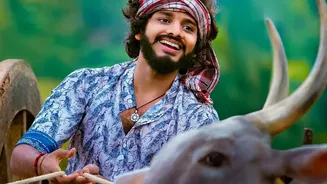







The Southern Wave That Changed Everything
The pan-India trend can largely be traced back to the monumental success of S.S. Rajamouli's 'Baahubali' series. These films, originally made in Telugu, were dubbed and released across India, proving that audiences would embrace a compelling story regardless
of its origin. This was followed by a wave of blockbusters from the South, like 'KGF: Chapter 2', 'Pushpa: The Rise', and 'RRR', which didn't just perform well in the Hindi belt—they dominated it. These movies demonstrated that a well-marketed film with high production values and universal themes could become a national cultural event. Bollywood took notice: the audience's appetite for larger-than-life heroes and high-octane action, a formula perfected by southern industries, was undeniable.
The New Economics of Filmmaking
Beyond cultural shifts, the move towards pan-India storytelling is a sound business strategy. By targeting the entire country simultaneously, producers can justify massive budgets that would be unsustainable for a single regional market. A film that succeeds across multiple language markets can join the elite ₹1,000 crore club, a feat that is increasingly difficult for a purely Hindi film. This model de-risks the financial investment. Furthermore, casting stars from different regions—a Bollywood lead with a Telugu superstar, for example—creates an inbuilt audience and marketing hook in multiple territories. It’s no longer about one industry competing with another, but about creating a larger, more profitable Indian film market.
How Streaming Broke Down Barriers
The rapid growth of Over-the-Top (OTT) platforms like Netflix and Amazon Prime Video has been a game-changer. These services have fundamentally altered viewing habits, exposing audiences to a diverse library of content from all over India and the world. Viewers are now accustomed to watching films and series in different languages with subtitles or dubs, making them more receptive to non-Hindi theatrical releases. This has amplified voices and stories that were previously confined to their linguistic regions, creating a truly national audience. For filmmakers, this means the language of the film has become secondary to the power of its story.
Bollywood's Adaptation and the Path Forward
In response, Bollywood is actively embracing the pan-India model. We now see more cross-industry collaborations than ever before. Films like 'Jawan', which paired Shah Rukh Khan with Tamil stars Nayanthara and Vijay Sethupathi, exemplify this new, integrated landscape. Similarly, upcoming projects are strategically assembling casts with actors from Hindi, Tamil, Telugu, and Kannada industries to maximise their appeal from day one. However, this strategy is not without its challenges. Critics point to a potential homogenization of content, where the pressure to create a universally appealing product could sideline smaller, more nuanced regional stories. There is also the risk of assuming that simply combining popular actors guarantees success, as content remains king.