



Gaganyaan: A Quick Refresher
The Gaganyaan project is India's ambitious endeavour to demonstrate human spaceflight capability. The core objective is to launch a crew of three astronauts into a 400-kilometre low-Earth orbit for a mission lasting three days. After the mission, they
will be brought back safely, landing in Indian sea waters. This historic initiative involves developing a host of indigenous technologies, from a human-rated launch vehicle to a life support system that provides an Earth-like environment in space. The mission will position India among an elite group of nations—currently just the United States, Russia, and China—that have independent human spaceflight capabilities.
The Ultimate Safety Net
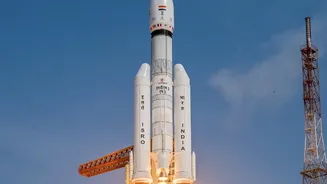
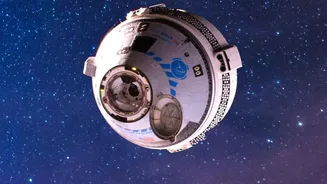
Of all the technologies being perfected, none is more critical than the Crew Escape System (CES). Think of it as the ultimate ejector seat, but for an entire space capsule. Its sole purpose is to protect the crew in the event of an emergency during the launch phase. If the powerful HLVM3 rocket experiences a major anomaly on the launchpad or during its ascent, the CES is designed to fire a set of quick-acting solid motors. These motors would instantly pull the crew module, containing the astronauts, away from the failing rocket to a safe distance, allowing for a parachute-assisted landing. Given the high-stakes nature of human spaceflight, this system must be flawless, capable of activating in milliseconds under extreme conditions.
A Picture-Perfect Test
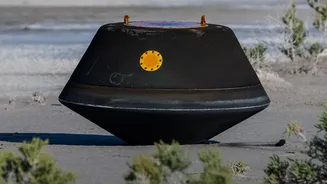
ISRO has been rigorously testing this life-saving system through a series of precursor missions. A key demonstration was the Test Vehicle Abort Mission-1 (TV-D1), which simulated an in-flight abort scenario. In this test, a specially designed test vehicle was launched to a specific altitude, at which point an anomaly was deliberately triggered. The Crew Escape System performed exactly as planned, separating the crew module from the rocket at an altitude of about 17 kilometres. The module then executed its descent, deploying parachutes for a gentle splashdown in the Bay of Bengal before being successfully recovered by the Indian Navy. The successful execution of this complex test was a massive confidence booster, validating a crucial piece of the safety puzzle.
Charting the Course to Orbit
The success of the abort system tests is a significant green light for the Gaganyaan timeline. With major systems like the human-rated launch vehicle's propulsion stages and the Crew and Service Modules developed and tested, the programme is steadily advancing. Government updates confirm that preparations for the first uncrewed Gaganyaan mission, designated G1, are progressing well. These uncrewed flights are essential to prove the safety and reliability of all systems in an end-to-end mission scenario before any astronauts are on board. While ISRO has not locked in a final date, the first uncrewed launch is targeted for 2026.
The Road Ahead
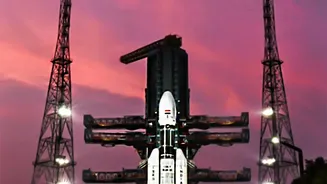
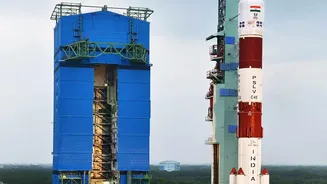
Before Indian astronauts make their historic journey, several more milestones must be achieved. ISRO is already preparing for the next Test Vehicle mission (TV-D2) and will conduct at least one more uncrewed flight after G1. These missions will test everything from flight systems and re-entry procedures to recovery operations. Meanwhile, the four astronaut-designates, all Indian Air Force pilots, have completed their generic training in Russia and are now undergoing mission-specific training in Bengaluru. To support the mission, significant infrastructure upgrades have been made at the Satish Dhawan Space Centre, including a special Crew Access Arm and emergency evacuation systems at the launch pad.