




The Challenge of City Skies
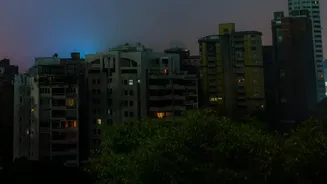
For most city dwellers, the night sky is a distant concept. Bright streetlights, illuminated buildings, and a general atmospheric haze create what is known as light pollution, washing out all but the brightest celestial bodies like the Moon and a few
planets. This nocturnal glow makes it challenging to connect with the cosmos, turning a timeless human activity into something that seems to require a long drive to the countryside. The reality for many is that true darkness is a rarity, and with it, the chance to simply look up and wonder. This disconnect from the night sky is more than just a missed view; studies have shown that stargazing can reduce stress and foster a sense of calm and perspective, benefits often lost in bustling urban environments.
Your Phone Is Now a Telescope
This is where technology brilliantly intervenes. Modern stargazing apps use the powerful sensors already in your smartphone—GPS, compass, and gyroscope—to know exactly where you are and which way you're pointing your device. The real magic happens with augmented reality (AR). When you hold your phone up to the sky, the app overlays a detailed star map directly onto your camera's view. Suddenly, constellations, stars, and planets are identified and labelled in real-time. Even if a star is too faint to be seen with the naked eye due to light pollution, the app knows it's there and can show you precisely where to look. It’s like having a planetarium in your pocket, one that turns a confusing canvas of black sky into an interactive, navigable map.
Your Balcony, Your Observatory
The beauty of this digital revolution is its accessibility. You don’t need an expensive telescope or a remote, dark-sky location. Your apartment balcony, a small terrace, or even a window with a decent view can become your personal observatory. These apps are designed for the urban experience, helping you make the most of what you can see from home. They can point you towards the brightest objects that are visible on any given night, from the International Space Station (ISS) flying overhead to the moons of Jupiter. It transforms a small, private outdoor space from a simple extension of your home into a launchpad for cosmic exploration, offering a moment of quiet awe amidst the urban chaos.
Essential App Features to Look For
When choosing an app, a few key features make a significant difference for urban stargazers. An intuitive augmented reality (AR) view is paramount. Look for apps that not only identify objects but also provide rich information about them, like their distance, history, and mythology. A 'time travel' function, which allows you to see the sky at any date in the past or future, is great for planning and understanding celestial movements. Another crucial feature is a red-light 'night mode', which preserves your night vision as your eyes adjust to the darkness. Finally, many apps include a calendar of celestial events, notifying you of upcoming meteor showers, eclipses, and planetary alignments.
Top Apps to Start Your Journey
Several apps are highly regarded by beginners and seasoned astronomers alike. SkyView Lite is celebrated for its simplicity and user-friendly AR interface, making it perfect for a first-time user. Star Walk 2 is another excellent option for beginners, known for its beautiful graphics and detailed astronomical calendar. For those who want a more comprehensive database, Stellarium Mobile provides a realistic and in-depth sky map that is popular among enthusiasts. Many of these apps offer robust free versions, providing more than enough functionality to get you started on identifying the wonders above your city.
Tips for the Best Balcony Viewing
While an app does most of the heavy lifting, a few simple tricks can enhance your urban stargazing. First, be patient and allow your eyes at least 20-30 minutes to adapt to the darkness; avoid looking at your bright phone screen during this time unless it’s in night mode. If possible, turn off any lights on your balcony or in the adjacent room to create your own pocket of darkness. Even using a wall or a building to block the direct glare from a nearby streetlamp can make a noticeable difference. Finally, manage your expectations. While you won’t see the Milky Way in all its glory, you can still witness planets, track satellites, and learn the major constellations, connecting you to the vast universe right from the comfort of home.