



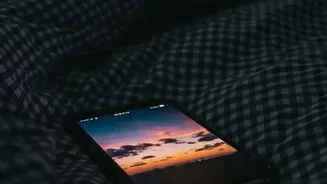

You’ve finished a long day, but you still have one last scroll on your phone. You switch on 'night mode,' thinking you're doing your eyes a favour. But is this tech band-aid really enough to combat the effects of our screen-filled lives?
The Promise of Warmth
Night mode, dark
mode, and other blue light filters have become standard features on our devices, promising a gentler viewing experience after sunset. The core idea is based on sleep science. Digital screens emit high-energy blue light, which our brains associate with daylight. Exposure to this light at night can suppress the production of melatonin, the hormone that tells your body it’s time to sleep. By shifting the screen’s colour palette to warmer, reddish tones, night mode aims to reduce this blue light exposure, theoretically making it easier to wind down and fall asleep. Many users find the reduced glare more comfortable in a dark room, but the benefits for sleep itself may be overstated.
More Than Just Blue Light
While reducing blue light is the main selling point of night mode, recent studies suggest its impact on sleep may be minimal. A 2021 study found no significant difference in sleep outcomes between people who used night mode, those who didn't, and those who avoided their phones altogether before bed. The reality is that sleep disruption isn't just about colour temperature. The brightness of the screen, even when dimmed, and the cognitive stimulation from engaging with content—whether it’s a work email or a social media feed—also play a huge role in keeping you awake. The key issue is often the simple act of using a screen, not just the light it emits.
The Real Problem: Digital Eye Strain
Beyond sleep, there's a more immediate problem that night mode does little to solve: Digital Eye Strain, also known as Computer Vision Syndrome. This collection of symptoms—including headaches, blurred vision, eye fatigue, and dry, irritated eyes—is not primarily caused by blue light. Instead, it’s the result of how we use our screens. When staring at a screen, we blink less frequently, leading to dryness. Furthermore, the tiny muscles in our eyes are held in a constant state of tension to keep focus on a close-up object for prolonged periods. No colour filter can alleviate this muscular and surface-level strain; the only solution is to look away.
The Power of the 20-20-20 Rule
This is where a full screen break demonstrates its superiority. Ophthalmologists widely recommend the '20-20-20 rule' as a simple and effective way to combat digital eye strain. The rule is easy to remember: every 20 minutes, take a 20 second break to look at something 20 feet away. This simple action allows the focusing muscles in your eyes to relax completely, something that never happens when you're just shifting your gaze around a screen. Taking a break also interrupts the 'staring effect,' prompting you to blink normally again and re_lubricate your eyes, which helps prevent dryness and irritation.
A Reset for Your Body and Mind
The benefits of a screen break extend far beyond your eyes. Stepping away from your desk or putting down your phone encourages movement, helping to combat the negative effects of a sedentary posture, such as neck and shoulder pain often dubbed 'tech neck'. Mentally, a break provides a much needed reset. Constant screen use can lead to information overload and cognitive fatigue, making it harder to concentrate. Taking a few minutes to disconnect, stretch, or simply look out a window can improve your focus and productivity when you return to your task. It allows your brain to switch off from a state of constant stimulation and reset, a benefit no software setting can replicate.