





The Moon: A Proving Ground for Deeper Space
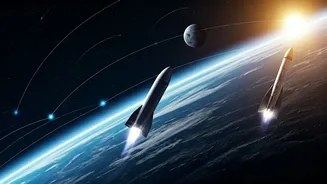
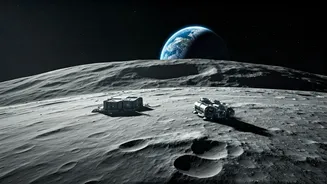
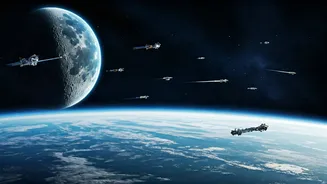
The renewed focus on the Moon, spearheaded by NASA's Artemis program, is about more than just leaving new footprints. These missions are designed to establish a sustainable human presence on another celestial body for the first time. [20] This involves
building a permanent base, planned to be operational by 2032, which will serve as a vital outpost. [20, 46] The goal is to test the technologies, systems, and procedures needed for long-duration missions far from Earth. [8, 16] This includes everything from advanced life support and radiation shielding to in-situ resource utilization—the idea of living off the land by, for example, extracting water ice from permanently shadowed craters at the lunar south pole. [31] In essence, mastering life on the Moon is the dress rehearsal for humanity's next giant leap: Mars. [8, 20]
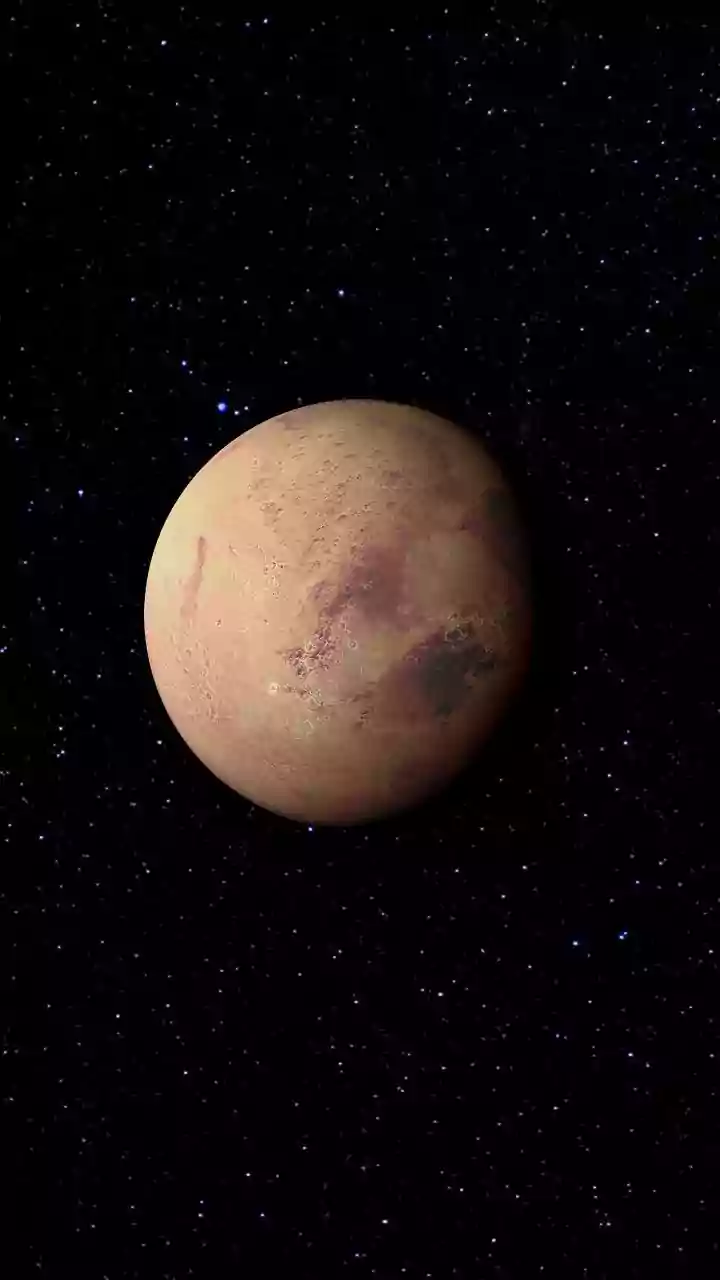
Mars: The Next Giant Leap
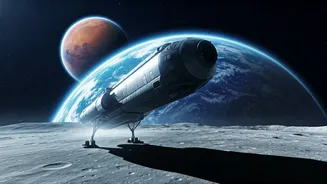
Mars remains the ultimate prize for human space exploration. [12] NASA's official strategy is explicitly called "Moon to Mars," using the lunar base as a launching point for eventual human missions to the Red Planet in the 2030s. [8, 13] However, the path to Mars is complex. The ambitious joint NASA-ESA Mars Sample Return (MSR) mission, which aimed to bring back rock samples collected by the Perseverance rover, was effectively cancelled in early 2026 due to budget and timeline concerns. [7, 30, 48] This has created an opening for other nations. China is moving forward with its own Tianwen-3 sample return mission, aiming to launch in 2028 and bring Martian soil to Earth by 2031, potentially making it the first nation to do so. [26] These robotic missions are critical precursors, helping scientists understand the Martian environment and identify potential signs of past life before sending humans. [12, 13]
India's Interplanetary Ambitions
The Indian Space Research Organisation (ISRO) is a major player in this new space race, building on the success of its Chandrayaan lunar missions and the Mangalyaan Mars orbiter. [15] ISRO has a robust roadmap for the coming decade. A lunar sample return mission, Chandrayaan-4, is planned for 2027. [21, 27, 34] This will be followed by a joint mission with Japan's JAXA, called LUPEX (Lunar Polar Exploration Mission) or Chandrayaan-5, to explore the Moon's polar regions for water ice around 2027-28. [21] Beyond the Moon, ISRO's sights are set on Venus with the Shukrayaan-1 orbiter mission, now targeted for a 2028 launch. [21, 24, 27, 34] This mission aims to study the Venusian atmosphere and subsurface. [10, 15] Plans are also developing for a Mars Lander Mission (Mangalyaan-2), which would build on the success of its first Mars orbiter. [9] These missions signal India's intent to become a leading power in deep-space exploration.
The Asteroid Frontier and Outer Worlds
It’s not just about planets. Asteroids and the moons of the outer solar system are also prime targets. China's Tianwen-2 mission, for instance, is set to explore an asteroid in 2026. [18, 19] Such missions are driven by both scientific curiosity—asteroids are pristine remnants from the formation of our solar system—and future economic potential, with talk of mining them for valuable resources. [12, 16] Further afield, the European Space Agency's (ESA) JUICE (JUpiter Icy Moons Explorer) mission is currently en route to Jupiter, set to arrive in 2031 to study its potentially life-harboring moons Ganymede, Callisto, and Europa. [42, 49] Not to be outdone, NASA is preparing its own revolutionary mission, Dragonfly. [5] Scheduled to launch in 2028, this nuclear-powered, car-sized rotorcraft will fly through the dense atmosphere of Saturn's moon Titan, landing at various sites to analyze its complex, carbon-rich chemistry and assess its habitability. [2, 3, 4, 6]