






Master Your Location
The biggest challenge for any urban astronomer is light pollution—the bright glow from streetlights and buildings that washes out the stars. But you can fight back. Start by making your viewing spot as dark as possible. Turn off all the lights on your balcony
and in the adjacent room. If possible, hang dark curtains or a sheet to block stray light from neighbours or street lamps. If you have safe access to your building’s rooftop, the higher elevation can offer a clearer view above the worst of the immediate ground-level glare and atmospheric haze. Every little bit of darkness you can create will dramatically improve what you can see.
Let Your Eyes Adapt
Your most important stargazing tool is your own vision, but it needs time to adjust. It takes about 20 to 30 minutes for your eyes to become fully 'dark-adapted,' allowing you to see faint objects. During this time, avoid looking at any bright screens, especially your phone. If you need to use your phone for a stargazing app, switch it to 'night mode' or 'red light mode.' Red light is much less disruptive to your night vision than the standard blue-white light of a screen. Patience is key; the longer you spend in the dark, the more stars will gradually appear.
Use Your Phone as a Planetarium
Modern technology puts a star map right in your pocket. Stargazing apps use your phone's location and sensors to show you exactly what's in the sky above you in real-time. Apps like Stellarium, SkyView Lite, and Star Walk 2 are excellent for identifying planets, constellations, and even satellites like the International Space Station. For a unique Indian perspective, the Bhagol app offers star charts based on Indian astronomical traditions, including nakshatras. These apps are perfect for beginners, helping you learn the sky and plan what you want to observe before you even step outside.
Start with Binoculars, Not a Telescope
Before investing in a large telescope, consider a good pair of binoculars. They are affordable, easy to use, and perfect for the limited space of a balcony. Binoculars offer a wide field of view, making it easier to scan the Milky Way and locate constellations. A pair of 10x50 binoculars (10x magnification and 50mm lenses) is a popular and effective choice for astronomy, gathering enough light to reveal Jupiter's moons, the craters on our own Moon, and dozens of star clusters. They are an excellent, unintimidating first step into the hobby.
Choose a Balcony-Friendly Telescope
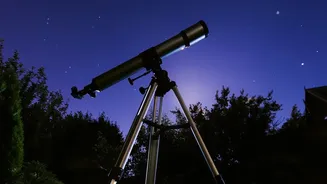
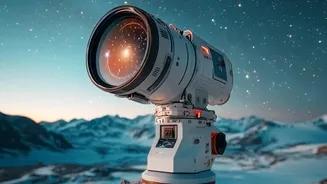
When you're ready to upgrade, choose a telescope that fits your space. For apartment balconies, compact and portable models are best. A tabletop 'Dobsonian' telescope is a fantastic option for beginners in India. Models like the Edisla Astra 114 are frequently recommended for their excellent performance, ease of use, and reasonable price. These reflector telescopes provide great views of planets and deep-sky objects without needing a bulky, complicated tripod. Some modern telescopes, like Celestron’s StarSense series, even work with your smartphone to help you find objects in the sky automatically.
Know What to Look For
Planning your sessions around specific celestial events makes stargazing even more rewarding. The Moon and bright planets like Jupiter and Saturn are excellent first targets. The final months of 2026 offer some great opportunities for Indian skywatchers. Look for Saturn reaching its brightest point on October 4, making its famous rings easier to see. In mid-November, you can spot the conjunction of Jupiter and Mars. And the Geminid meteor shower, one of the year's best, peaks around December 13-14 under favourable dark-sky conditions.
Join a Local Astronomy Community
You don't have to learn the night sky alone. Nearly every major Indian city has an amateur astronomy club, such as the Bangalore Astronomical Society, Jyotirvidya Parisanstha in Pune, or the Chennai Astronomy Club. These groups are incredibly welcoming to beginners and regularly organize star parties, workshops, and observation nights just outside the city. Joining a club is one of the best ways to learn from experienced astronomers, try out different telescopes, and share the excitement of discovery with fellow enthusiasts.