



A Portrait of Creation
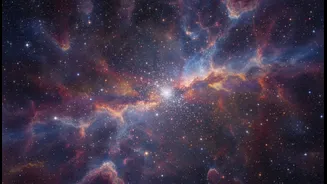
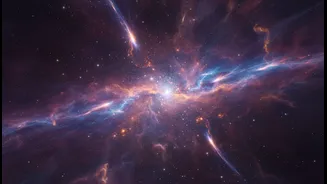
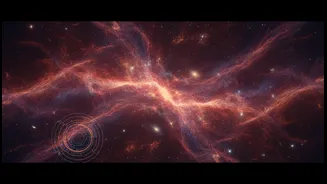
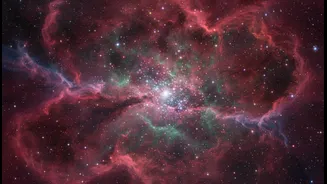
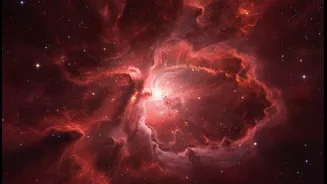
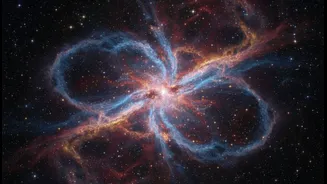
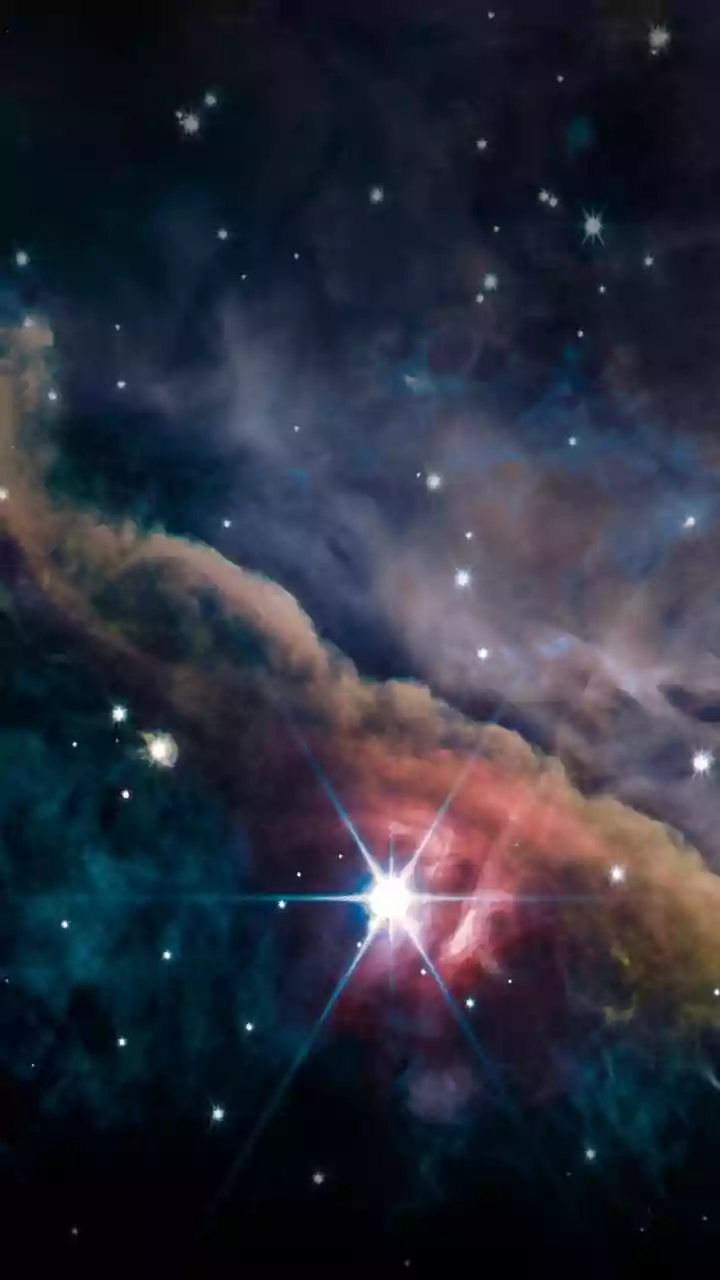
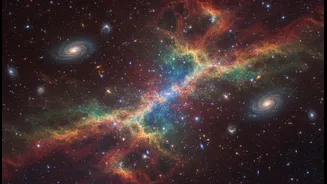
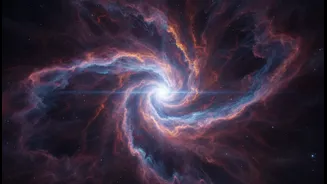
Imagine a canvas of deep black, splashed with fiery orange and blood-red streaks that look like celestial brushstrokes. At the center, brilliant points of light burst forth, while shadowy forms hint at even more cosmic drama hidden from view. This isn't
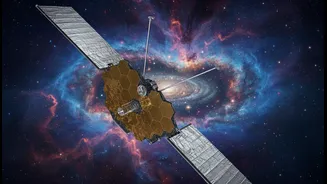
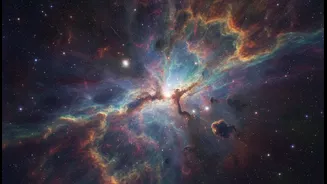
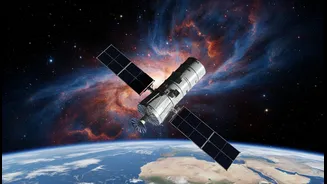
abstract art; it's a real portrait from the universe, captured by powerful instruments like the James Webb Space Telescope (JWST). These images show stellar nurseries—vast clouds of gas and dust where new stars are born. The most striking features are often the brilliant red jets and outflows, which are signatures of the turbulent process of stellar creation.
The Science Behind the Crimson Glow
Why all the red? The answer lies in the incredible power of infrared astronomy. Star-forming regions are choked with dense clouds of gas and dust that block visible light, the kind our eyes can see. It's like trying to see through thick fog. However, infrared light, which has longer wavelengths, can pierce through this cosmic dust. Telescopes like JWST are designed to see in infrared, effectively giving astronomers X-ray vision for the cosmos. The red colors in these images are often specifically assigned to represent the light emitted by excited hydrogen molecules or other elements colliding at high speeds. These collisions create shockwaves that cause the gas to glow, producing the dramatic red phenomena we see.
Anatomy of a Newborn Star
At the heart of the chaos is a protostar, the embryonic stage of a star. It's a dense, hot clump of gas and dust that is collapsing under its own gravity. As this material falls inward, it forms a rotating disk around the protostar, known as an accretion disk. But not all the material gets pulled in. The young star's powerful magnetic fields can grab some of this ionized gas and funnel it out through its poles at incredible speeds—hundreds of kilometers per second. These high-velocity, focused streams are called jets. When these jets slam into the surrounding interstellar gas, they create magnificent, glowing shockwaves known as Herbig-Haro objects, which often appear as the prominent red features.
Cosmic Fireworks with a Purpose
These dramatic outflows are not just for show. They play a crucial role in the star's own development. By blasting away excess material, the jets help to clear the star's immediate surroundings and regulate how much mass it can accumulate. In a way, the star is carving out its own space in the nursery. These outflows can extend for light-years and are a transient, but vital, phase of star formation, lasting only a few tens of thousands of years. Studying them gives astronomers a snapshot of the processes that our own Sun went through billions of years ago.
A Window to Our Own Origins
Observing these distant, fiery births does more than just produce stunning pictures. It provides critical data on how stars, and the planetary systems that often form around them, come into being. The jets and outflows help disperse the parent molecular cloud, eventually allowing the newly formed stars to shine freely and for planets to coalesce in the remaining disk material. By analyzing the light from these regions, scientists can even identify the presence of key molecules like water, silicates, and carbon dioxide—the building blocks for planets like Earth. Every new image of these dramatic red nurseries is another piece of the puzzle, helping us understand not just the universe, but our own cosmic origins.