



Artemis: India Joins the Return to the Moon
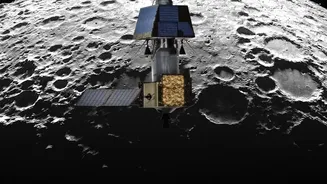
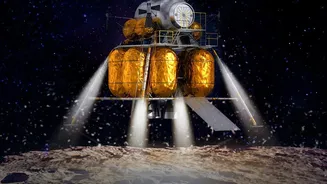
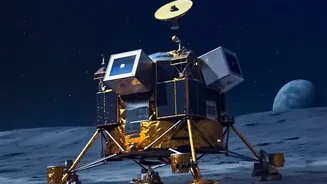
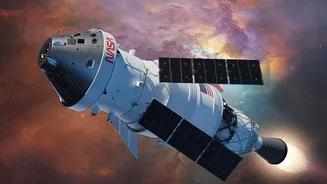
The Artemis program is arguably NASA's most ambitious undertaking in a generation: returning humans to the Moon with the goal of establishing a sustainable presence. In a significant development, India signed the Artemis Accords in 2023, joining a growing
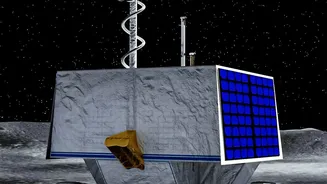
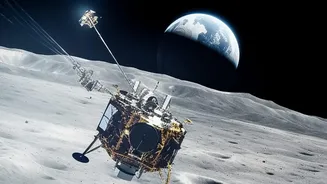
list of nations committed to cooperative and peaceful lunar exploration. This isn't just a symbolic gesture. In August 2026, NASA officially invited ISRO to participate in its planned Moon Base program, which aims to build a permanent outpost near the lunar south pole. This partnership offers India access to cutting-edge technology and a role in shaping humanity's future on the Moon, building on the success of its own Chandrayaan missions. For India's booming private space-tech sector, this collaboration could unlock immense opportunities for innovation and commercial ventures.
NISAR: A Joint Eye on Planet Earth
The NASA-ISRO Synthetic Aperture Radar (NISAR) mission is a powerful symbol of the deepening space partnership between the two agencies. Launched in July 2025 aboard an Indian GSLV rocket, this advanced Earth-observation satellite is the first to use two different radar frequencies (L-band and S-band) to monitor our planet's complex processes. NISAR will provide incredibly detailed data on everything from agricultural monitoring and soil moisture to the stability of Himalayan glaciers and the impact of natural hazards. By scanning nearly the entire globe every 12 days, its insights will be invaluable for India's disaster management agencies, climate scientists, and agricultural planners, offering a wealth of openly accessible data to tackle critical environmental challenges.
PACE: Monitoring Climate and Oceans
NASA's PACE (Plankton, Aerosol, Cloud, ocean Ecosystem) mission is a state-of-the-art climate observatory that offers profound benefits for a nation as geographically diverse as India. PACE's advanced instruments study the complex interplay between the ocean and atmosphere. It can identify and track different species of phytoplankton, the microscopic organisms that form the base of the marine food web and play a crucial role in the global carbon cycle. For India, with its vast coastline and dependence on the monsoon, understanding ocean health is vital for fisheries and climate modelling. Furthermore, PACE's ability to monitor aerosols—tiny atmospheric particles from dust and pollution—will help improve air quality forecasting in some of the world's most polluted cities, a challenge India is actively working to address. An Indian tech firm is already an early adopter of PACE data to improve air quality monitoring across the country.
X-59: Quieting the Sonic Boom
While deep space missions grab headlines, NASA is also revolutionising travel closer to home. The X-59 Quiet SuperSonic Technology (QueSST) experimental aircraft is designed to fly faster than the speed of sound without creating a loud, disruptive sonic boom. Instead, it aims to produce a much quieter "sonic thump." The aircraft successfully completed its first supersonic test flights in mid-2026. NASA's goal is to gather data that could lead regulators to lift the long-standing ban on overland supersonic flight. For a large and growing country like India, the potential for quiet supersonic travel could one day dramatically reduce cross-country flight times, transforming business and logistics. While challenges around fuel consumption remain, the X-59's noise-reduction technology is a crucial first step toward a new era of high-speed aviation.