




The Old-School Challenge in Engineering
Heavy engineering—the world of mechanics, thermodynamics, and fluid dynamics—is notoriously difficult. The concepts are abstract, the mathematics is dense, and the traditional 'one-size-fits-all' lecture model often leaves many students behind. Some grasp
concepts instantly, while others need more time or a different approach. This gap is especially challenging in India, where large class sizes make individual attention nearly impossible. The result is often rote memorisation instead of true understanding, creating a disconnect between what is learned in college and what is required on the factory floor or design desk.
Enter the AI Tutor: A Personalised Path
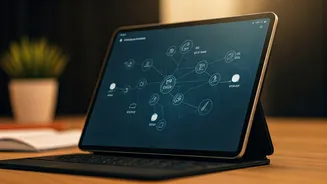
This is where personalized AI learning portals are creating a seismic shift. Imagine a digital tutor that knows your exact strengths and weaknesses. These platforms use artificial intelligence to analyse your performance on quizzes, exercises, and simulations in real-time. If you’re struggling with the principles of heat transfer but acing structural analysis, the system will automatically provide you with more resources, videos, and practice problems for the former, while allowing you to speed ahead in the latter. It breaks the linear, chapter-by-chapter mould, creating a unique learning journey for every single student.
Beyond Theory: Virtual Labs and Simulations
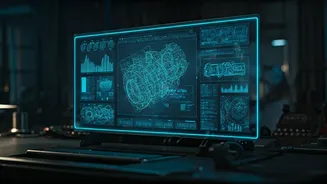
One of the biggest hurdles in engineering education is the lack of access to expensive lab equipment. How can you truly understand a hydraulic press without ever operating one? AI portals solve this with sophisticated simulations and interactive 3D models. Students can virtually assemble and disassemble complex machinery, run virtual experiments on a jet engine, or test the stress tolerance of a bridge under different conditions—all from their laptop. This hands-on, trial-and-error approach fosters a much deeper, more intuitive understanding than static diagrams ever could. It’s the closest thing to a real-world apprenticeship, available 24/7.
The Advantage for Indian Engineers
For aspiring and current engineers in India, the implications are huge. Firstly, it democratises access to high-quality practical education, regardless of a student's physical location or the resources of their institution. Secondly, it helps bridge the critical skills gap that many companies complain about. Graduates trained on these platforms are not just book-smart; they are problem-solvers who have experience with virtual troubleshooting. For professionals already in the workforce, these portals offer an efficient way to upskill and learn about new technologies like Industry 4.0, automation, and advanced materials, ensuring their skills remain relevant in a rapidly changing industrial landscape.
So, Is It Really That Easy?
The word 'easily' in the headline is tempting, but it’s important to be realistic. These AI portals are not magic wands. They don’t eliminate the need for hard work, discipline, and a genuine curiosity about how things work. Mastering heavy engineering will always require effort. However, what these tools do is make that effort smarter, more focused, and infinitely more engaging. They remove the frustration of being stuck on a concept everyone else seems to get. They replace passive listening with active doing. So, while it may not be 'easy', it is a far more efficient, effective, and ultimately rewarding way to learn.