




More Than Just Kheer
First, let's be clear: Phirni is not just another kheer. While both are beloved rice puddings, Phirni holds a unique and elegant status. Its magic lies in its texture. Instead of using whole rice grains, Phirni is made with coarsely ground rice, which
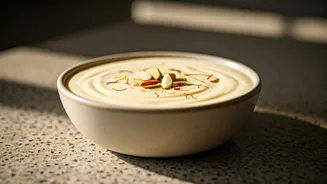
dissolves into a silken, impossibly smooth paste when cooked slowly in milk. The result is a dessert that feels lighter and more refined. Traditionally served chilled in small earthenware bowls called 'sakoras' or 'matkas', it absorbs a subtle, earthy aroma that elevates it from a simple sweet to a sophisticated experience. It’s the kind of dessert that feels like a quiet celebration, perfect for a lazy Sunday afternoon.
The Secret Starts with the Rice
The heart and soul of a perfect Phirni is the rice. Not just any rice will do; you need good quality Basmati for its distinct aroma. The process is simple but crucial. Start by washing a small quantity of rice (about a quarter cup for a litre of milk) and soaking it in water for at least 30 to 45 minutes. This step softens the grains, making them easier to grind and ensuring they cook evenly without becoming lumpy. After soaking, drain the rice completely. The key is to grind it into a coarse, semolina-like texture. You are not aiming for a fine powder or a paste. A mixer-grinder works perfectly; just use short pulses until you have a grainy consistency. This texture is non-negotiable. It’s what allows the rice to meld into the milk, thickening it naturally and creating that signature velvety smoothness without the starchy feel of whole grains.
Embrace the Full-Fat Milk
This is no time for compromise. For that luxurious, creamy texture that coats the back of a spoon, you must use full-fat milk. It’s the fat content that lends richness and body to the Phirni. Skimmed or low-fat milk will result in a watery, disappointing dessert, and no amount of cooking can fix it. Bring the milk to a boil in a heavy-bottomed pan to prevent it from scorching. Once it boils, reduce the heat to a low-medium flame and add your ground rice. Now comes the part that defines weekend cooking: patience. You need to stir continuously, especially for the first 10 minutes, to prevent lumps from forming. Let the mixture simmer gently, stirring frequently, until the milk has reduced and thickened considerably and the rice is completely cooked. This can take anywhere from 25 to 35 minutes. It’s a slow, meditative process, perfect for a day when you aren't in a hurry.
A Symphony of Flavour
Once your Phirni has reached the desired consistency—thick enough to coat a spoon but still pourable (it will thicken more as it cools)—it’s time to add the sugar and aromatics. Adding sugar too early can sometimes cause the milk to curdle or the bottom to burn. Stir until the sugar is fully dissolved. Now, for the classic trio of Indian flavours. Add freshly ground cardamom (elaichi) powder for its warm, fragrant notes. A few strands of saffron (kesar), soaked in a tablespoon of warm milk beforehand, will impart a beautiful golden hue and an unmistakable royal aroma. Finally, a few drops of rose water or kewra water, added right at the end after turning off the heat, will provide a delicate floral finish that ties everything together. Don’t overdo the flavourings; the goal is a gentle perfume, not an overpowering scent.
The Chill and The Garnish
The final stage is perhaps the most important for achieving “weekend perfection.” Pour the warm Phirni into your serving bowls. If you can find them, shallow clay or terracotta bowls are the traditional and best choice. The porous nature of the clay absorbs excess moisture, helping the Phirni set to a perfect, scoopable consistency while imparting that signature earthy fragrance. Let the bowls cool to room temperature before covering them with cling film and placing them in the refrigerator to chill for at least four hours, or preferably overnight. Phirni is always served cold. The chilling process allows the flavours to meld and deepen. Just before serving, complete your masterpiece with a flourish of garnishes. Finely chopped pistachios and almonds add a lovely crunch and colour. A few dried rose petals make it look as beautiful as it tastes. This final touch is the visual cue that this isn't just dessert; it's a special occasion.