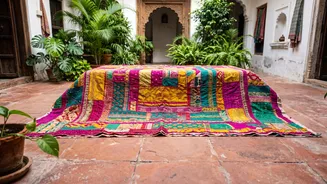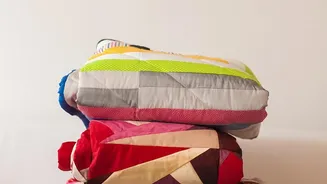





In a world of mass-produced goods, some objects sing with the warmth of human touch. Maharashtra's Godhadi, a handmade quilt born from old clothes and countless stitches, is one such treasure—a story of memory, reuse, and love.
A Blanket Woven from Memories
The Godhadi is far more
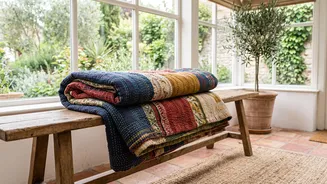
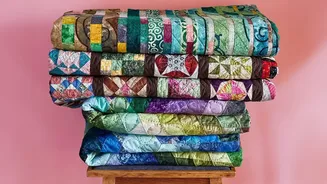
than just a blanket; it is a living textile native to Maharashtra, built on the principle of upcycling. Traditionally crafted by women, these quilts are made by layering and hand-stitching discarded fabrics, such as old saris, dhotis, and other pieces of clothing that have outlived their original purpose. Each quilt is unique, a patchwork of personal histories where a mother's favourite sari might lie next to a child's first shirt. The process is a testament to resourcefulness, transforming what would be waste into an object of comfort and beauty. This art of the discarded fabric ensures that every Godhadi is a one-of-a-kind creation, imbued with the artisan's personal touch.
The Art of the Stitch
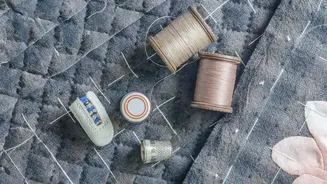
Creating a Godhadi is a patient and meticulous craft. The process begins with collecting and carefully cleaning old garments, which are then ironed flat. These fabrics are sorted; larger, more durable pieces like saris or dupattas are often chosen for the outer layers, while smaller scraps from shirts and pants form the soft, warm filling inside. The layers are then tacked together and stitched through and through with a simple, yet sturdy, running stitch. Traditionally, a strong white cotton thread is used, as adding dye was believed to weaken its fibres, and the artisans prized longevity above all. The entire process, done without machinery, could take from a week to three months, depending on the quilt's size and complexity.
A Social and Cultural Tapestry
The making of a Godhadi has historically been a communal activity. Especially during the summer months when agricultural work would slow, women in a village would gather in the afternoons to stitch together. These gatherings were social events, filled with shared stories, daily news, and traditional songs sung in the local dialect. The craft became a medium for expression and bonding. The quilts themselves hold deep cultural significance. A smaller Godhadi is often one of the first gifts for a newborn, stitched by a grandmother from her own and her daughter's saris to physically wrap the baby in familial love and history. Because of this deep sentimental value, many families refuse to sell their Godhadis, viewing them as priceless heirlooms.
From Household Staple to Sustainable Icon
In an era increasingly focused on sustainability and conscious consumerism, the Godhadi has found a new relevance. Its core principles—reusing materials, minimising waste, and celebrating handmade quality—align perfectly with the modern slow-living movement. This has sparked a revival of the craft. Social enterprises and design collectives are now working with traditional Godhadi makers, helping them reach new markets while ensuring fair wages. These initiatives are not only preserving a valuable cultural heritage but are also empowering rural women artisans. The humble Godhadi is being re-imagined into new products like bags and tapestries, proving that traditional crafts can thrive in the contemporary world.