





The Hidden Costs of Sitting Still
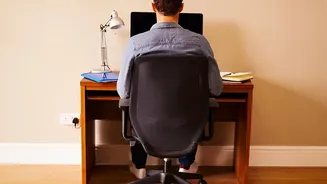
Our bodies are designed for movement, but many of us spend the majority of our day in a chair. This prolonged sitting, often called sedentary behaviour, has been linked to a host of health issues. Physically, it leads to reduced blood circulation, especially
in the legs, as well as muscle stiffness, back pain, and weakened core stability. When you remain still for long periods, your muscles are not contracting to help pump blood back to the heart, which can lead to feelings of sluggishness and fatigue. Mentally, the impact can be just as significant. Studies have shown a connection between increased sedentary time and higher levels of anxiety and stress. The continuous mental focus on tasks without a physical release can create a cycle of tension and mental fatigue, making it harder to concentrate and stay productive.
A Boost for Your Blood Flow
The simplest way to counteract the effects of sitting is to interrupt it with movement. When you stand up, stretch, or take a short walk, you activate what physiologists call the 'skeletal muscle pump'. Large muscles in your legs and glutes contract, squeezing the surrounding veins and pushing blood back up towards your heart. This process dramatically improves circulation, delivering fresh oxygen and nutrients throughout your body and brain. Research has shown that even very short breaks of a few minutes can produce a sharp increase in blood flow to the legs. One study found that taking regular short walking breaks prevented the decline in cerebral blood flow (blood flow to the brain) that occurs during long periods of uninterrupted sitting. This boost in circulation doesn't just wake up your limbs; it helps you think more clearly and feel more energised.
Breaking the Mental Stress Cycle
A movement break is also a mental break. Stepping away from your screen for even a minute or two allows your brain to reset and can reduce mental fatigue and cognitive overload. This interruption of a continuous task helps maintain a higher level of attention and performance when you return to your work. Physically, movement helps release the muscle tension that builds up from stress, particularly in the neck and shoulders. Stretching and light activity can also trigger the release of endorphins, the body’s natural mood elevators, helping to lower feelings of stress and anxiety. Some studies have found that short breaks can lower heart rates, a key indicator of reduced stress. By giving both your body and mind a brief pause, you prevent the gradual build-up of stress that can lead to burnout.
Simple, Desk-Friendly Movements
You don't need a gym or special equipment to get moving. These simple exercises can be done right at your desk in just a few minutes: Shoulder Rolls and Neck Tilts: To release tension in your upper body, sit up straight and roll your shoulders backwards and forwards several times. Then, gently tilt your head towards your right shoulder, holding for 15-30 seconds, and repeat on the left side. Seated Spinal Twist: Sit tall with your feet flat on the floor. Place your right hand on your left knee and gently twist your upper body to the left, using your chair for support. Hold the stretch while breathing deeply, then repeat on the other side. Leg Lifts and Ankle Circles: While seated, extend one leg straight out in front of you until it is parallel with the floor. Hold for a few seconds, then lower it. Alternate between legs. You can also lift one foot off the ground and rotate your ankle in circles, first clockwise and then counterclockwise, to boost circulation in your lower legs. Wrist and Forearm Stretch: Extend one arm with your palm facing up. With your other hand, gently pull your fingers back toward your body and hold for 15 seconds. This is great for preventing strain from typing.
Making Movement a Habit
The key to reaping the benefits is consistency. Aiming for a short break every hour is a great starting point. One of the easiest ways to remember is to link movement to a regular task. For example, stand up and stretch every time you finish a call or send a long email. Another popular method is the Pomodoro Technique, where you work for 25 minutes and then take a five-minute break. You can also simply set a recurring alarm on your phone or computer to remind you to get up. Even standing up while you take a phone call or walking to get a glass of water counts. The goal isn't to have an intense workout, but to frequently break the cycle of sitting still. Start small, and you’ll find that these little breaks quickly become a natural and energising part of your day.