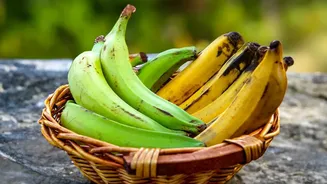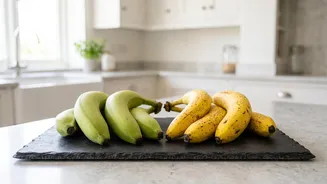





The humble banana is often hailed as a gut-friendly snack. But a banana isn't just a banana; its ripeness completely changes how it affects your digestive system. Here’s the context you need to choose the right one for your body.
The Green Banana: A Prebiotic Powerhouse
A firm, green, or slightly
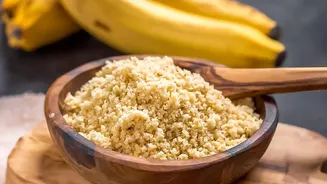
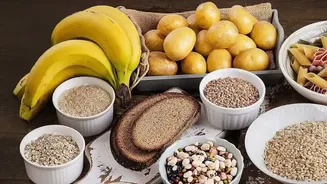
underripe banana is defined by one key component: resistant starch. This type of carbohydrate 'resists' digestion in your small intestine and travels to the colon, where it acts as a prebiotic. Essentially, it becomes food for your beneficial gut bacteria. As these microbes feast on resistant starch, they produce short-chain fatty acids like butyrate, which nourishes the cells of your colon and helps reduce inflammation. This process makes green bananas excellent for supporting a healthy microbiome. Furthermore, their high fiber and pectin content can help you feel fuller for longer and promote more stable blood sugar levels.
A Word of Caution on Green Bananas
While resistant starch is a gut health hero, it can be a double-edged sword. For individuals not accustomed to a high-fiber diet, or for those with certain digestive sensitivities, a sudden increase in resistant starch can lead to uncomfortable gas and bloating. This is a normal result of the fermentation process in your gut, but it's often best to introduce green bananas into your diet gradually to allow your digestive system and its resident microbes time to adapt. If you experience persistent discomfort, it may be a sign to scale back your portion size.
The Ripe Banana: Easy Energy and Digestion
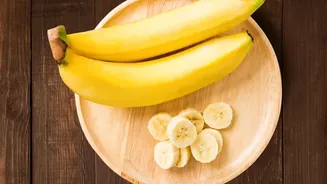
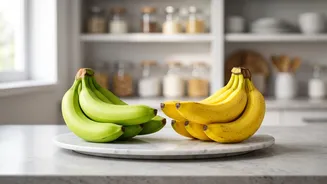
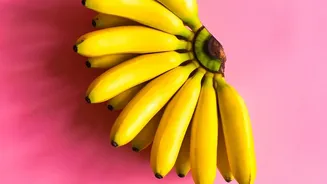
As a banana ripens, its nutritional profile transforms. The resistant starch that defined its green stage breaks down into simple sugars like fructose and glucose. This change makes ripe, yellow bananas significantly sweeter and softer. For many people, this makes them much easier to digest, providing a source of quick, easily absorbed energy. Ripe bananas are also often higher in antioxidants compared to their green counterparts. This makes them an ideal pre-workout snack or a gentle option for when your stomach is feeling sensitive.
The Ripe Banana and FODMAPs
The increase in simple sugars during ripening comes with a significant catch for some people, particularly those with Irritable Bowel Syndrome (IBS). As bananas ripen, they accumulate a type of fermentable carbohydrate known as fructans, which are a high FODMAP food. FODMAPs can trigger symptoms like gas, bloating, and stomach pain in sensitive individuals. According to research from Monash University, a world leader in FODMAP research, a firm, unripe banana is considered low FODMAP, while a ripe banana is high FODMAP in larger quantities. People following a low FODMAP diet may only be able to tolerate a small portion, such as one third of a ripe banana.
So, Which Banana Is Best for Your Gut?
There is no single 'best' banana for everyone; the right choice depends entirely on your individual health goals and digestive tolerance. If your primary goal is to feed your beneficial gut bacteria and you want the prebiotic benefits of resistant starch, a green banana is the superior choice. If you need a quick source of energy that's easy to digest or are looking for a sweeter taste, a ripe yellow banana is your best bet. For those with IBS or sensitivity to FODMAPs, a green banana is generally a safer option than a ripe one, though portion size remains key. Ultimately, the banana you choose should be the one that makes your body feel its best.